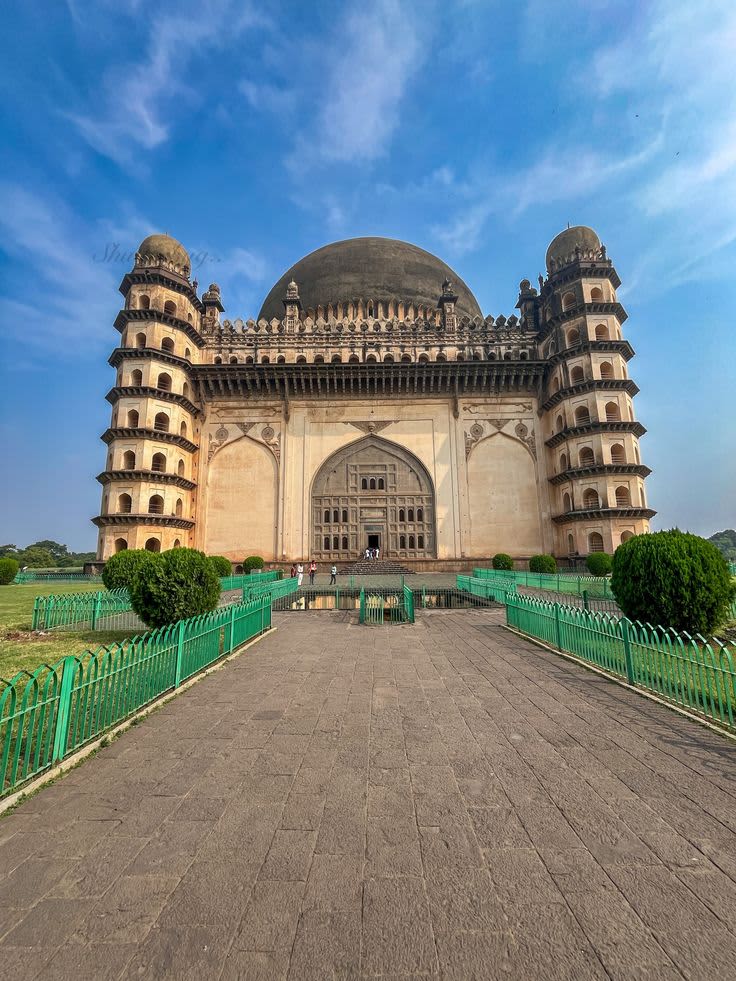
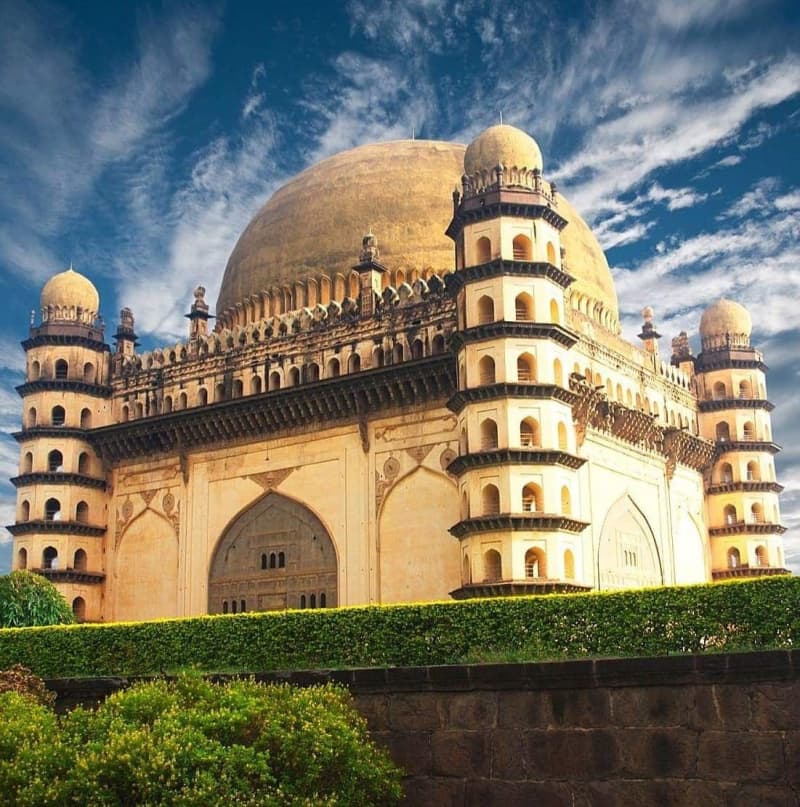
Bijapur, now officially renamed Vijayapura, in Karnataka is home to some of the finest examples of Deccan Sultanate architecture in India, most magnificently the Gol Gumbaz — the mausoleum of Sultan M...
Bijapur
The Agra of South India
Karnataka, India
4.5
Gol GumbazIslamic ArchitectureAdil Shahi Dynasty
heritage
Best places to visit in Bijapur


Things to do in Bijapur
- No photoHeritageView full guide
1.5–2 hours
Gol Gumbaz Visit
The Gol Gumbaz — the mausoleum of Adil Shah II — sits in your memory long after you've left Bijapur. Its central dome, measuring 44 metres in diameter, was the largest in the world for centuries after its completion in 1656 and remains the second largest unsupported dome on earth to this day. But the real star is the 'Whispering Gallery' running inside the dome's base: even the faintest whisper travels across the entire 37.9-metre diameter, a piece of 17th-century acoustic engineering that still astonishes visitors.
- No photoHeritageView full guide
1–1.5 hours
Ibrahim Rauza Exploration
Often called the 'Taj Mahal of the Deccan', the Ibrahim Rauza is in many ways more intimate and arguably more beautiful than its more famous cousin. Built in 1627 as the tomb of Ibrahim Adil Shah II, this Deccan Sultanate masterpiece features exquisitely pierced stone windows, richly carved minarets, and a perfect symmetry between its mosque and tomb that reportedly inspired the architects of the Taj. The garden setting and surrounding silence make it profoundly atmospheric.
- No photoHeritageView full guide
1.5–2 hours
Malik-e-Maidan Cannon & City Walls Walk
Perched on a bastion of Bijapur's ancient city walls sits Malik-e-Maidan — the 'Master of the Battlefield' — the largest medieval cannon in the world, cast in 1549 and weighing a staggering 55 tonnes. Walking along the old city walls gives you a sense of the sheer scale of the Adil Shahi kingdom's ambition. The surrounding area is dotted with mosques, tombs, and gateways that make for a wonderfully unhurried heritage wander.
Best Time to Visit and Weather Info
Best time: October to March (pleasant weather). Avoid summer heat.
Weather notes: Now known as Vijayapura. Compact city, easy to explore in 1-2 days.
No FAQs available.
Best Places Similar
Hampi
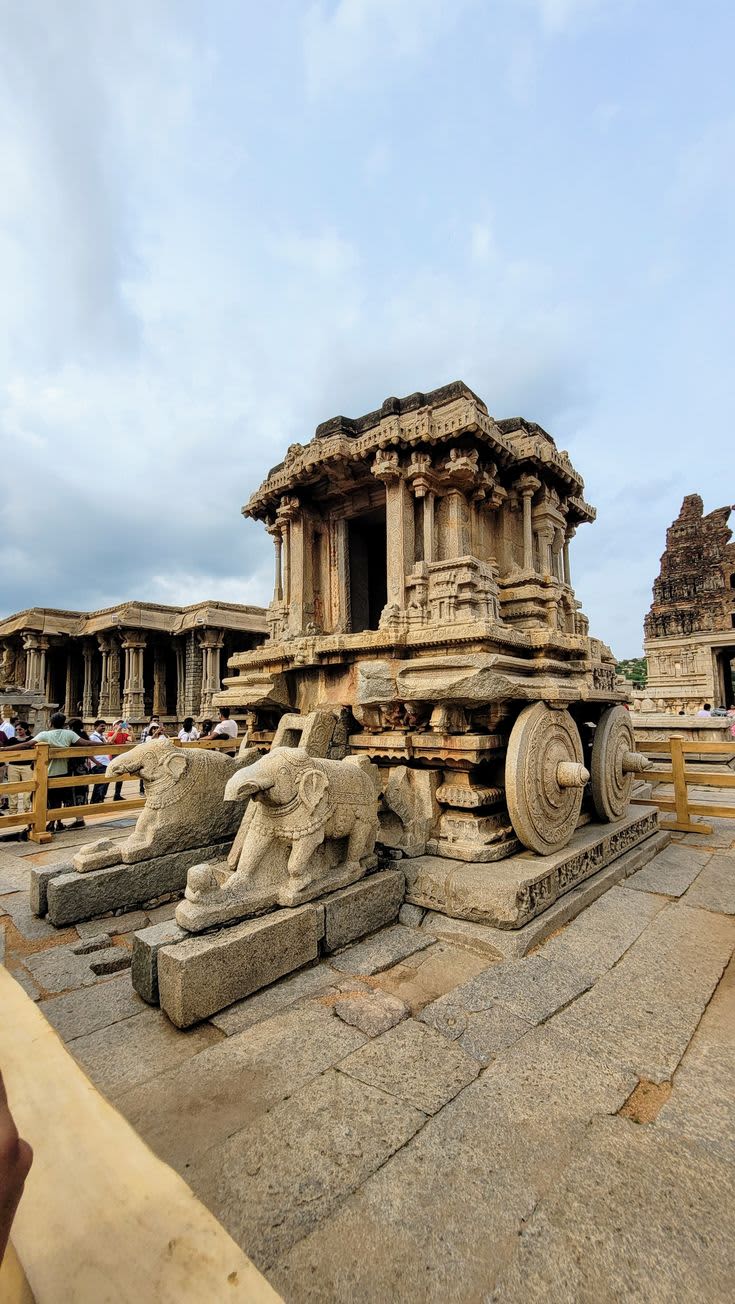
Hampi, a UNESCO World Heritage Site in Karnataka, is one of the most evocative and visually stunning historical destinations in India — the ruins of Vijayanagara, once one of the largest and wealthiest cities in the medieval world and capital of the last great Hindu empire, spread across an otherworldly landscape of giant boulders, banana plantations, and the Tungabhadra River. The Virupaksha Temple, Vittala Temple with its famous Stone Chariot and musical pillars, the Lotus Mahal, and Elephant Stables are architectural masterpieces within a landscape of over 1,600 monuments. Cycling or hiking among Hampi's surreal boulder fields at sunrise and sunset is an experience of rare beauty and historical majesty.
Badami
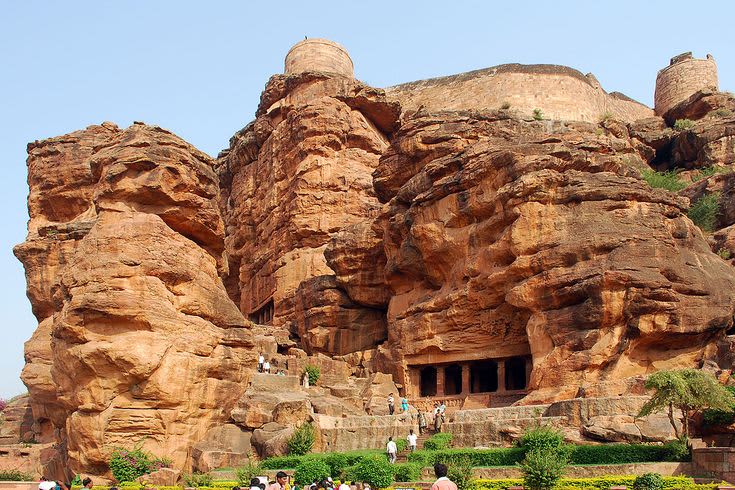
Badami, the ancient capital of the early Chalukya dynasty in Karnataka, is a historically rich town known above all for its four magnificent rock-cut cave temples carved into the face of a red sandstone cliff overlooking the scenic Agastya Lake in the 6th and 7th centuries CE. The caves contain exceptional sculptures of Shiva as Nataraja with 18 arms, various Vishnu avatars including the colossal reclining Vishnu in Cave 3, and Jain tirthankaras that represent some of the finest examples of early Deccan sculpture. The fortified hilltop above the caves, the temples on the lake's southern shore, and the nearby Pattadakal and Aihole make Badami the hub of an extraordinary ancient Chalukyan heritage trail.
Pattadakal
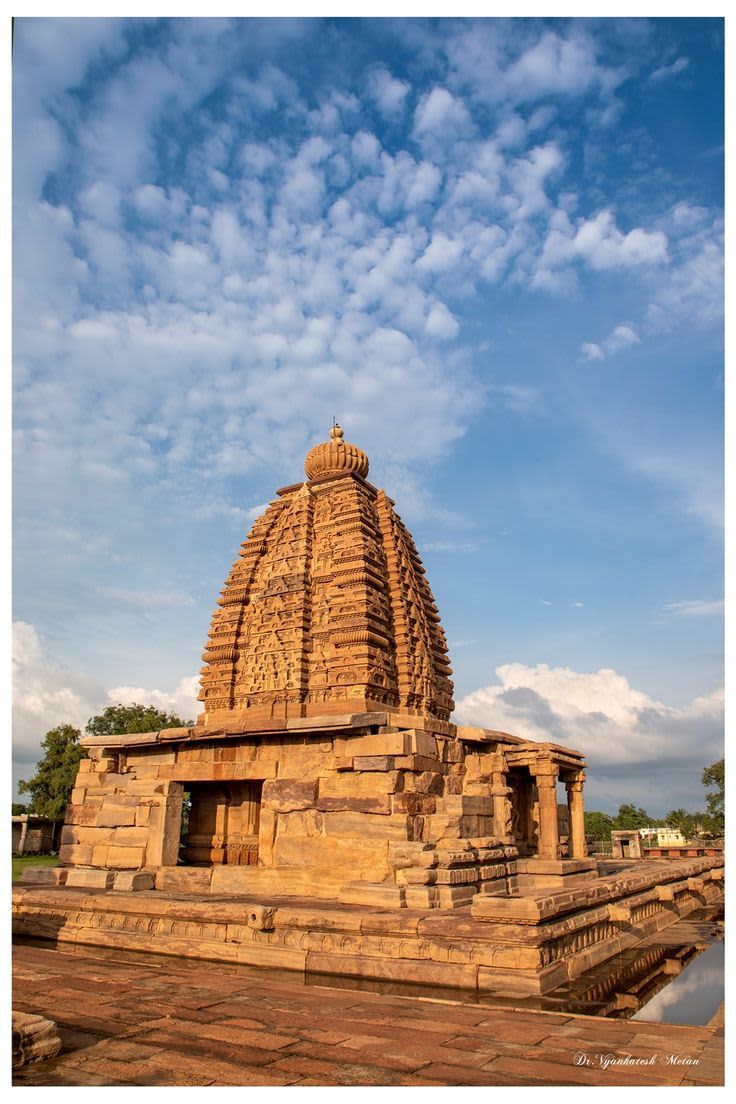
Pattadakal, a UNESCO World Heritage Site on the banks of the Malaprabha River in Karnataka, is a remarkable gallery of 8th-century Chalukyan temples that uniquely showcases the evolution of two distinct South Indian temple architectural styles — the nagara (northern) and dravidian (southern) — side by side. The Virupaksha Temple, built by Queen Lokamahadevi to commemorate the Chalukyan victory over the Pallavas, is the most impressive of the complex's ten temples and served as the model for the famous Kailasanatha Temple at Ellora. Visiting Pattadakal as part of a Chalukyan heritage trail with Badami and Aihole is one of the most richly rewarding historical journeys in all of South India.
Nearby destinations
Pattadakal
99 km · Pattadakal, a UNESCO World Heritage Site on the banks of the Malaprabha River in Karnataka, is a remarkable gallery of 8th-century Chalukyan temples that uniquely showcases the evolution of two distinct South Indian temple architectural styles — the nagara (northern) and dravidian (southern) — side by side. The Virupaksha Temple, built by Queen Lokamahadevi to commemorate the Chalukyan victory over the Pallavas, is the most impressive of the complex's ten temples and served as the model for the famous Kailasanatha Temple at Ellora. Visiting Pattadakal as part of a Chalukyan heritage trail with Badami and Aihole is one of the most richly rewarding historical journeys in all of South India.
Badami
102 km · Badami, the ancient capital of the early Chalukya dynasty in Karnataka, is a historically rich town known above all for its four magnificent rock-cut cave temples carved into the face of a red sandstone cliff overlooking the scenic Agastya Lake in the 6th and 7th centuries CE. The caves contain exceptional sculptures of Shiva as Nataraja with 18 arms, various Vishnu avatars including the colossal reclining Vishnu in Cave 3, and Jain tirthankaras that represent some of the finest examples of early Deccan sculpture. The fortified hilltop above the caves, the temples on the lake's southern shore, and the nearby Pattadakal and Aihole make Badami the hub of an extraordinary ancient Chalukyan heritage trail.
Hampi
185 km · Hampi, a UNESCO World Heritage Site in Karnataka, is one of the most evocative and visually stunning historical destinations in India — the ruins of Vijayanagara, once one of the largest and wealthiest cities in the medieval world and capital of the last great Hindu empire, spread across an otherworldly landscape of giant boulders, banana plantations, and the Tungabhadra River. The Virupaksha Temple, Vittala Temple with its famous Stone Chariot and musical pillars, the Lotus Mahal, and Elephant Stables are architectural masterpieces within a landscape of over 1,600 monuments. Cycling or hiking among Hampi's surreal boulder fields at sunrise and sunset is an experience of rare beauty and historical majesty.