Hampi, a UNESCO World Heritage Site in Karnataka, is one of the most evocative and visually stunning historical destinations in India — the ruins of Vijayanagara, once one of the largest and wealthies...
Hampi
Ruins of the Vijayanagara Empire
Karnataka, India
4.9
UNESCO SiteAncient RuinsBoulder Landscape
heritage
Duration: 2–3 Days
Budget/day: ₹1,000 – ₹4,000
Best season: Oct – Feb
Altitude: 467 m
Nearest airport: Hubli Airport (160 km); Bengaluru (350 km)
Nearest railway: Hospet Junction (13 km)
Best places to visit in Hampi


Things to do in Hampi
 HeritageView full guide
Full day (ideally 2 days for full coverage)
Ruins Exploration
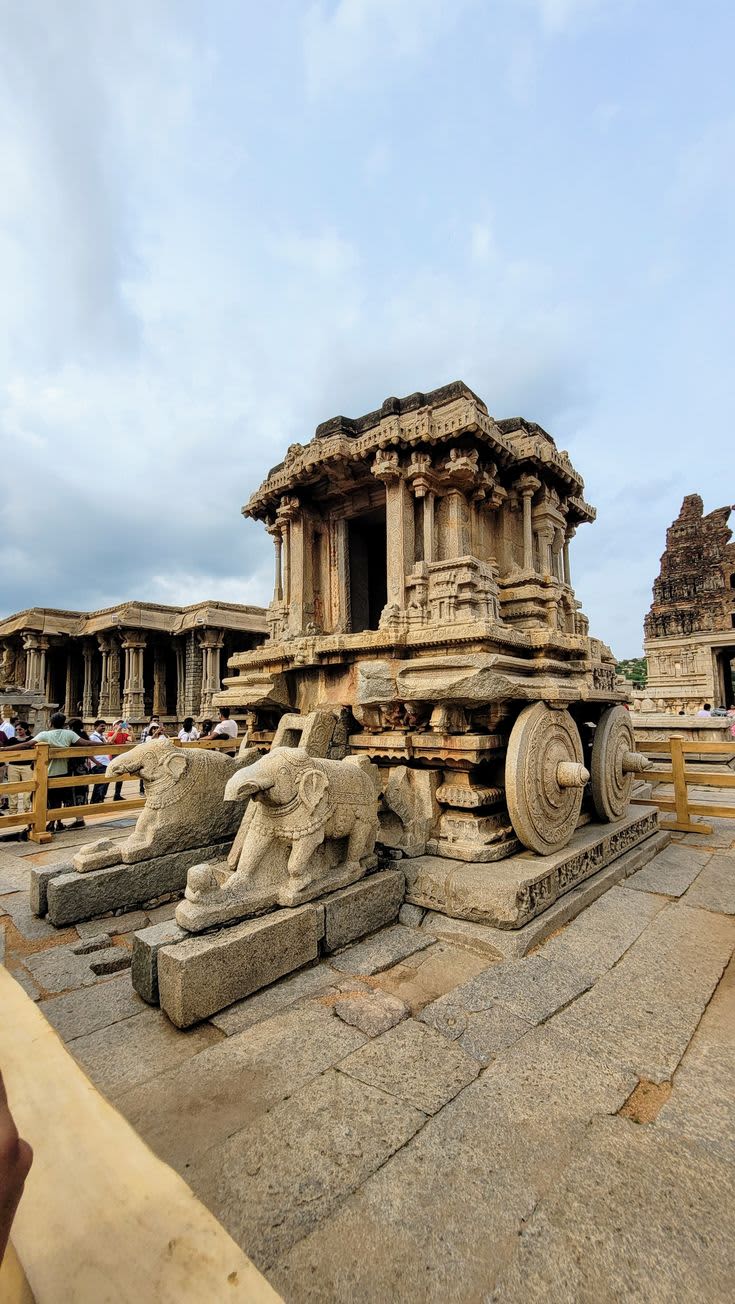
Explore the sprawling 4,187-hectare UNESCO World Heritage site of Vijayanagara — the medieval capital of the Vijayanagara Empire (1336–1565 CE), once the world's second-largest city. Key monuments include the Virupaksha Temple (still-active living temple), Vittala Temple (stone chariot and musical pillars), Royal Enclosure (Lotus Mahal, elephant stables), and the Queen's Bath.
 Cultural / AdventureView full guide
10–15 minutes (crossing)
Coracle Ride
Cross the Tungabhadra River in a coracle — a circular traditional wicker-and-pitch boat piloted with a single oar — between the temple side and Hippie Island (Virupapur Gaddi). The crossing offers views of riverside ruins, boulders, banana plantations, and the Hanuman Temple perched on a rocky outcrop.
 Adventure / SightseeingView full guide
Full day
Cycling
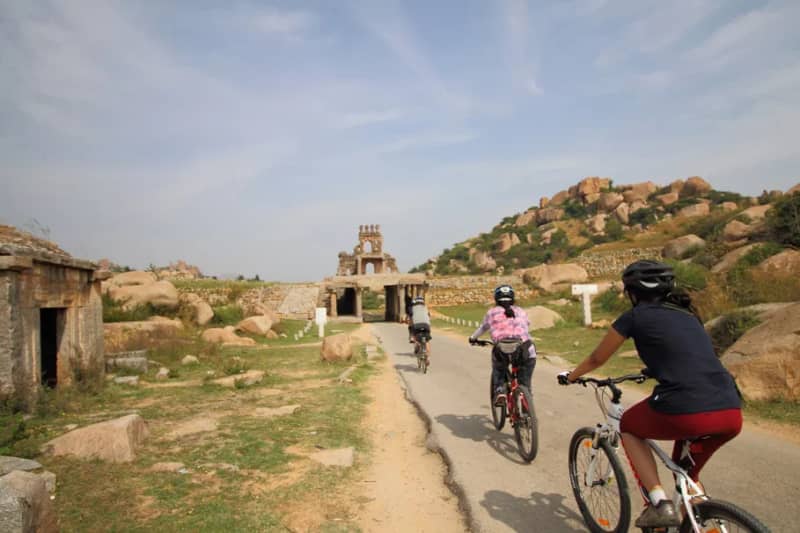
Cycle across Hampi's vast ruins — the most popular and enjoyable way to cover the spread-out heritage zone. Cycle from the Virupaksha Temple area through the Kamalapur road, past the Royal Enclosure, underground Shiva Temple, Lotus Mahal, elephant stables, and on to the Vittala Temple complex.
Best Time to Visit and Weather Info
Best time: October to February
Monsoon (June–September) is lush but heat and some flooding. Summer (March–May) gets very hot among the boulders.
Winter
Best Time ⭐Oct – Feb
15°C – 32°C
The best time to explore the vast boulder-strewn Vijayanagara empire ruins. Pleasant mornings and evenings. The Virupaksha Temple festival (November) is spectacular.
- Rent a bicycle or moped to cover the vast 26 sq km site
- Sunrise from Matanga Hill is the most popular and rewarding viewpoint
Monsoon
Avoid 🔴Jun – Sep
22°C – 35°C
Hot, humid, and occasional flooding of low-lying areas. The coracle ferry is suspended when the river runs high.
- The Tungabhadra dam release sometimes floods access routes
- The ruins are still accessible but conditions are tough
How to Reach
✈️By Air
Airport: Hubli Airport (160 km) or Bengaluru Kempegowda Airport (350 km) (160 km from Hubli; 350 km from Bengaluru)
Duration: ~4 hrs from Hubli; ~7 hrs from Bengaluru
Fly to Hubli then taxi to Hospet (130 km). Alternatively, overnight bus from Bengaluru is common.
Taxi: ₹3,500 – ₹5,500 (Hubli to Hampi)
Airlines: IndiGo, Air India, SpiceJet
🚂By Train
Station: Hospet Junction (13 km from Hampi)
Trains from Bengaluru, Hyderabad, and Hubli to Hospet. Auto-rickshaws from Hospet to Hampi.
- Hampi Express — Bengaluru (Yasvanthpur) (~8 hrs to Hospet)
- Amaravathi Express — Hyderabad (~10 hrs to Hospet)
🚌By Road
KSRTC buses from Bengaluru, Hubli, and Hyderabad. Overnight buses from Bengaluru are the most popular option.
- Bengaluru: 350 km, 7–8 hrs via NH-67 via Chitradurga
- Hubli: 160 km, 3.5 hrs via NH-67
- Hyderabad: 400 km, 7 hrs via NH-44
Itineraries
Local Food
Hampi has a vibrant traveller café culture on both sides of the Tungabhadra — particularly on Virupapur Gaddi (the island), which has a Goa-like laid-back vibe.
Bisi Bele Bath
Karnataka's beloved one-pot dish — spiced rice, lentils, and vegetables cooked with ghee and bisi bele bath powder.
Where: Any Karnataka restaurant in Hampi or Hospet
₹80 – ₹150
Jowar Rotti with Enne Badane
Thick sorghum flatbread with brinjal curry — a Deccan Plateau rural staple perfect in the Hampi landscape.
Where: Local dhabas in Hampi bazaar
₹60 – ₹100
Mango Lassi
Thick Alphonso mango lassi — popular at the island cafés during summer.
Where: Island cafés on Virupapur Gaddi
₹60 – ₹120
Banana Pancakes & Israeli Salad
Virupapur Gaddi (hippie island) has a strong backpacker café culture with global food.
Where: Cafés on the island across the river
₹100 – ₹200
Masala Dosa
Classic South Indian breakfast — crispy rice crepe with spiced potato filling and coconut chutney.
Where: Any restaurant in Hampi market
₹60 – ₹100
Fresh Coconut & Pineapple
Fresh tropical fruits sold by vendors near the Virupaksha Temple — perfect morning refreshment.
Where: Vendors along Hampi Bazaar street
₹20 – ₹60
The island (Virupapur Gaddi) across the Tungabhadra is Hampi's backpacker paradise — bamboo guest houses and cafés with a Goa-in-the-ruins vibe. Cross by coracle boat (₹20–₹50).
FAQs
- Hampi is a UNESCO World Heritage Site — the ruins of Vijayanagara, the greatest medieval Hindu empire. It's famous for the Virupaksha Temple, Vittala Temple (stone chariot and musical pillars), Hazara Rama Temple, the Queen's Bath, and its extraordinary boulder-strewn landscape.
Best Places Similar
Badami
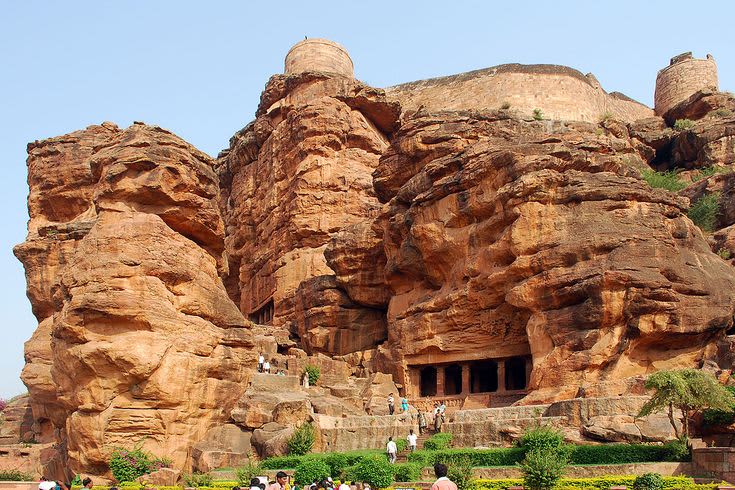
Badami, the ancient capital of the early Chalukya dynasty in Karnataka, is a historically rich town known above all for its four magnificent rock-cut cave temples carved into the face of a red sandstone cliff overlooking the scenic Agastya Lake in the 6th and 7th centuries CE. The caves contain exceptional sculptures of Shiva as Nataraja with 18 arms, various Vishnu avatars including the colossal reclining Vishnu in Cave 3, and Jain tirthankaras that represent some of the finest examples of early Deccan sculpture. The fortified hilltop above the caves, the temples on the lake's southern shore, and the nearby Pattadakal and Aihole make Badami the hub of an extraordinary ancient Chalukyan heritage trail.
Pattadakal
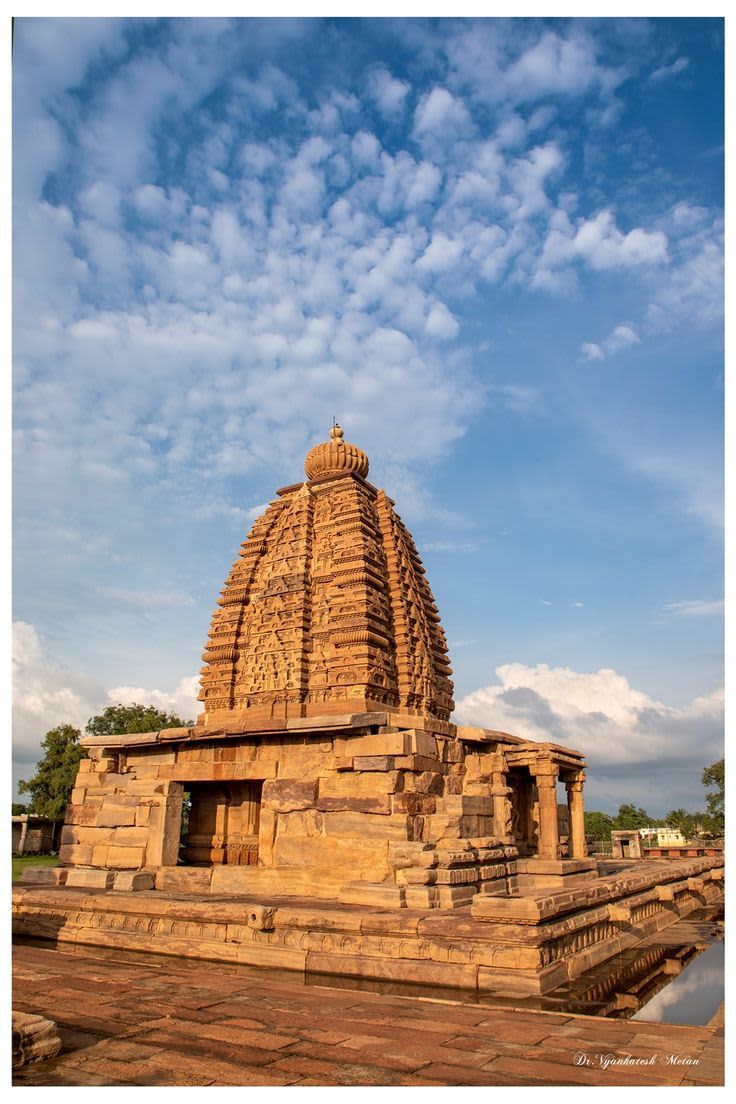
Pattadakal, a UNESCO World Heritage Site on the banks of the Malaprabha River in Karnataka, is a remarkable gallery of 8th-century Chalukyan temples that uniquely showcases the evolution of two distinct South Indian temple architectural styles — the nagara (northern) and dravidian (southern) — side by side. The Virupaksha Temple, built by Queen Lokamahadevi to commemorate the Chalukyan victory over the Pallavas, is the most impressive of the complex's ten temples and served as the model for the famous Kailasanatha Temple at Ellora. Visiting Pattadakal as part of a Chalukyan heritage trail with Badami and Aihole is one of the most richly rewarding historical journeys in all of South India.
Bijapur
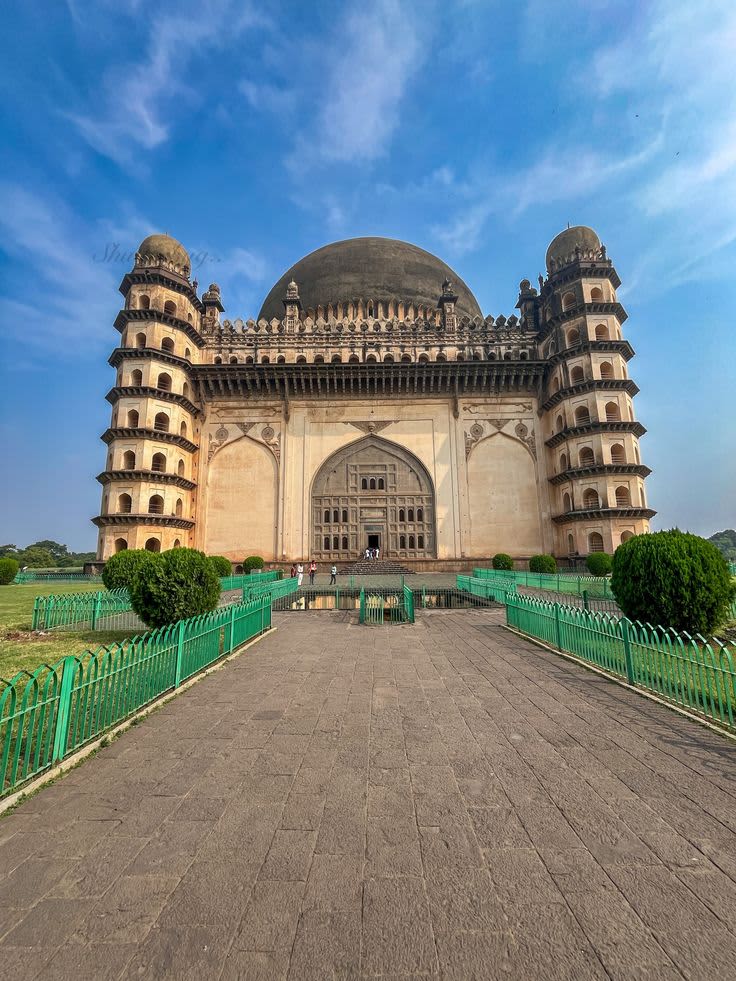
Bijapur, now officially renamed Vijayapura, in Karnataka is home to some of the finest examples of Deccan Sultanate architecture in India, most magnificently the Gol Gumbaz — the mausoleum of Sultan Muhammad Adil Shah, crowned by the world's second-largest dome after St. Peter's Basilica in Rome, famous for its extraordinary Whispering Gallery where even the softest sound bounces around the dome audibly. The city's wealth of Islamic heritage — including the Ibrahim Rauza (considered more beautiful than the Taj Mahal by some), the Jama Masjid, and the Malik-e-Maidan cannon — makes Bijapur one of the most architecturally significant and underappreciated cities in India.
Nearby destinations
Pattadakal
97 km · Pattadakal, a UNESCO World Heritage Site on the banks of the Malaprabha River in Karnataka, is a remarkable gallery of 8th-century Chalukyan temples that uniquely showcases the evolution of two distinct South Indian temple architectural styles — the nagara (northern) and dravidian (southern) — side by side. The Virupaksha Temple, built by Queen Lokamahadevi to commemorate the Chalukyan victory over the Pallavas, is the most impressive of the complex's ten temples and served as the model for the famous Kailasanatha Temple at Ellora. Visiting Pattadakal as part of a Chalukyan heritage trail with Badami and Aihole is one of the most richly rewarding historical journeys in all of South India.
Badami
106 km · Badami, the ancient capital of the early Chalukya dynasty in Karnataka, is a historically rich town known above all for its four magnificent rock-cut cave temples carved into the face of a red sandstone cliff overlooking the scenic Agastya Lake in the 6th and 7th centuries CE. The caves contain exceptional sculptures of Shiva as Nataraja with 18 arms, various Vishnu avatars including the colossal reclining Vishnu in Cave 3, and Jain tirthankaras that represent some of the finest examples of early Deccan sculpture. The fortified hilltop above the caves, the temples on the lake's southern shore, and the nearby Pattadakal and Aihole make Badami the hub of an extraordinary ancient Chalukyan heritage trail.
Bijapur
185 km · Bijapur, now officially renamed Vijayapura, in Karnataka is home to some of the finest examples of Deccan Sultanate architecture in India, most magnificently the Gol Gumbaz — the mausoleum of Sultan Muhammad Adil Shah, crowned by the world's second-largest dome after St. Peter's Basilica in Rome, famous for its extraordinary Whispering Gallery where even the softest sound bounces around the dome audibly. The city's wealth of Islamic heritage — including the Ibrahim Rauza (considered more beautiful than the Taj Mahal by some), the Jama Masjid, and the Malik-e-Maidan cannon — makes Bijapur one of the most architecturally significant and underappreciated cities in India.