Best places to visit in Bijapur
Best places to visit in Bijapur
Bijapur, now officially renamed Vijayapura, in Karnataka is home to some of the finest examples of Deccan Sultanate architecture in India, most magnificently the Gol Gumbaz — the mausoleum of Sultan Muhammad Adil Shah, crowned by the world's second-largest dome after St. Peter's Basilica in Rome, famous for its extraordinary Whispering Gallery where even the softest sound bounces around the dome audibly. The city's wealth of Islamic heritage — including the Ibrahim Rauza (considered more beautiful than the Taj Mahal by some), the Jama Masjid, and the Malik-e-Maidan cannon — makes Bijapur one of the most architecturally significant and underappreciated cities in India.
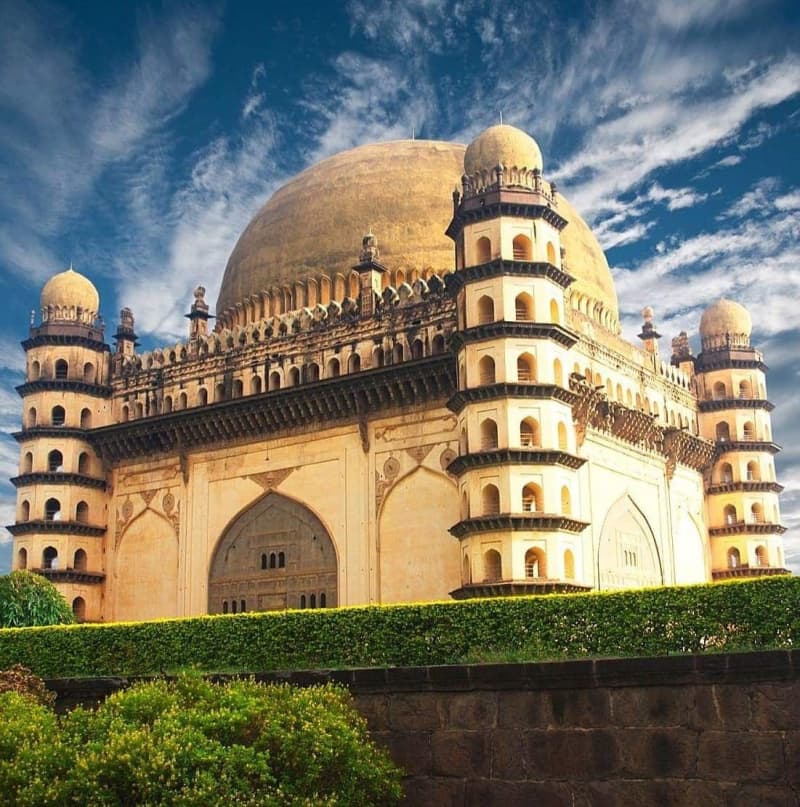
Gol Gumbaz
→Gol Gumbaz is one of India's greatest architectural wonders — the mausoleum of Adil Shah II, completed in 1656, housing the world's second-largest dome after St. Peter's Basilica in Rome. Its famous Whispering Gallery amplifies even the softest sound seven times around the interior. A top Bijapur sightseeing landmark and Karnataka heritage destination. Entry fee applies; best visited early morning. The massive 44-metre dome dominates Bijapur's skyline and is visible from across the city.

Ibrahim Rauza
→Ibrahim Rauza is Bijapur's most elegant monument — a 17th-century Adil Shahi mausoleum complex of graceful proportions, intricate stone lacework, and serene garden setting, often called the Taj Mahal of the Deccan. Said to have inspired the Taj Mahal's design. A top Bijapur sightseeing and photography destination. Entry fee applies; more aesthetically refined than Gol Gumbaz. Best photographed at sunrise when soft morning light falls on the delicate stone carvings.

Bijapur Fort (Citadel)
→Bijapur Fort is one of the Deccan's most formidable medieval fortifications — a 16th-century Adil Shahi fortress with a 10 km perimeter wall, multiple imposing gateways, and the enormous Malik-e-Maidan cannon within its grounds. Partially ruined but extraordinary in scale, the battlements offer fine views of Bijapur. A top Bijapur sightseeing destination for history enthusiasts. Free to walk around; exploring with a local guide reveals many hidden corners not visible from the main paths.
Jama Masjid
→Jama Masjid Bijapur is one of the finest mosques in South India — a 17th-century Adil Shahi mosque of elegant proportions, with a vast prayer hall covered by 33 domes and an open courtyard accommodating thousands of worshippers. The painted calligraphy interior and slender minarets are remarkable. An active place of worship and top Bijapur Islamic heritage sightseeing landmark. Free entry; modest dress required. Serene and beautifully lit in the golden morning light.
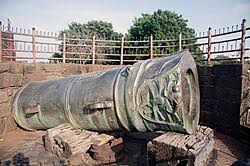
Malik-e-Maidan
→Malik-e-Maidan (Lord of the Plains) is one of the world's largest medieval bronze cannons — a massive 55-tonne piece cast in 1549, mounted on a lion-shaped base at Bijapur Fort's western bastion. The craftsmanship and sheer scale make it one of India's most remarkable historical artefacts. A top Bijapur sightseeing and history destination. Free entry; it takes four people with outstretched arms to span the cannon's barrel. An unmissable highlight of any Bijapur Fort visit.
