Things to do in Bijapur
Things to do in Bijapur
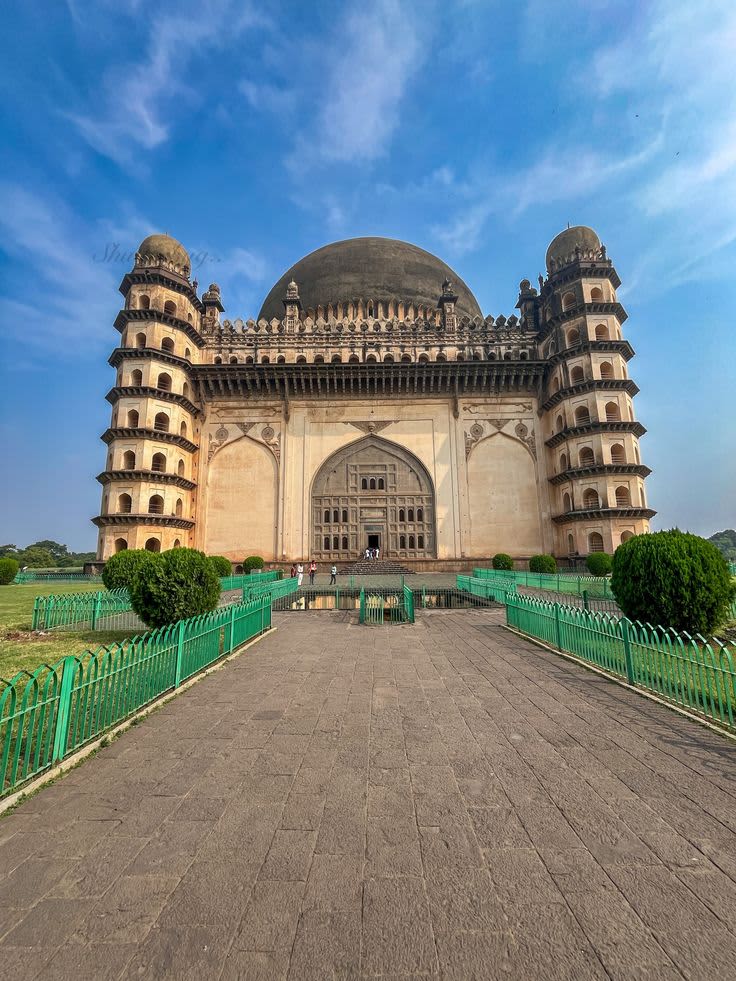
Bijapur, now officially renamed Vijayapura, in Karnataka is home to some of the finest examples of Deccan Sultanate architecture in India, most magnificently the Gol Gumbaz — the mausoleum of Sultan Muhammad Adil Shah, crowned by the world's second-largest dome after St. Peter's Basilica in Rome, famous for its extraordinary Whispering Gallery where even the softest sound bounces around the dome audibly. The city's wealth of Islamic heritage — including the Ibrahim Rauza (considered more beautiful than the Taj Mahal by some), the Jama Masjid, and the Malik-e-Maidan cannon — makes Bijapur one of the most architecturally significant and underappreciated cities in India.
- No photoHeritageView full guide
1.5–2 hours
Gol Gumbaz Visit
The Gol Gumbaz — the mausoleum of Adil Shah II — sits in your memory long after you've left Bijapur. Its central dome, measuring 44 metres in diameter, was the largest in the world for centuries after its completion in 1656 and remains the second largest unsupported dome on earth to this day. But the real star is the 'Whispering Gallery' running inside the dome's base: even the faintest whisper travels across the entire 37.9-metre diameter, a piece of 17th-century acoustic engineering that still astonishes visitors.
- No photoHeritageView full guide
1–1.5 hours
Ibrahim Rauza Exploration
Often called the 'Taj Mahal of the Deccan', the Ibrahim Rauza is in many ways more intimate and arguably more beautiful than its more famous cousin. Built in 1627 as the tomb of Ibrahim Adil Shah II, this Deccan Sultanate masterpiece features exquisitely pierced stone windows, richly carved minarets, and a perfect symmetry between its mosque and tomb that reportedly inspired the architects of the Taj. The garden setting and surrounding silence make it profoundly atmospheric.
- No photoHeritageView full guide
1.5–2 hours
Malik-e-Maidan Cannon & City Walls Walk
Perched on a bastion of Bijapur's ancient city walls sits Malik-e-Maidan — the 'Master of the Battlefield' — the largest medieval cannon in the world, cast in 1549 and weighing a staggering 55 tonnes. Walking along the old city walls gives you a sense of the sheer scale of the Adil Shahi kingdom's ambition. The surrounding area is dotted with mosques, tombs, and gateways that make for a wonderfully unhurried heritage wander.
- No photoHeritageView full guide
2–2.5 hours
Jod Gumbaz & Bara Kaman Discovery Walk
Bijapur is littered with Adil Shahi monuments that most visitors rush past en route to Gol Gumbaz — and they're missing a lot. The Jod Gumbaz (twin domed tombs), the haunting ruins of Bara Kaman (planned as the world's largest mausoleum but left unfinished after the sultan's death), and the Asar Mahal with its remarkable frescoes together form a fascinating secondary circuit through the old city that reveals the empire's extraordinary creative ambition.
- No photoFood & CultureView full guide
2–3 hours
Bijapur Heritage Cuisine Trail
Bijapur (Vijayapura) is the birthplace of some of Karnataka's most distinctive culinary traditions — the Adil Shahi era brought Persian and Central Asian flavours that fused over centuries with local Deccan ingredients. Don't leave without trying Bijapur's famous Ennegayi (stuffed brinjal curry), the region's distinctive Jolada Rotti (sorghum flatbread), and the extraordinary Shahi Mutton dishes served in the old city's street restaurants near the Gol Gumbaz. Food here is genuinely unlike anything else in Karnataka.