Rameswaram, an island town in Tamil Nadu connected to the mainland by the iconic Pamban Bridge, is one of the holiest sites in Hinduism and one of the four sacred dhams (Char Dham) that every devout H...
Rameswaram
Sacred Island of Lord Rama
Tamil Nadu, India
4.8
Ramanathaswamy TempleChar DhamPamban Bridge
spiritualbeach
Duration: 1–2 Days
Budget/day: ₹1,000 – ₹3,000
Best season: Oct – Apr
Altitude: 10 m
Nearest airport: Madurai Airport (170 km)
Nearest railway: Rameswaram Railway Station (1 km)
Best places to visit in Rameswaram

Things to do in Rameswaram
- No photoSpiritual & HeritageView full guide
2–3 hours
Ramanathaswamy Temple corridor walk
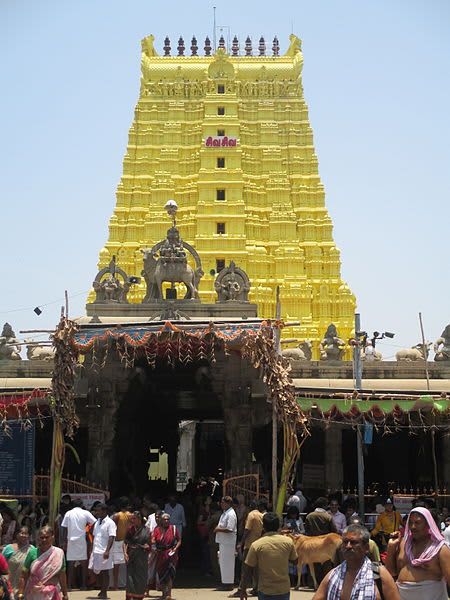
The Ramanathaswamy Temple in Rameswaram has the longest temple corridor in the world — 1,219 metres of colonnaded passageways lined with massive sculpted pillars that extend into the distance in perfect geometrical precision. Walking the length of this corridor, hearing your footsteps echo off the ancient stone, is one of the most meditative and architecturally astonishing experiences in all of India. The temple also has 22 sacred wells, each with water of a different taste.
- No photoScenic & HeritageView full guide
3–4 hours (including drive on the beach road)
Dhanushkodi ghost town and land's end
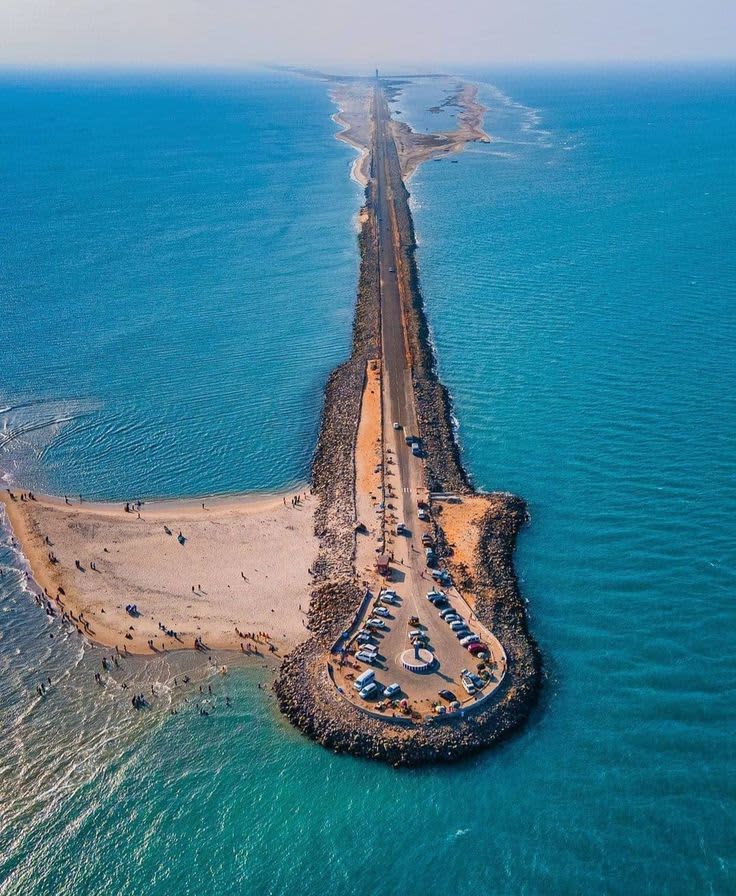
At the very tip of the Rameswaram island — 18 kilometres beyond the main town — lies Dhanushkodi, a town destroyed by a catastrophic cyclone in 1964 and never rebuilt. The ruins of the station, church, and railway tracks emerge from the sand dunes like a half-buried memory, and beyond them the land narrows to a thin sandspit where the Bay of Bengal and the Indian Ocean meet in two different shades of blue. It is otherworldly and deeply moving.
- No photoScenicView full guide
30–45 minutes (train crossing); or view from road bridge
Pamban Bridge and island crossing
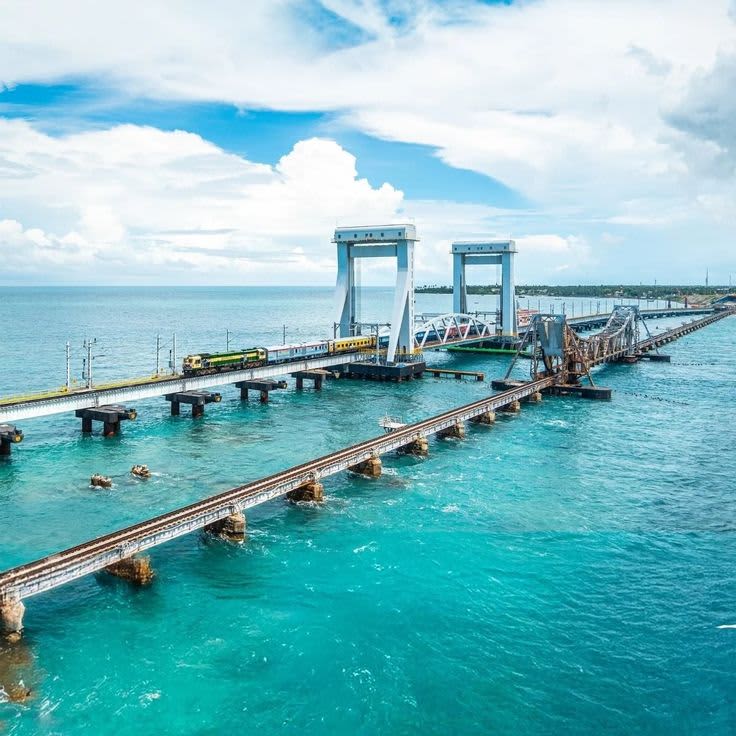
The Pamban Bridge connecting Rameswaram island to mainland India is a remarkable piece of early 20th-century engineering — a 2-kilometre rail bridge crossing the Palk Strait at sea level, with a central bascule section that lifts to allow ships to pass. Crossing the bridge by train is one of the most scenic railway journeys in South India, with the sea visible on both sides and the distant outline of Sri Lanka on clear days.
Best Time to Visit and Weather Info
Best time: October to April
Avoid cyclone-prone months (Nov–Dec) if possible. Maha Shivaratri sees huge crowds.
Winter
Best Time ⭐Oct – Feb
20°C – 30°C
Best weather for temple visits and beach walks. Calm seas allow boat trips to Dhanushkodi.
- Visit Ramanathaswamy Temple at 5 AM for first darshan
- Take holy dip at Agni Teertham beach at sunrise
Summer
Good 🟡Mar – Jun
28°C – 38°C
Hot but manageable early morning. Temples less crowded.
- Start temple visits by 5 AM
- Carry cotton clothing
Monsoon/Cyclone
Avoid 🔴Jul – Sep
25°C – 33°C
Rough seas affect boat rides. Cyclone risk in Nov–Dec. Flooding possible near coast.
- Monitor weather alerts
- Avoid Dhanushkodi boat rides in rough sea
How to Reach
✈️By Air
Airport: Madurai Airport (170 km)
Duration: ~3.5 hrs
Hire a cab or take a bus from Madurai. No direct flights to Rameswaram.
Taxi: ₹2,500 – ₹3,500
Airlines: IndiGo, Air India
🚂By Train
Station: Rameswaram Railway Station
The train journey across Pamban Bridge is iconic. Direct trains from Chennai and Madurai.
- Rameswaram Express — Chennai (13 hrs)
- Sethu Express — Madurai (3.5 hrs)
🚌By Road
TNSTC buses connect Rameswaram to Madurai and Chennai. The road crosses Pamban Bridge — a scenic drive.
- Madurai: 173 km, 3.5 hrs via NH-87
- Chennai: 570 km, 10 hrs via NH-32
- Kanyakumari: 300 km, 6 hrs via NH-87
Local Food
Rameswaram offers coastal Tamil Nadu cuisine with fresh seafood (outside temple areas) and sattvic vegetarian meals near the temple.
Fish Curry
Fresh catch cooked in spicy tamarind-based coastal curry.
Where: Restaurants near Rameswaram beach
₹120 – ₹200
Idli & Sambar
Classic Tamil breakfast — soft steamed idlis with tangy sambar.
Where: Dhabas near the railway station
₹40 – ₹70
Kozhukattai
Steamed rice dumplings with coconut filling — a prasadam-style snack.
Where: Temple street stalls
₹30 – ₹60
Prawn Masala
Freshly caught prawns cooked in fiery South Indian spices.
Where: Seafood shacks near Dhanushkodi
₹150 – ₹250
The area around the Ramanathaswamy Temple is strictly vegetarian. Seafood is available in other parts of the island.
FAQs
- Rameswaram is one of the Char Dham pilgrimage sites, home to the Ramanathaswamy Temple, Agni Teertham, and Dhanushkodi — the ghost town at India's tip. It is also linked to the Ramayana.
Best Places Similar
Madurai
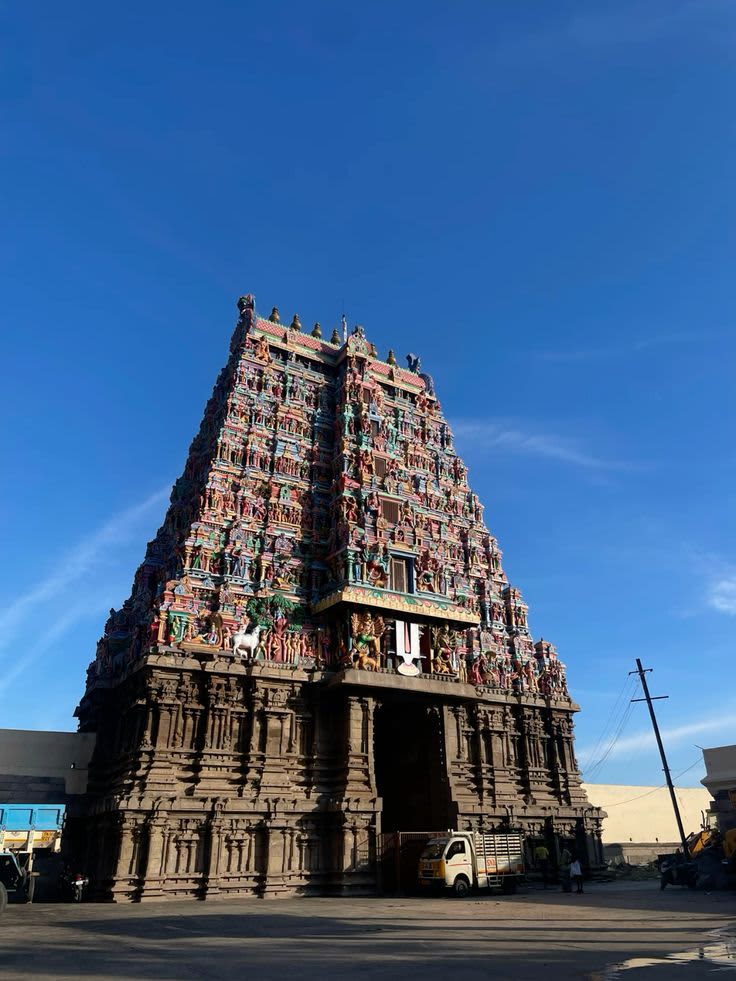
Madurai, one of the oldest continuously inhabited cities in the world and a major pilgrimage hub in Tamil Nadu, is centered on the awe-inspiring Meenakshi Amman Temple — a Dravidian architectural masterpiece with 14 elaborately sculpted gopurams that tower over the city's skyline. Dedicated to the goddess Meenakshi and her consort Sundareswarar (Shiva), the temple complex with its celebrated Hall of Thousand Pillars and sacred Golden Lotus Tank draws millions of devotees and travelers each year. Madurai's vibrant jasmine flower markets, street food culture, and the evening temple ceremony make it one of South India's most atmospheric and spiritually alive cities.
Kanchipuram
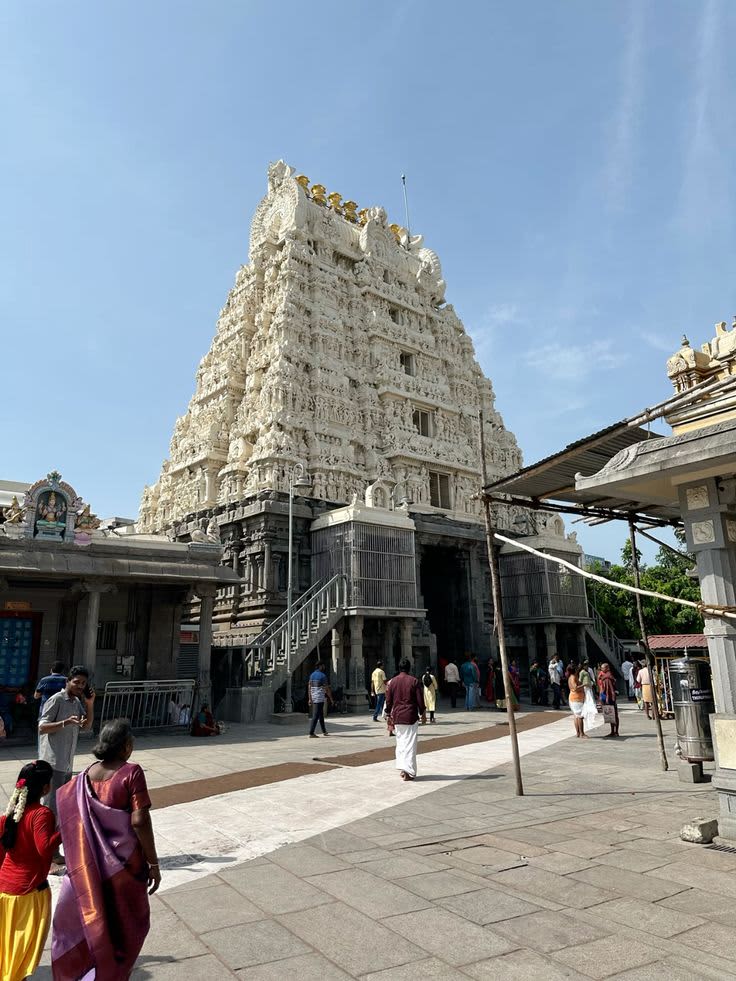
Kanchipuram, one of India's seven sacred pilgrimage cities and the Temple City of Tamil Nadu, is home to over 1,000 temples and is equally renowned worldwide as the Silk City for its exquisite handwoven Kanchipuram silk sarees, prized as among the finest in the world. The magnificent Ekambaranatha Temple, Kamakshi Amman Temple, and the Kailasanathar Temple — one of the oldest temples in South India — are masterpieces of Pallava and Chola Dravidian architecture. Kanchipuram has been a seat of Hindu philosophical learning for centuries and remains a living embodiment of Tamil cultural and spiritual heritage.

Tirupati
Tirupati, in Andhra Pradesh, is home to the Tirumala Venkateswara Temple atop the Tirumala Hills — the most visited place of worship on earth, receiving an average of 60,000 to 100,000 pilgrims daily. Dedicated to Lord Venkateswara, a form of Vishnu, the temple is not only the world's richest religious institution but also one of the most spiritually charged destinations in Hinduism. The famous 'Tirupati laddu' prasad, the tradition of tonsuring one's head as an offering, and the breathtaking view of the gilded gopuram rising above the Nallamala Hills make a Tirupati pilgrimage an unforgettable experience.
Nearby destinations
Madurai
149 km · Madurai, one of the oldest continuously inhabited cities in the world and a major pilgrimage hub in Tamil Nadu, is centered on the awe-inspiring Meenakshi Amman Temple — a Dravidian architectural masterpiece with 14 elaborately sculpted gopurams that tower over the city's skyline. Dedicated to the goddess Meenakshi and her consort Sundareswarar (Shiva), the temple complex with its celebrated Hall of Thousand Pillars and sacred Golden Lotus Tank draws millions of devotees and travelers each year. Madurai's vibrant jasmine flower markets, street food culture, and the evening temple ceremony make it one of South India's most atmospheric and spiritually alive cities.
Kodaikanal
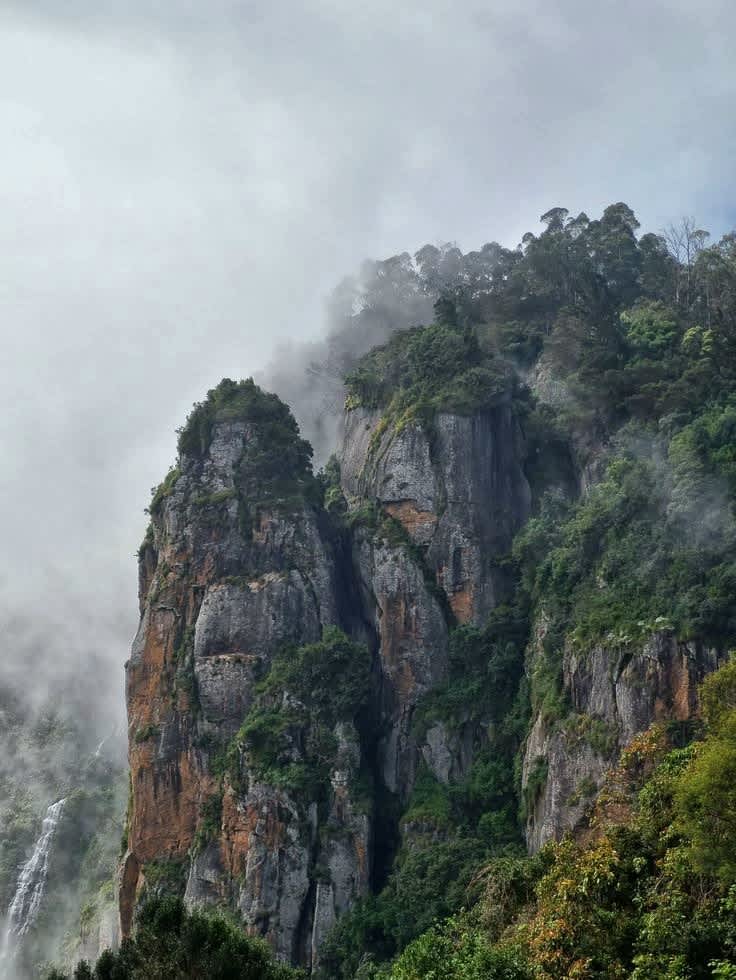
226 km · Kodaikanal, the "Princess of Hill Stations" in Tamil Nadu's Palani Hills, sits at 2,133 meters and enchants visitors with its star-shaped Kodai Lake, shola forests, dramatic cliff-top viewpoints, and the rare Kurinji flowers that bloom in purple waves across the hillsides every 12 years. The Pillar Rocks — three vertical rock pillars rising 122 meters above a wooded valley — and the Bear Shola Falls are among the natural highlights, while the lake promenade lined with rental boats and picnicking families captures the town's leisurely atmosphere. Kodaikanal's cool, misty climate, flower nurseries, and home-made chocolates and eucalyptus oil make it a uniquely charming South Indian hill retreat.
Sabarimala
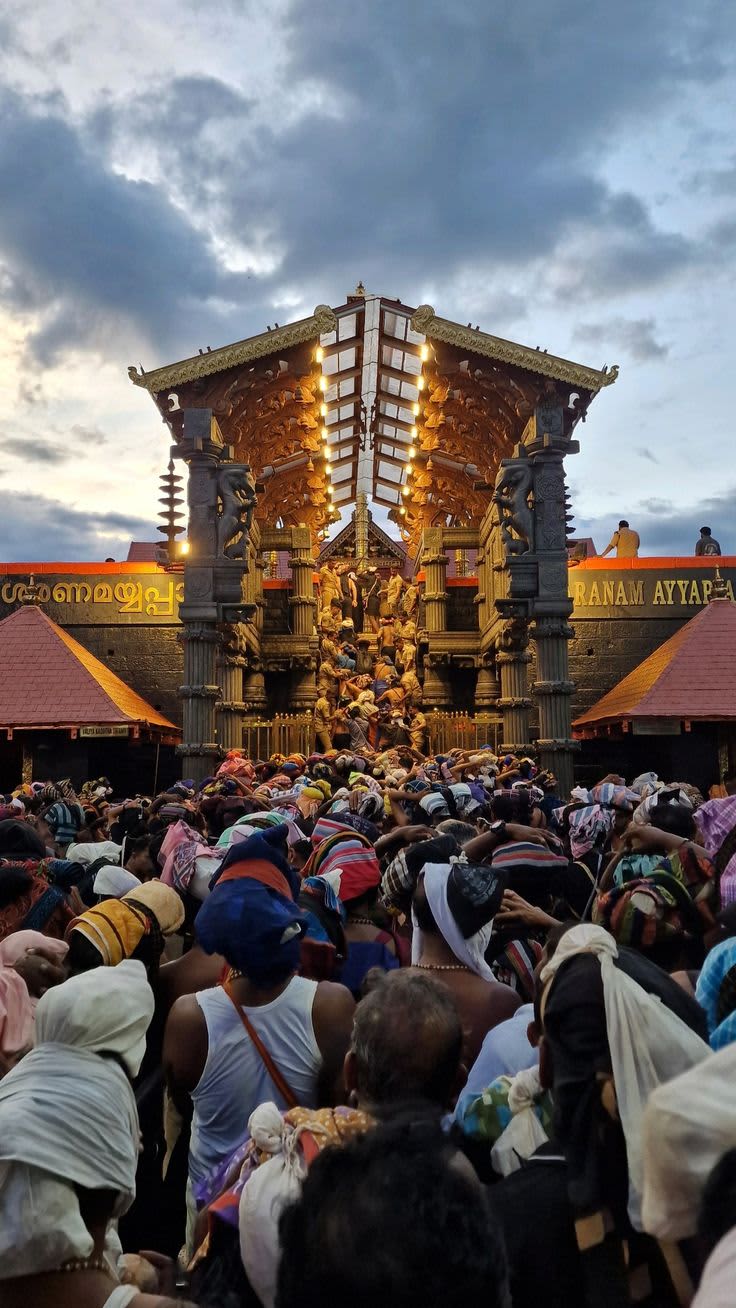
245 km · Sabarimala, nestled in the forested hills of the Western Ghats in Kerala, is one of the largest Hindu pilgrimage sites in the world and the abode of Lord Ayyappa — a deity embodying dharma, celibacy, and universal brotherhood. The annual pilgrimage season from November to January sees millions of devotees, clad in traditional black attire, undertaking the challenging 5-kilometer trek through dense jungle to reach the hilltop shrine. The journey to Sabarimala is as much a physical and spiritual ordeal as it is an act of devotion, passing through the sacred 18 golden steps before reaching the temple.