Things to do in Rameswaram
Things to do in Rameswaram
Rameswaram, an island town in Tamil Nadu connected to the mainland by the iconic Pamban Bridge, is one of the holiest sites in Hinduism and one of the four sacred dhams (Char Dham) that every devout Hindu aspires to visit. The Ramanathaswamy Temple, famous for its 1,200-meter-long ornate corridors — the longest in any Hindu temple in the world — and its 22 sacred theerthams (water tanks), is the spiritual heart of the island. The pristine beaches, the mythological connection to the Ramayana, and the dramatic vistas of the Pamban Railway Bridge make Rameswaram a unique confluence of faith, history, and natural beauty.
- No photoSpiritual & HeritageView full guide
2–3 hours
Ramanathaswamy Temple corridor walk
The Ramanathaswamy Temple in Rameswaram has the longest temple corridor in the world — 1,219 metres of colonnaded passageways lined with massive sculpted pillars that extend into the distance in perfect geometrical precision. Walking the length of this corridor, hearing your footsteps echo off the ancient stone, is one of the most meditative and architecturally astonishing experiences in all of India. The temple also has 22 sacred wells, each with water of a different taste.
- No photoScenic & HeritageView full guide
3–4 hours (including drive on the beach road)
Dhanushkodi ghost town and land's end
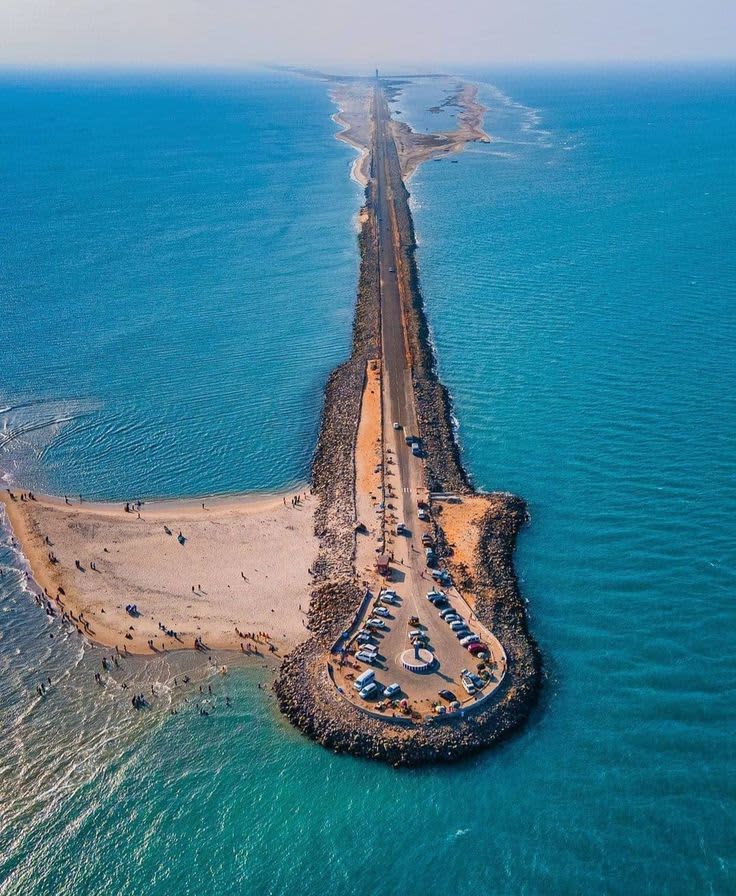
At the very tip of the Rameswaram island — 18 kilometres beyond the main town — lies Dhanushkodi, a town destroyed by a catastrophic cyclone in 1964 and never rebuilt. The ruins of the station, church, and railway tracks emerge from the sand dunes like a half-buried memory, and beyond them the land narrows to a thin sandspit where the Bay of Bengal and the Indian Ocean meet in two different shades of blue. It is otherworldly and deeply moving.
- No photoScenicView full guide
30–45 minutes (train crossing); or view from road bridge
Pamban Bridge and island crossing
The Pamban Bridge connecting Rameswaram island to mainland India is a remarkable piece of early 20th-century engineering — a 2-kilometre rail bridge crossing the Palk Strait at sea level, with a central bascule section that lifts to allow ships to pass. Crossing the bridge by train is one of the most scenic railway journeys in South India, with the sea visible on both sides and the distant outline of Sri Lanka on clear days.
- No photoSpiritual & ScenicView full guide
1 hour
Kothandaramaswamy Temple and ocean views
Located at the tip of the island, 12 kilometres from the main town, Kothandaramaswamy Temple is the only structure in Dhanushkodi that survived the 1964 cyclone — a fact that locals consider miraculous. The ancient temple sits literally at the edge of the sea, with waves sometimes washing over the courtyard during high tide, and the legend that this is the spot where Vibhishana (Ravana's brother) surrendered to Rama gives it a particular mythological weight.
- No photoSpiritualView full guide
1 hour
Agni Theertham sunrise bath
The Agni Theertham is a sacred point on the eastern coast of Rameswaram where the waves of the Bay of Bengal crash onto the beach and thousands of pilgrims gather before dawn for the traditional ritual sea bath that marks the beginning of the Rameswaram pilgrimage. The moment when the sun rises over the water while thousands of white-clad pilgrims stand in the surf chanting is one of the most visually and emotionally powerful scenes in Tamil Nadu.