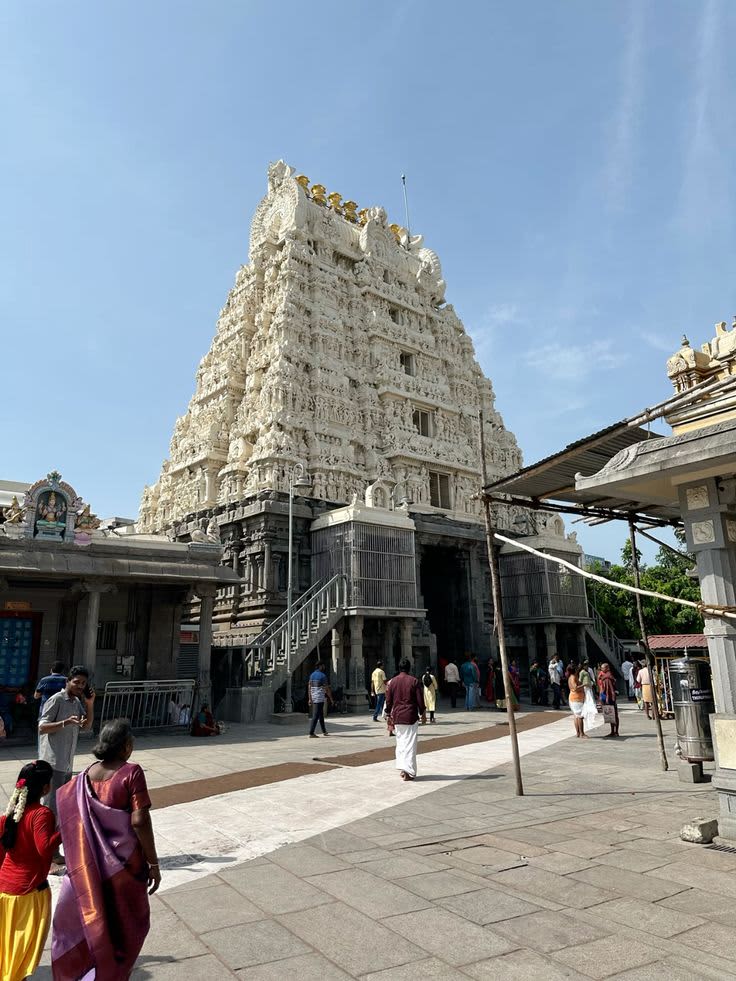
Kanchipuram, one of India's seven sacred pilgrimage cities and the Temple City of Tamil Nadu, is home to over 1,000 temples and is equally renowned worldwide as the Silk City for its exquisite handwov...
Kanchipuram
City of Thousand Temples
Tamil Nadu, India
4.7
Ancient TemplesSilk SareesSpiritual Hub
spiritualheritage
Duration: 1–2 Days
Budget/day: ₹1,000 – ₹2,500
Best season: Oct – Mar
Altitude: 83 m
Nearest airport: Chennai International Airport (75 km)
Nearest railway: Kanchipuram Railway Station (2 km)
Best places to visit in Kanchipuram


Things to do in Kanchipuram
- No photoHeritage & SpiritualView full guide
1.5–2 hours
Kailasanathar Temple exploration
The 8th-century Kailasanathar Temple is the oldest and most artistically significant temple in Kanchipuram — a masterpiece of Pallava architecture dedicated to Lord Shiva, built by the Pallava king Rajasimha. The sandstone temple is remarkably intimate compared to later Dravidian colossi, with exquisitely carved panels of Shiva in various manifestations, a circumambulation tunnel that you must crouch to pass through, and an atmosphere of profound antiquity.
- No photoSpiritual & HeritageView full guide
2 hours
Ekambareswarar Temple visit
One of the Pancha Bhuta Stalas representing the element earth, Ekambareswarar Temple is Kanchipuram's largest temple — a 20-acre complex with a 58-metre main gopuram that is visible from kilometres away. The temple is built around a sacred mango tree said to be 3,500 years old, and the inner sanctum houses a Shivalingam beneath the oldest tree in the country. The sheer scale of the complex, with its 1,000-pillared hall and enormous tanks, is overwhelming.
- No photoCultural & ShoppingView full guide
1–2 hours
Silk saree weaving experience
Kanchipuram silk sarees are India's most celebrated textile tradition — 1,200-year-old weaving techniques using pure mulberry silk and real zari (silver and gold thread) passed through families for generations. Visiting a traditional weaver's workshop and watching the Jacquard handlooms in action — threads interlocking in patterns that take weeks to design and days to weave — is a profound lesson in human craft and patience.
Best Time to Visit and Weather Info
Best time: October to March
North-east monsoon (Oct–Nov) brings moderate rains. Winters are pleasant for temple visits.
Winter
Best Time ⭐Nov – Feb
18°C – 30°C
Ideal for visiting temples and silk weaving centers. Comfortable weather for long walks.
- Visit Kamakshi Amman Temple early morning
- Explore silk saree workshops
Summer
Good 🟡Mar – Jun
28°C – 40°C
Very hot but manageable in early morning. Fewer crowds.
- Start at 6 AM
- Carry water and sunscreen
Monsoon
Good 🟡Jul – Sep, Oct–Nov
24°C – 33°C
Green and lush. Moderate rainfall. Temples uncrowded.
- Carry umbrella
- Good for photography
How to Reach
✈️By Air
Airport: Chennai International Airport (75 km)
Duration: ~1.5 hrs
Hire cab from Chennai airport. CMBT buses also connect to Kanchipuram.
Taxi: ₹1,200 – ₹1,800
Airlines: IndiGo, Air India, SpiceJet
🚂By Train
Station: Kanchipuram Railway Station
Regular trains from Chennai Egmore. Travel time is about 2 hours.
- Kanchipuram Fast Passenger — Chennai Egmore (2 hrs)
🚌By Road
MTC and TNSTC buses run frequently from Chennai Koyambedu bus stand.
- Chennai: 75 km, 1.5 hrs via NH-48
- Mahabalipuram: 60 km, 1.5 hrs via ECR
- Vellore: 90 km, 2 hrs via NH-48
Local Food
Kanchipuram offers traditional Tamil Brahmin cuisine. The famous Kanchipuram Idli is a unique GI-tagged delicacy.
Kanchipuram Idli
Distinct from regular idli — coarser, spiced with pepper, cumin, and ginger, steamed in jackfruit leaves.
Where: Saravana Bhavan and local eateries
₹50 – ₹80
Pongal & Sambar
Soft rice-lentil preparation with ghee, perfect for breakfast.
Where: Local dhabas near temples
₹60 – ₹100
Murukku
Crispy rice flour snack — a local specialty sold across the town.
Where: Sweet shops on temple streets
₹20 – ₹50
Payasam
Sweet milk-based dessert offered as temple prasadam.
Where: Temple canteens
₹30 – ₹60
Kanchipuram is predominantly vegetarian, especially near temple areas. Saravana Bhavan has a branch here.
FAQs
- Kanchipuram is famous as the City of Thousand Temples, the Kanchipuram silk saree, Kamakshi Amman Temple, Ekambareswarar Temple, and its status as one of the seven sacred cities of Hinduism.
Best Places Similar
Madurai
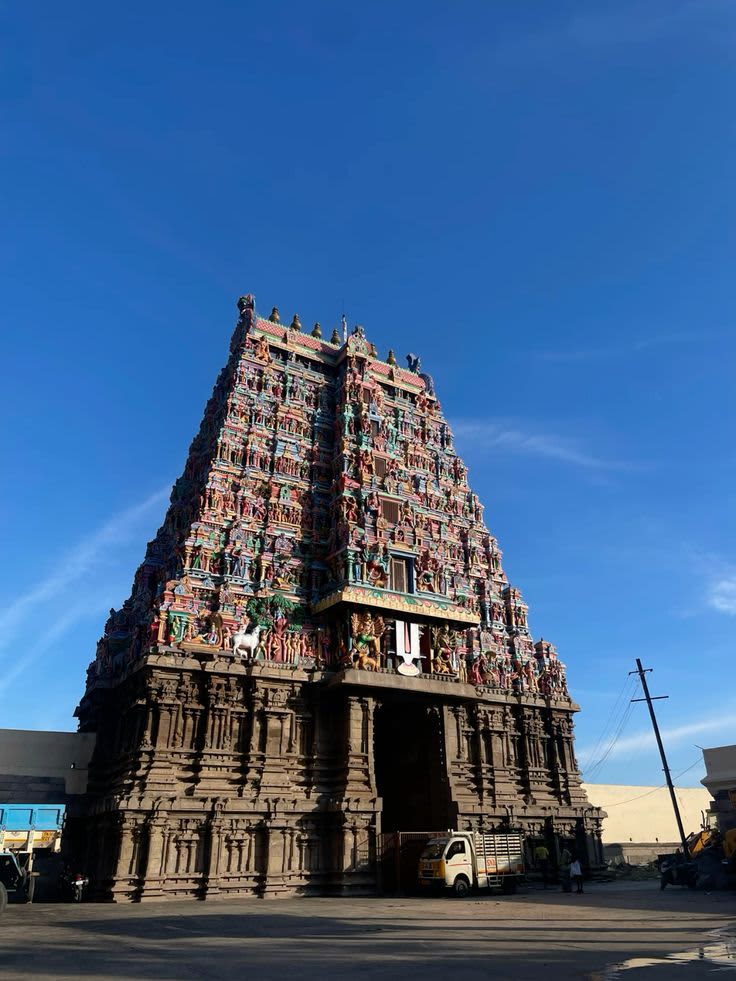
Madurai, one of the oldest continuously inhabited cities in the world and a major pilgrimage hub in Tamil Nadu, is centered on the awe-inspiring Meenakshi Amman Temple — a Dravidian architectural masterpiece with 14 elaborately sculpted gopurams that tower over the city's skyline. Dedicated to the goddess Meenakshi and her consort Sundareswarar (Shiva), the temple complex with its celebrated Hall of Thousand Pillars and sacred Golden Lotus Tank draws millions of devotees and travelers each year. Madurai's vibrant jasmine flower markets, street food culture, and the evening temple ceremony make it one of South India's most atmospheric and spiritually alive cities.

Rameswaram
Rameswaram, an island town in Tamil Nadu connected to the mainland by the iconic Pamban Bridge, is one of the holiest sites in Hinduism and one of the four sacred dhams (Char Dham) that every devout Hindu aspires to visit. The Ramanathaswamy Temple, famous for its 1,200-meter-long ornate corridors — the longest in any Hindu temple in the world — and its 22 sacred theerthams (water tanks), is the spiritual heart of the island. The pristine beaches, the mythological connection to the Ramayana, and the dramatic vistas of the Pamban Railway Bridge make Rameswaram a unique confluence of faith, history, and natural beauty.

Tirupati
Tirupati, in Andhra Pradesh, is home to the Tirumala Venkateswara Temple atop the Tirumala Hills — the most visited place of worship on earth, receiving an average of 60,000 to 100,000 pilgrims daily. Dedicated to Lord Venkateswara, a form of Vishnu, the temple is not only the world's richest religious institution but also one of the most spiritually charged destinations in Hinduism. The famous 'Tirupati laddu' prasad, the tradition of tonsuring one's head as an offering, and the breathtaking view of the gilded gopuram rising above the Nallamala Hills make a Tirupati pilgrimage an unforgettable experience.
Nearby destinations
Tirupati
94 km · Tirupati, in Andhra Pradesh, is home to the Tirumala Venkateswara Temple atop the Tirumala Hills — the most visited place of worship on earth, receiving an average of 60,000 to 100,000 pilgrims daily. Dedicated to Lord Venkateswara, a form of Vishnu, the temple is not only the world's richest religious institution but also one of the most spiritually charged destinations in Hinduism. The famous 'Tirupati laddu' prasad, the tradition of tonsuring one's head as an offering, and the breathtaking view of the gilded gopuram rising above the Nallamala Hills make a Tirupati pilgrimage an unforgettable experience.
Coonoor
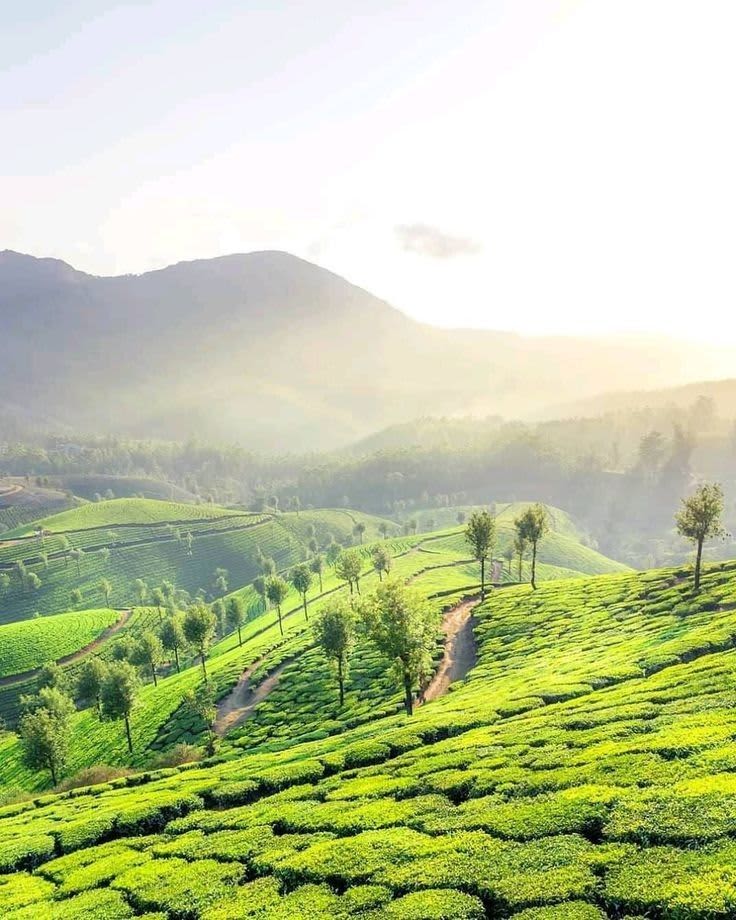
356 km · Coonoor, the second-largest hill station in the Nilgiris after Ooty, is a tranquil retreat in Tamil Nadu known for its rolling tea plantations, colonial-era bungalows, and a refreshingly unhurried pace of life. The iconic Nilgiri Mountain Railway — a UNESCO World Heritage toy train — connects Coonoor to Ooty through breathtaking scenery of tea estates and forests. Sim's Park with its impressive botanical collection, the dramatic Dolphin's Nose viewpoint, and proximity to the organic tea gardens of the Nilgiris make Coonoor an ideal offbeat hill station getaway.

Ooty
363 km · Ooty, officially Udhagamandalam and fondly called the "Queen of Hill Stations," is the crown jewel of Tamil Nadu's Nilgiri Hills, famed for its lush botanical gardens, shimmering Ooty Lake, and the iconic UNESCO-listed Nilgiri Mountain Railway toy train. The cool climate, eucalyptus and pine forests, and terraced tea gardens make Ooty a perennial summer escape and a popular honeymoon destination. The Government Botanical Gardens with over 650 plant species, Doddabetta Peak with panoramic Nilgiri views, and the charming colonial bazaars make Ooty one of South India's most enduring travel classics.