Lonar Lake in Maharashtra is one of only four known hyper-velocity impact craters in basaltic rock on earth, formed approximately 50,000 years ago when a meteor struck the Deccan Plateau — making it o...

Lonar Lake
World's Third Largest Crater Lake
Maharashtra, India
4.5
Meteor CraterUnique EcologyAncient Temples
lake
Duration: 1–2 Days
Budget/day: ₹800 – ₹2,500
Best season: Nov – Feb
Altitude: 453 m
Nearest airport: Dr. Babasaheb Ambedkar International Airport, Aurangabad (140 km)
Nearest railway: Buldhana Railway Station (25 km); Malkapur Junction (85 km)
Best places to visit in Lonar Lake


Things to do in Lonar Lake
- No photoNature / GeologicalView full guide
3–4 hours
Lonar Crater Lake Circumambulation
Lonar Lake sits inside a 50,000-year-old meteorite impact crater — one of only four hypervelocity impact craters in basaltic rock in the world, and the only one in India. Walking the full 7-km circumference of the crater rim through scrub forest while the bright green, sometimes flamingo-pink hypersaline lake shimmers 130 metres below is one of the most unique geological and ecological experiences in India. The contrast between the barren Deccan landscape outside and the extraordinary biodiversity inside the crater is startling.
- No photoHeritage / SpiritualView full guide
2–3 hours
Ancient Temple Exploration Inside the Crater
The interior of the Lonar crater contains a remarkable cluster of medieval temples — including the Kamalja Devi Temple, Daitya Sudan Temple, and Ram Gaya Temple — built between the 6th and 13th centuries and still partially active as places of worship. Walking down into the crater to explore these ancient stone temples surrounded by dense forest, with the alkaline lake lapping metres away, is a profoundly atmospheric experience unlike anything else in Maharashtra tourism.
- No photoWildlife / BirdingView full guide
Half to full day
Flamingo and Migratory Bird Watching
Lonar Lake's alkaline and saline chemistry supports a highly specialised ecosystem that attracts thousands of flamingos and over 160 species of migratory birds during the winter months. Watching pink flamingos feeding in the turquoise-green crater lake against the backdrop of ancient volcanic rock is a sight of extraordinary natural beauty — and one that wildlife photographers from across India travel to capture. The lake is considered one of the best birding sites on the Deccan Plateau.
Best Time to Visit and Weather Info
Best time: November to February
Summer (March–May) is very hot in the Vidarbha region. Monsoon (June–September) fills the lake but access can be muddy.
Winter
Best Time ⭐Nov – Feb
10°C – 28°C
Pleasant weather for exploring the crater rim walk, ancient temples, and birdwatching around the saline lake.
- Sunrise over the crater is spectacular — arrive before dawn
- Do the rim walk (7 km) around the full crater
Monsoon
Lush but Wet 🟡Jul – Sep
22°C – 35°C
The crater is intensely green. The lake fills up. Many migratory birds arrive.
- The flamingo and bird presence peaks in October–November
- Rim trails can be slippery
Summer
Very Hot 🔴Mar – May
30°C – 45°C
Vidarbha summers are among the harshest in India. Visiting the open crater in this heat is very uncomfortable.
- Avoid unless combining with other Maharashtra destinations
- If visiting, do so only in the early morning
How to Reach
✈️By Air
Airport: Dr. Babasaheb Ambedkar Airport, Aurangabad (140 km from Lonar)
Duration: ~3 hrs by road
Fly to Aurangabad (also gateway to Ajanta/Ellora), then taxi to Lonar. Good option for combining with the Ajanta-Ellora circuit.
Taxi: ₹2,500 – ₹4,000 (Aurangabad to Lonar)
Airlines: IndiGo, Air India, SpiceJet
🚂By Train
Station: Buldhana (25 km) or Malkapur Junction (85 km)
Malkapur is the nearest mainline station on the Mumbai–Nagpur line. Take a bus or taxi to Lonar from Malkapur.
- Vidarbha Express — Mumbai (~8 hrs to Malkapur)
- Maharashtra Express — Nagpur (~4 hrs to Malkapur)
🚌By Road
MSRTC buses connect Lonar to Aurangabad, Buldhana, and Malkapur. Private taxis available from Aurangabad.
- Aurangabad: 140 km, 3 hrs via SH-222
- Nagpur: 330 km, 6 hrs via Wardha – Washim
- Ajanta Caves: 130 km, 3 hrs via Jalgaon
Itineraries
Local Food
Lonar town is small with limited restaurants. Marathi food is available at local dhabas. Most visitors stock up in Aurangabad before visiting.
Varhadi Mutton Curry
Fiery Vidarbha-style mutton curry with dry coconut and Kolhapuri-style spices.
Where: Non-veg restaurants in Lonar town
₹200 – ₹350
Saoji Chicken
Dark, intensely spiced chicken curry — a Vidarbha specialty with over 21 spices.
Where: Saoji dhabas in Buldhana (25 km)
₹180 – ₹320
Puran Poli
Sweet flatbread stuffed with jaggery and lentils — a Maharashtrian festive classic.
Where: Local Marathi homes and sweet shops
₹30 – ₹60 per piece
Misal Pav
Spicy sprouted moth bean curry with onion, lemon, and bread — Maharashtra's favourite street breakfast.
Where: Any dhaba in Lonar
₹60 – ₹100
Bhakar with Jhunka
Thick jowar (sorghum) flatbread with dry chickpea flour curry — traditional Vidarbha farmer's food.
Where: Local dhabas
₹60 – ₹100
Jawas (Linseed) Chutney
Roasted linseed chutney with garlic — a uniquely Vidarbha condiment served with meals.
Where: Local homes and dhabas
₹20 – ₹50
Lonar is a very small town. Carry meals from Aurangabad for the best food experience. MTDC resort in Lonar provides basic but decent meals.
FAQs
- Lonar is a 50,000-year-old meteor impact crater — one of the world's largest and best-preserved. The hyper-saline and alkaline lake inside the crater is a UNESCO tentative site and home to unique bacteria, flamingos, and ancient temples.
Best Places Similar

Ajanta Caves
The Ajanta Caves, a UNESCO World Heritage Site in Maharashtra, comprise 30 rock-cut Buddhist cave monuments excavated between the 2nd century BCE and 480 CE containing the finest surviving examples of ancient Indian art — murals and sculptures of extraordinary refinement and beauty that depict the life of Buddha and Jataka tales with a naturalism and emotional depth that influenced Buddhist art across Asia. The paintings, preserved in remarkable condition within the caves' controlled environment, are considered among the greatest works of art in human history. Rediscovered by a British hunting party in 1819 after centuries of jungle overgrowth, Ajanta remains one of the most awe-inspiring artistic and archaeological treasures in India.
Ellora Caves
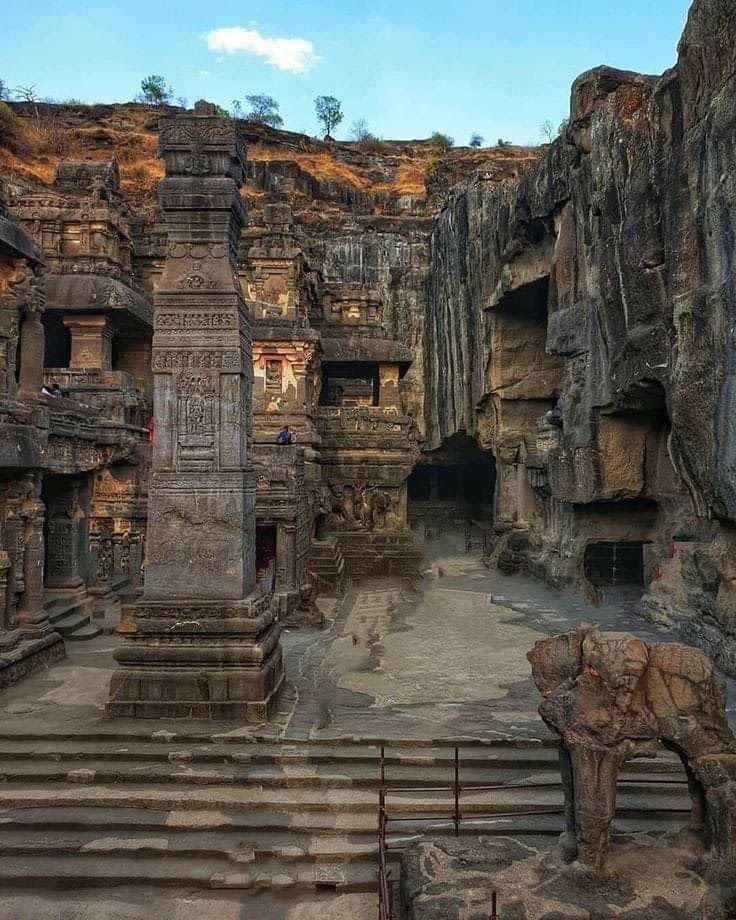
Ellora, a UNESCO World Heritage Site in Maharashtra, is perhaps the greatest testament to India's tradition of religious tolerance and artistic ambition — a 2-kilometer stretch of cliff containing 34 remarkable rock-cut monasteries and temples representing Buddhism, Hinduism, and Jainism, created between the 6th and 11th centuries CE. The centerpiece is the awe-inspiring Kailasa Temple (Cave 16) — entirely carved out of a single basalt rock face from the top down in a feat of engineering that remains miraculous to this day, a monolithic reproduction of Mount Kailash dedicated to Shiva. The Buddhist viharas and chaityas, the towering Jain temples, and the dynamic Hindu sculptures of Shiva make Ellora a journey through the artistic genius of ancient India.
Mahabaleshwar
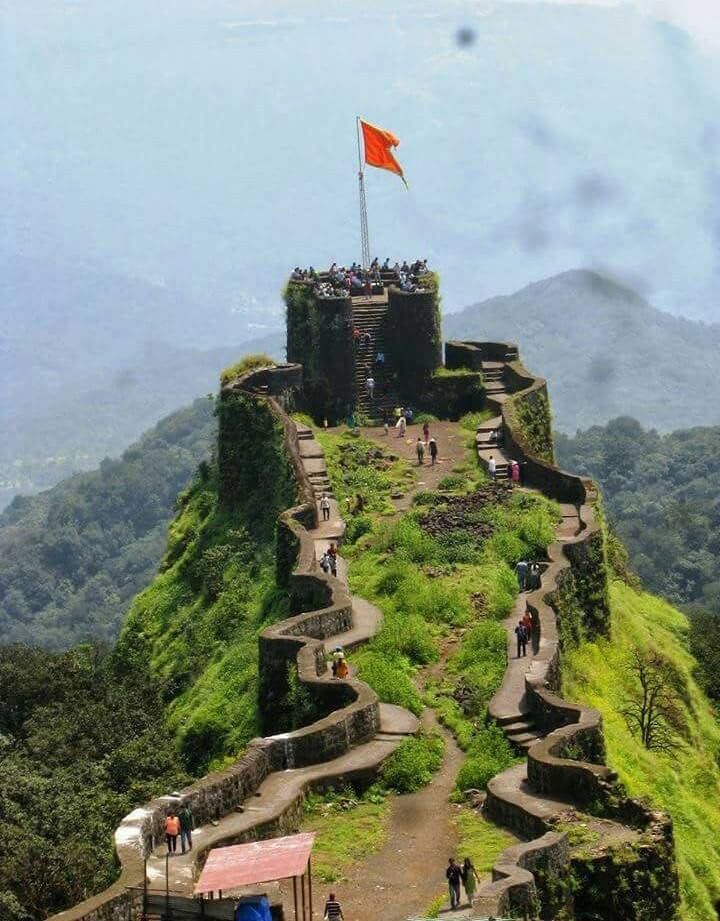
Mahabaleshwar, at 1,353 meters in the Sahyadri Hills of Maharashtra, is the state's most popular hill station and the summer capital of the Bombay Presidency during British times, renowned for its spectacular valley viewpoints, lush strawberry farms, and the panoramic Wilson Point from which the sunrise over the Western Ghats is one of Maharashtra's most beautiful sights. The Arthur's Seat viewpoint, known as the Queen of all Points, the sacred Krishnabai Temple at the source of the Krishna River, and the old colonial town of Old Mahabaleshwar with its charming 16th-century stone church add historical depth to the scenic beauty. Fresh strawberries, cream, and the local chikki candy make Mahabaleshwar's food as memorable as its views.
Nearby destinations
Ajanta Caves
106 km · The Ajanta Caves, a UNESCO World Heritage Site in Maharashtra, comprise 30 rock-cut Buddhist cave monuments excavated between the 2nd century BCE and 480 CE containing the finest surviving examples of ancient Indian art — murals and sculptures of extraordinary refinement and beauty that depict the life of Buddha and Jataka tales with a naturalism and emotional depth that influenced Buddhist art across Asia. The paintings, preserved in remarkable condition within the caves' controlled environment, are considered among the greatest works of art in human history. Rediscovered by a British hunting party in 1819 after centuries of jungle overgrowth, Ajanta remains one of the most awe-inspiring artistic and archaeological treasures in India.
Ellora Caves
140 km · Ellora, a UNESCO World Heritage Site in Maharashtra, is perhaps the greatest testament to India's tradition of religious tolerance and artistic ambition — a 2-kilometer stretch of cliff containing 34 remarkable rock-cut monasteries and temples representing Buddhism, Hinduism, and Jainism, created between the 6th and 11th centuries CE. The centerpiece is the awe-inspiring Kailasa Temple (Cave 16) — entirely carved out of a single basalt rock face from the top down in a feat of engineering that remains miraculous to this day, a monolithic reproduction of Mount Kailash dedicated to Shiva. The Buddhist viharas and chaityas, the towering Jain temples, and the dynamic Hindu sculptures of Shiva make Ellora a journey through the artistic genius of ancient India.
Shirdi
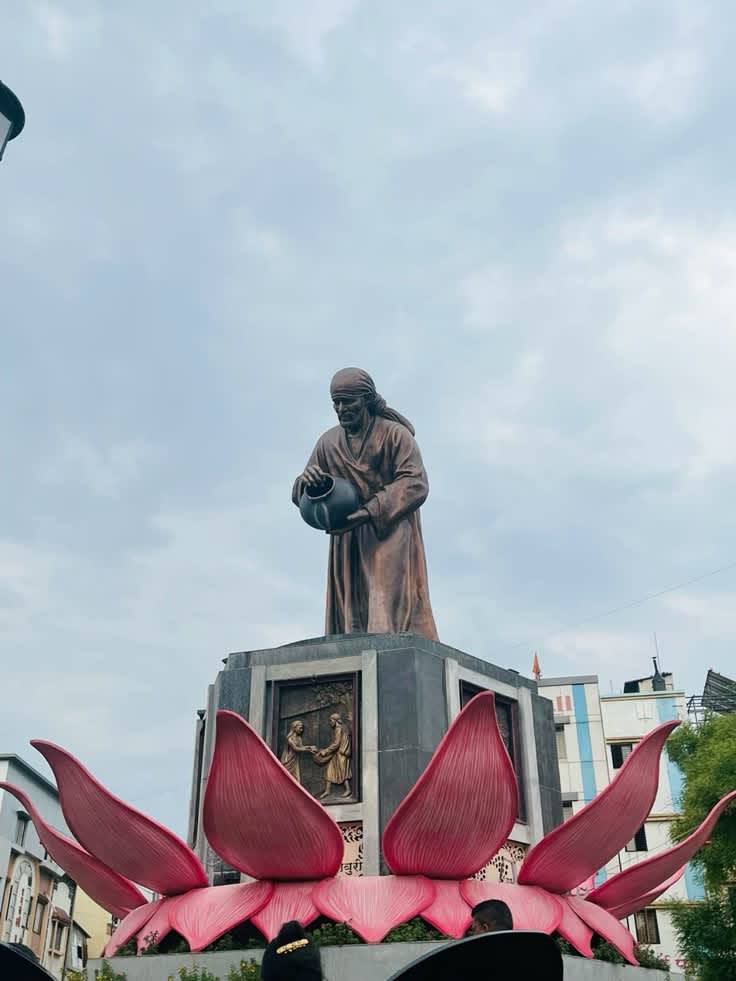
215 km · Shirdi, a small town in Maharashtra's Ahmednagar district, is one of the most visited pilgrimage destinations in India — home to the Shri Sai Baba Samadhi Mandir, the shrine of the revered saint Sai Baba of Shirdi, who is worshipped by both Hindus and Muslims as a manifestation of God and whose teachings of love, forgiveness, and brotherhood continue to attract millions of devotees from across India and the world. The Samadhi Mandir housing the marble idol of Sai Baba, the Dwarkamai mosque where Sai Baba lived for much of his life, and the Chavadi where he slept on alternate nights are the three most sacred sites in the Shirdi complex, creating a deeply moving spiritual circuit for devotees of every faith.