Places to visit near Agra
Places to visit near Agra
Agra, situated on the banks of the Yamuna River in Uttar Pradesh, is home to the Taj Mahal — one of the Seven Wonders of the World and perhaps the most celebrated monument to love ever built — attracting millions of visitors each year with its transcendent marble beauty at sunrise and sunset. The city also shelters the magnificent Agra Fort, a UNESCO World Heritage Site, and the deserted imperial city of Fatehpur Sikri nearby. Together these sites make Agra the crown jewel of India's Golden Triangle tourist circuit and a non-negotiable stop on any visit to the Indian subcontinent.
48 km
Mathura
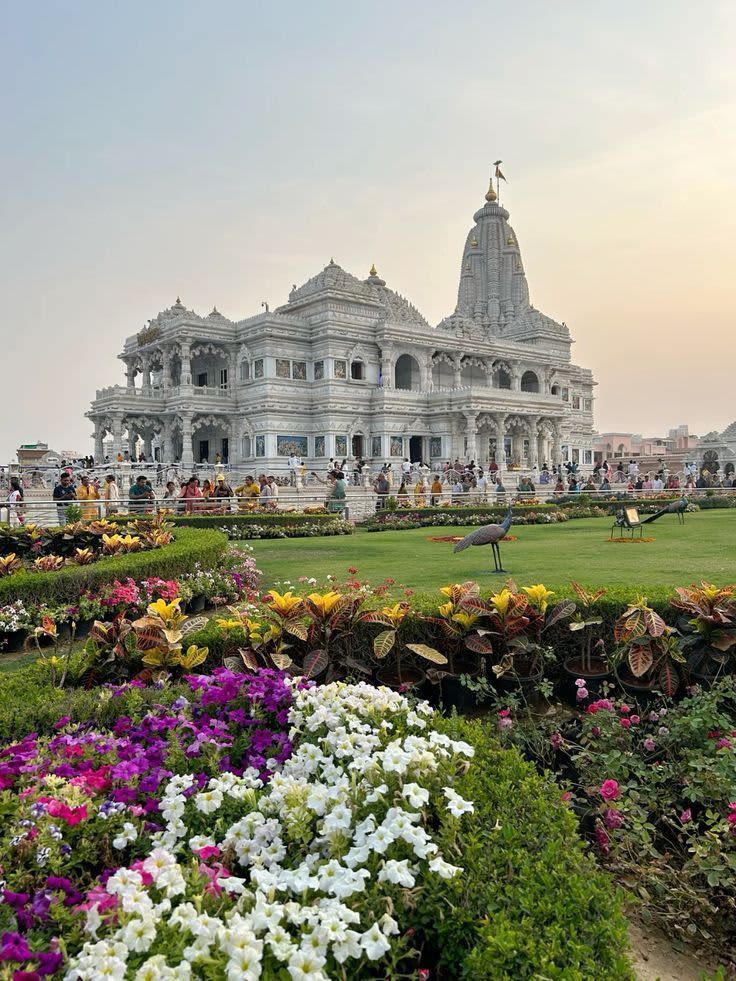
→Mathura, situated on the western bank of the Yamuna River in Uttar Pradesh, is one of Hinduism's most sacred cities and the birthplace of Lord Krishna — the beloved deity whose life and teachings form the foundation of the Bhagavad Gita. The city's Krishna Janmabhoomi temple complex marks the exact spot of Krishna's birth, while the ghats along the Yamuna, the Dwarkadhish Temple, and dozens of ancient temples make Mathura a vibrant center of Vaishnava devotion. The Holi festival celebrated in Mathura and nearby Vrindavan is one of India's most ecstatic and visually spectacular events, drawing visitors from across the globe.
54 km
Vrindavan
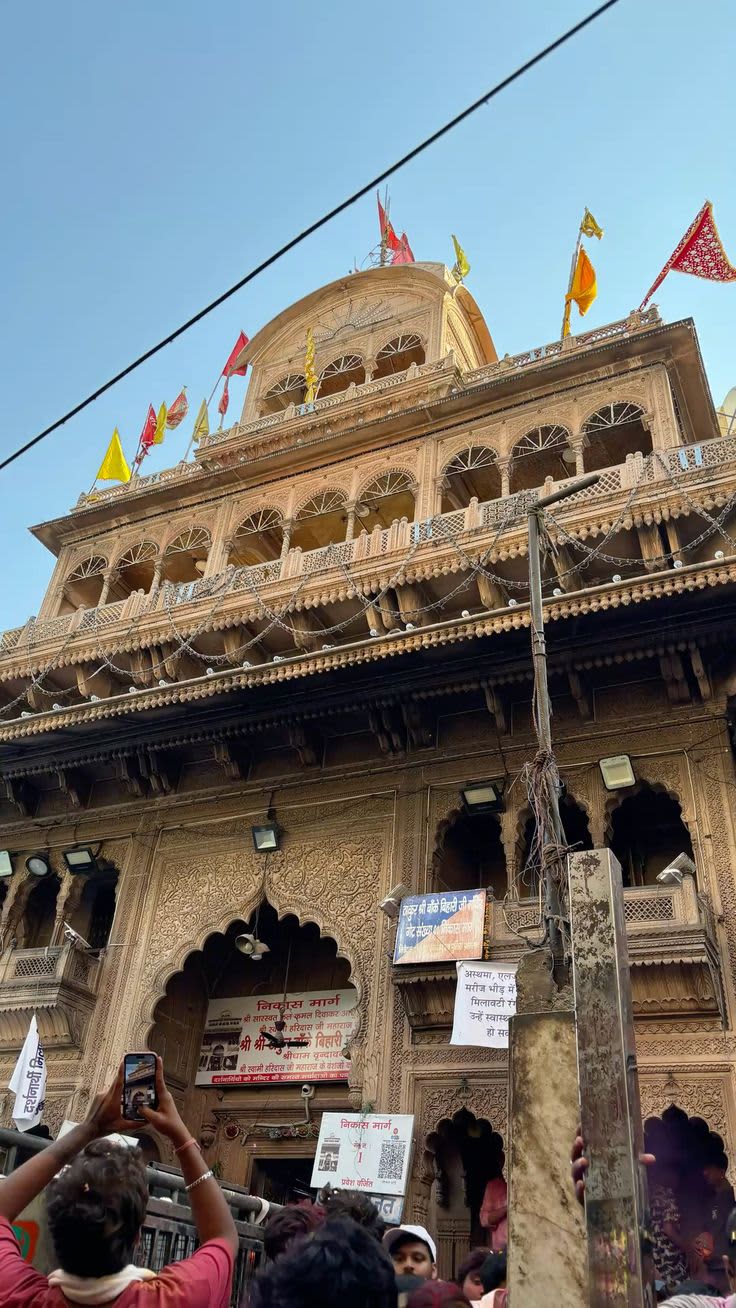
→Vrindavan, a sacred town on the Yamuna River near Mathura in Uttar Pradesh, is revered as the place where young Krishna spent his childhood, and every corner of this town resonates with devotional music, temple bells, and the fragrance of flowers and incense. The town's 5,000-plus temples — including the grand Banke Bihari Mandir, the Radha Raman Temple, and the ISKCON complex — are centers of intense Vaishnava worship that pulsates with joy and bhakti. The enchanting Yamuna ghats, the Nidhivan forest sacred to Radha-Krishna lore, and the festival of Radhashtami make Vrindavan one of India's most spiritually alive and emotionally moving destinations.
108 km
Gwalior
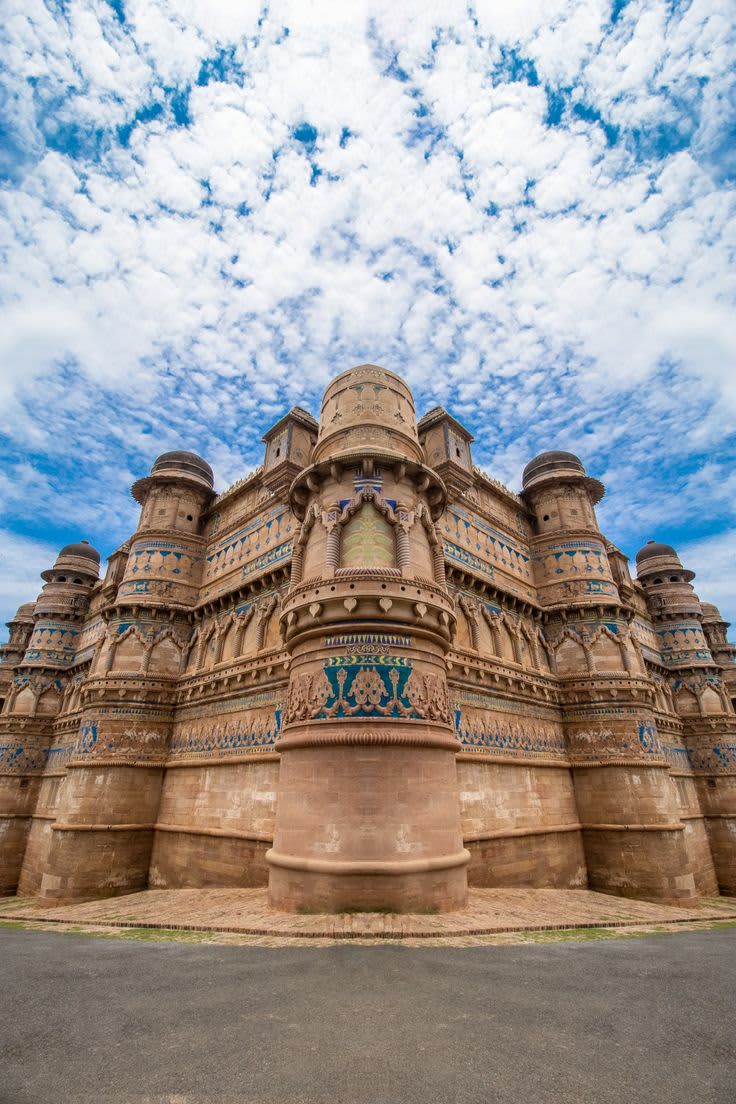
→Gwalior, in Madhya Pradesh, is dominated by one of India's most spectacular forts — the Gwalior Fort, rising 100 meters on a rocky hill above the city, described by the Mughal Emperor Babur as the pearl among fortresses of Hind. The fort complex encompasses palaces including the magnificent Man Mandir Palace with its brilliant tile work, Jain rock-cut sculptures, temples, and water tanks spanning over a thousand years of architectural history. The city also celebrates its deep musical heritage as the birthplace of the Gwalior Gharana, one of the most prestigious classical music traditions in Hindustani music, through the Tansen Music Festival held each November.
178 km
Delhi
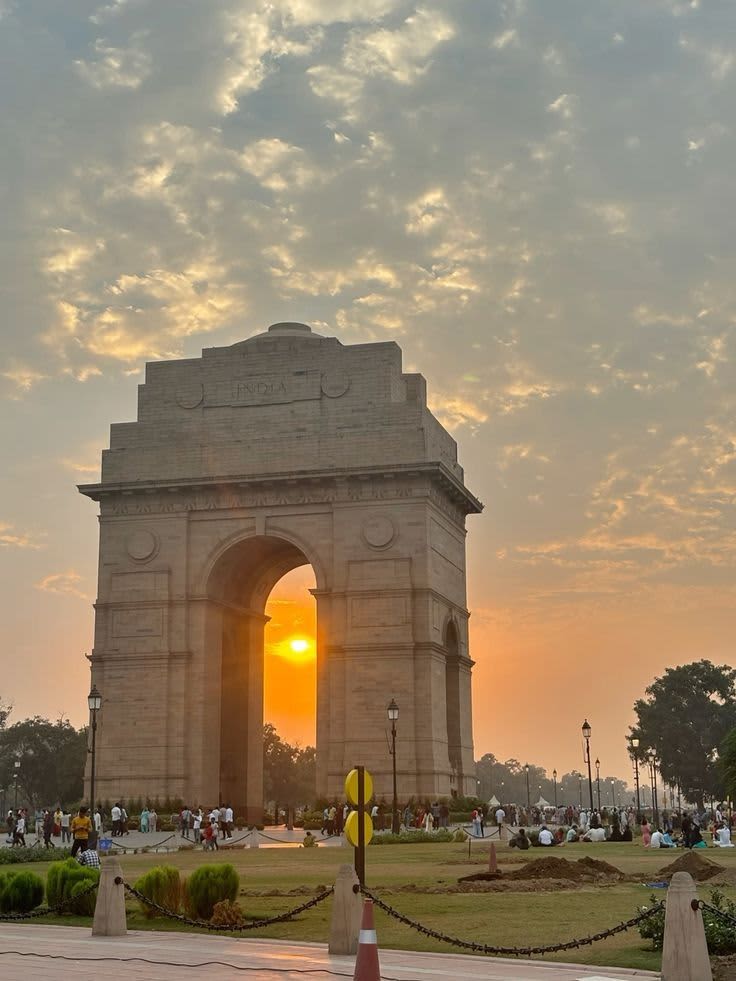
→Delhi, India's sprawling national capital, is one of the world's oldest continuously inhabited cities and a living tapestry of civilizations spanning 5,000 years, from the medieval lanes of Shahjahanabad to the wide boulevards of Lutyens' Delhi. UNESCO World Heritage Sites like the Red Fort, Humayun's Tomb, and the Qutub Minar stand alongside the modern parliament buildings and a world-class metro system. Delhi's extraordinary street food scene — from Old Delhi's parathas to Chandni Chowk's jalebis — and its vibrant markets, Mughal monuments, and cultural institutions make it an endlessly compelling destination.

198 km
Ranthambore National Park
→Ranthambore National Park in Rajasthan is one of India's largest and most famous tiger reserves, renowned for offering some of the most reliable tiger sightings in the country, particularly around its ancient lakes. The ruined 10th-century Ranthambore Fort, a UNESCO World Heritage Site, rises dramatically above the forest and adds a unique historical dimension to wildlife safaris. Beyond tigers, the park shelters leopards, sloth bears, striped hyenas, and abundant birdlife, making every game drive an adventure in this iconic Rajasthani wilderness.
213 km
Orchha
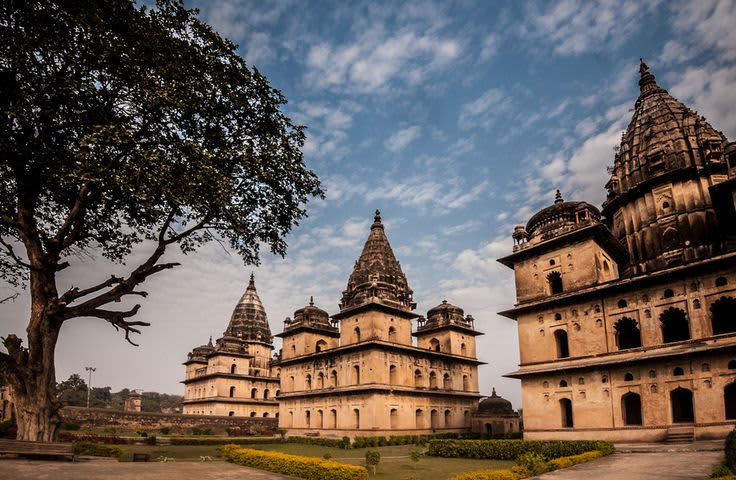
→Orchha, a small medieval town on the Betwa River in Madhya Pradesh, is one of India's most underrated historical gems — a perfectly preserved Bundela-era capital of palaces, cenotaphs, and temples that appear frozen in time since the 16th and 17th centuries. The Jahangir Mahal palace, built to honor the Mughal Emperor's visit, is a breathtaking example of Mughal-Rajput architecture, while the Ram Raja Temple — the only temple in India where Lord Rama is worshipped as a king — is an extraordinary religious and cultural anomaly. Orchha's chaturbhuj temples rising above the Betwa River, the evening light-and-sound show at the palace complex, and the vultures nesting in the riverside cenotaphs create an atmosphere of remarkable historical enchantment.
222 km
Jaipur
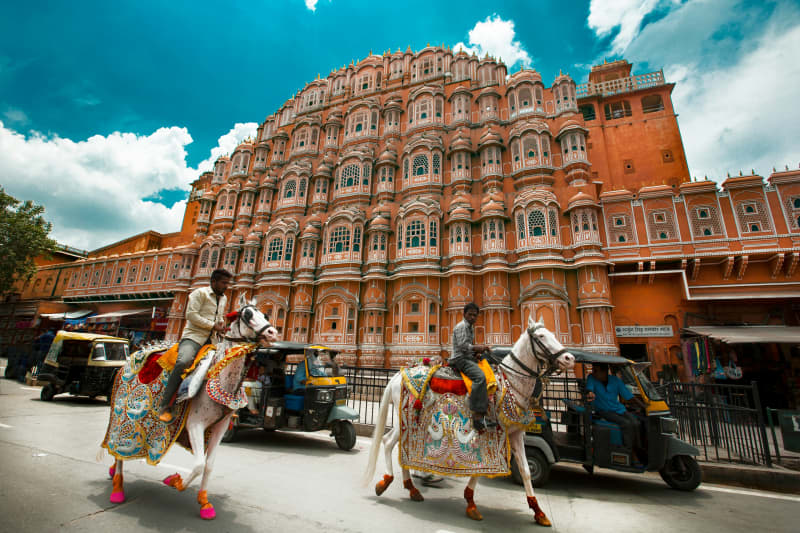
→Jaipur, the Pink City and capital of Rajasthan, is one of India's most vibrant and photogenic destinations, famous for its rose-tinted heritage architecture, colorful bazaars overflowing with textiles and jewelry, and the formidable Amer Fort. Built by Maharaja Jai Singh II in 1727 as India's first planned city, Jaipur's geometric street layout and magnificent palaces — including the City Palace and the iconic Hawa Mahal — reflect the opulence of Rajput royalty. The city is the gateway to Rajasthan's royal heartland and forms the third vertex of India's legendary Golden Triangle alongside Delhi and Agra.
272 km
Jim Corbett National Park
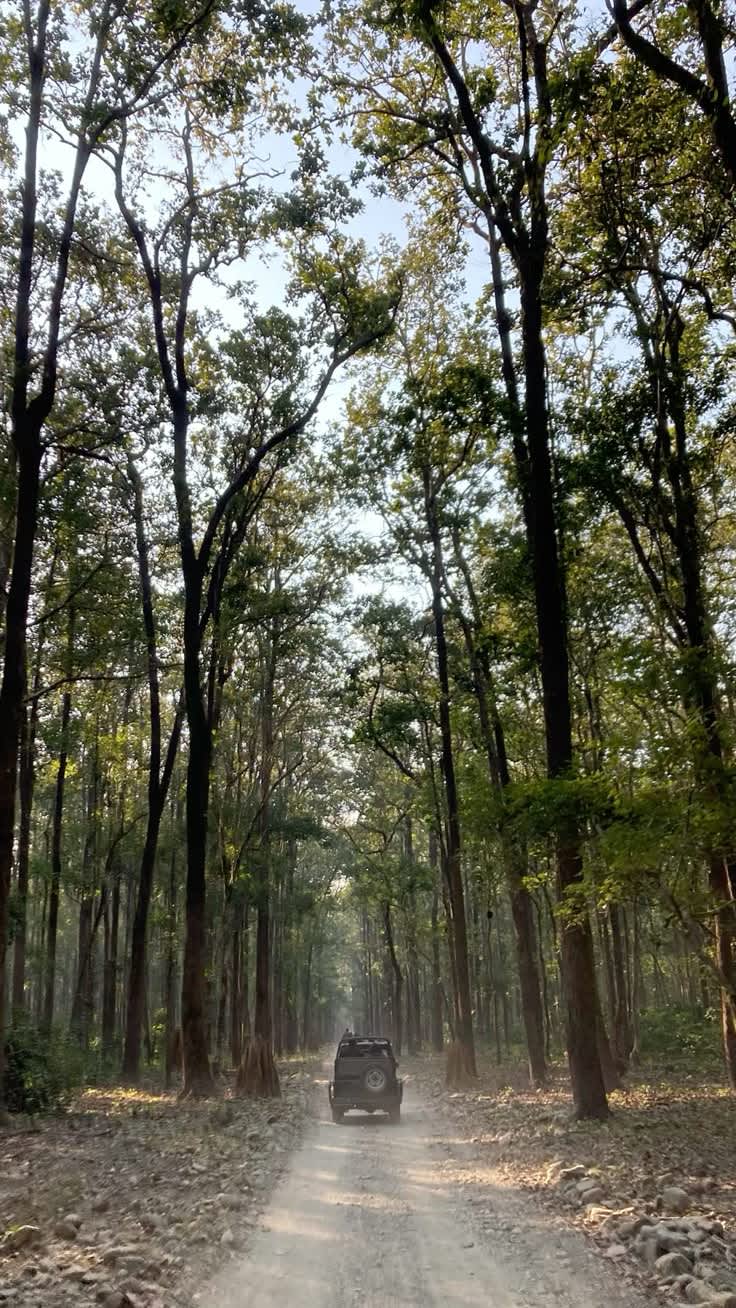
→Jim Corbett National Park, established in 1936 as India's first national park and named after the legendary hunter-turned-conservationist Jim Corbett, is one of the best places in the world to spot the majestic Bengal tiger in its natural habitat. Spread across over 1,300 square kilometers in the Shivalik foothills of Uttarakhand, the park encompasses dense sal forests, grasslands, and the Ramganga River, supporting rich biodiversity including elephants, leopards, gharials, and over 600 bird species. Jeep safaris into the Dhikala and Bijrani zones offer thrilling wildlife encounters in a remarkably pristine natural setting.
283 km
Nainital
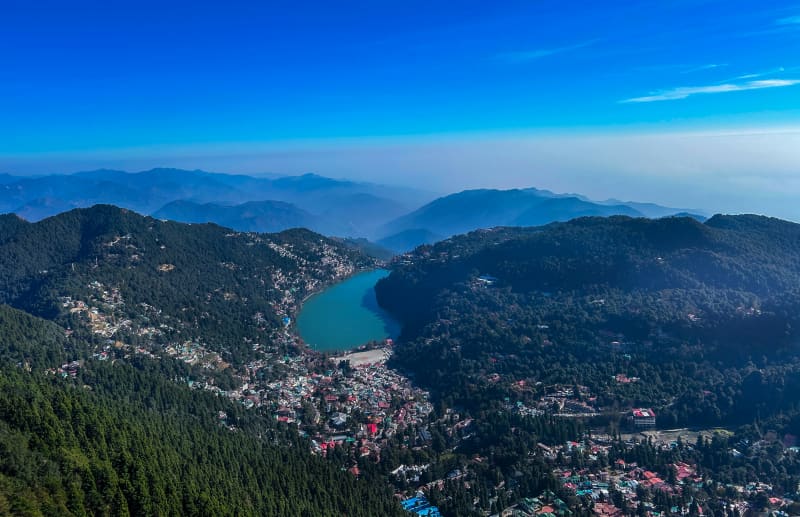
→Nainital, the lake district jewel of Uttarakhand, is built around the serene Naini Lake nestled among seven hills at an altitude of 2,084 meters. This charming hill station offers breathtaking views of the surrounding Kumaon Himalayas, with boating on the lake, a cable car ride to Snow View Point, and the bustling Mall Road shopping strip among the top experiences. The Naina Devi Temple on the northern shore of the lake adds a deep spiritual dimension to this naturally stunning destination.

293 km
Lucknow
→Lucknow, the capital of Uttar Pradesh and the City of Nawabs, is a magnificent and cultured city renowned across India for its exquisite Nawabi-era architecture, the refined Urdu spoken in its bazaars, the legendary tehzeeb (etiquette) of its people, and some of the finest cuisine India has to offer. The Bara Imambara complex with its mesmerizing Bhool Bhulaiya labyrinth, the elegant Residency ruins from the 1857 uprising, and the Rumi Darwaza modeled on a Lucknow gateway in Turkey are architectural landmarks of great distinction. The Hazratganj promenade, the kebab trail on Tunday Kababi street, and the chikankari embroidery bazaars make Lucknow one of India's most pleasurably civilized cities to explore.