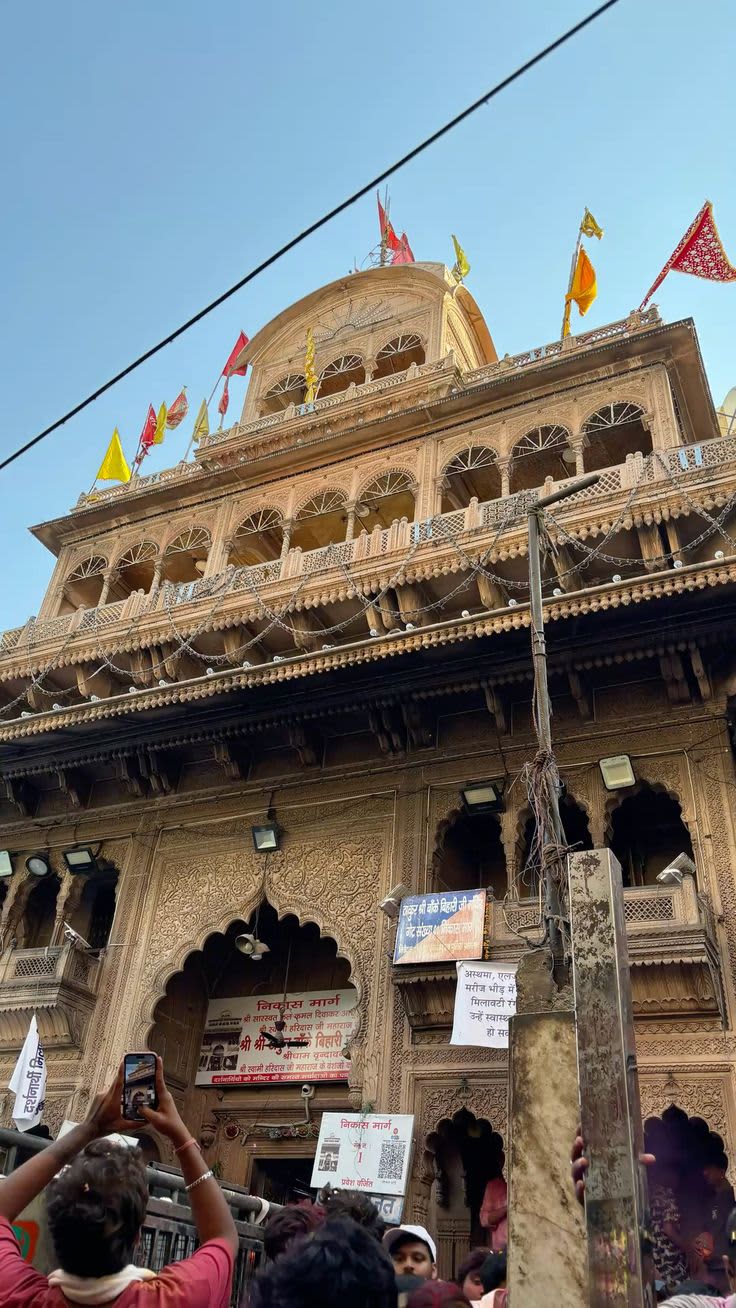
Vrindavan, a sacred town on the Yamuna River near Mathura in Uttar Pradesh, is revered as the place where young Krishna spent his childhood, and every corner of this town resonates with devotional mus...
Vrindavan
Land of Krishna's Childhood
Uttar Pradesh, India
4.8
Krishna LeelaTemplesSpiritual Atmosphere
spiritual
Duration: 1–2 Days
Budget/day: ₹800 – ₹2,500
Best season: Oct – Mar
Altitude: 170 m
Nearest airport: Agra Airport (70 km) / Delhi Airport (145 km)
Nearest railway: Mathura Junction (15 km)
Best places to visit in Vrindavan
Things to do in Vrindavan
- No photoSpiritualView full guide
45 minutes to 1 hour
Banke Bihari Temple darshan
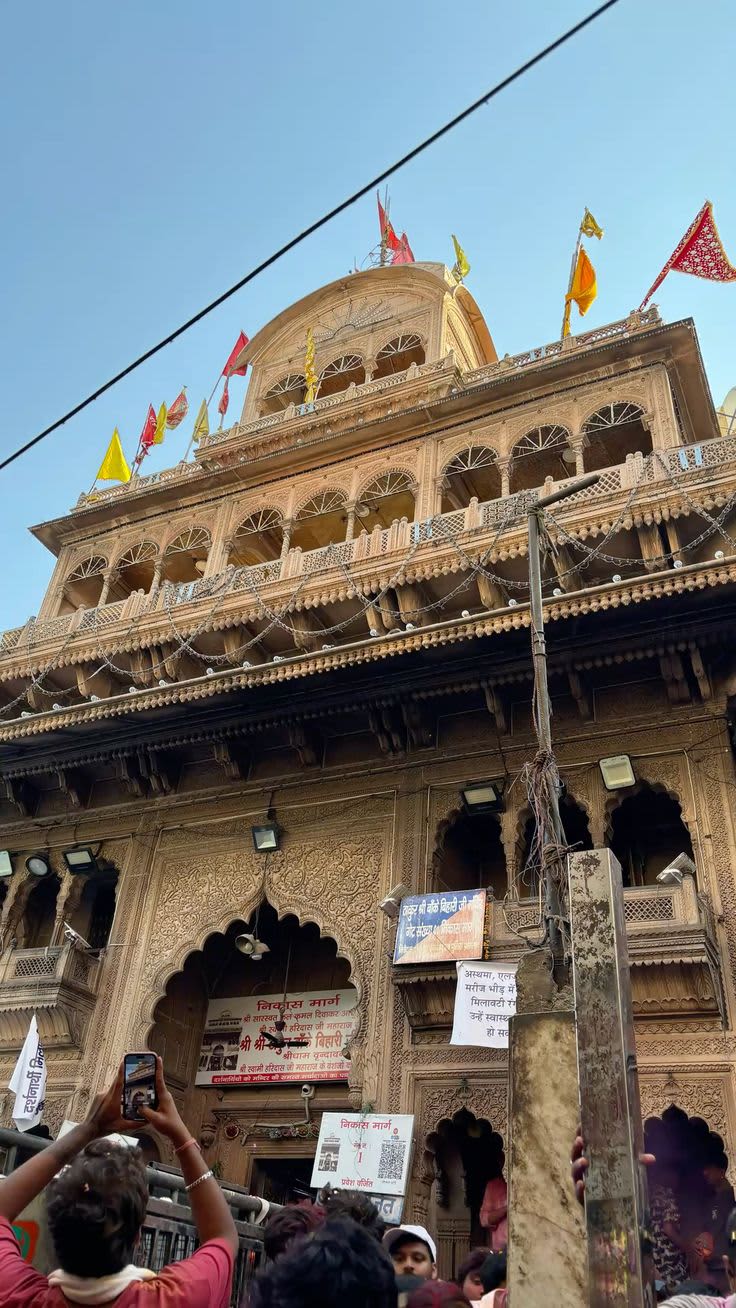
The Banke Bihari Temple is Vrindavan's most beloved and most visited — home to a form of Krishna considered so playful and mischievous that the curtain in front of the idol is opened and closed every few minutes to prevent devotees from losing themselves in his gaze. The temple has no bells, no conches, and no aarti flames — only the sound of devotional music and the collective intake of breath when the curtain parts to reveal the dark-blue deity.
- No photoSpiritualView full guide
30–45 minutes
Nidhivan — the sacred forest of the Rasleela
Nidhivan is a small, dense grove of trees in the heart of Vrindavan where the branches of the tulsi plants twist down to the ground in unusual formations — locally explained as the Gopis who danced with Krishna and turn back to plants by dawn. The compound is locked every evening at sunset and no one — human or animal — remains inside overnight by tradition. The mystique surrounding this place and its atmosphere of timeless devotion is unlike anything else in Vrindavan.
- No photoSpiritualView full guide
1 hour (morning aarti at 7 AM)
Radha Raman Temple morning aarti
The Radha Raman Temple is one of Vrindavan's oldest and most revered shrines — founded in 1542 and housing a self-manifested black stone deity of Krishna considered among the most sacred in the Vaishnava tradition. The morning aarti here is a living piece of medieval devotional music, performed in the same Dhrupad style used for the past 500 years by priests descended from the temple's original founders.
Best Time to Visit and Weather Info
Best time: October to March
Holi and Janmashtami are the peak festive periods. Always combine Vrindavan with Mathura.
Winter
Best Time ⭐Oct – Feb
5°C – 22°C
Perfect for temple visits and the parikrama (circumambulation) walk around the holy forest.
- Banke Bihari Temple darshan opens at specific hours — check timings
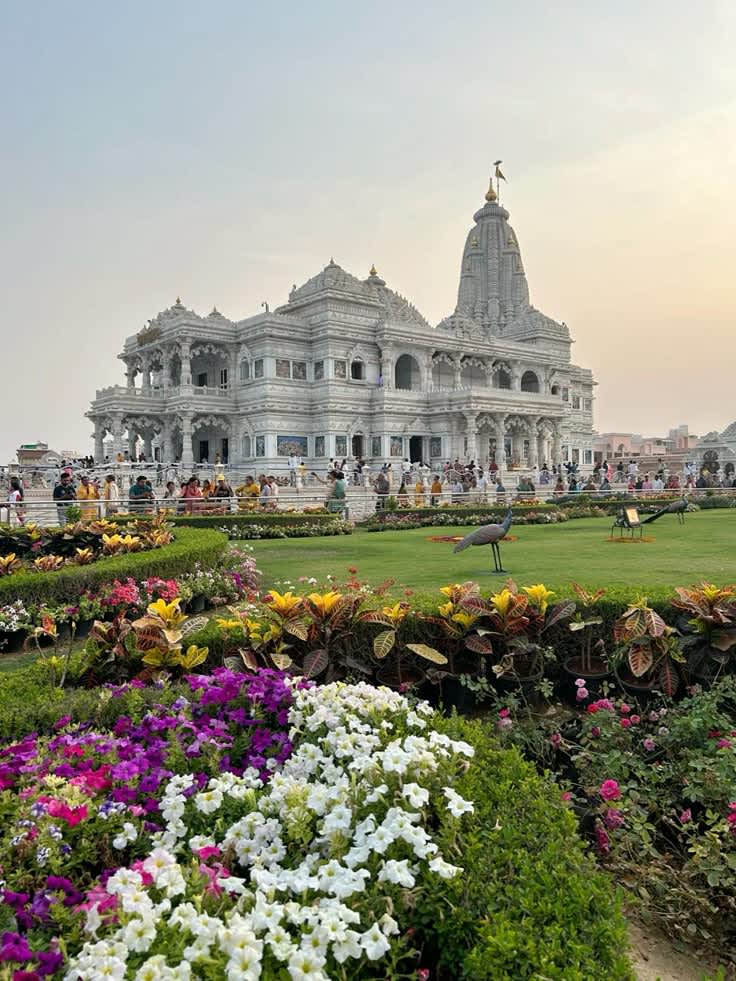
- Evening aarti at Prem Mandir is illuminated and grand
How to Reach
✈️By Air
Airport: Agra Airport / Delhi Airport (70–145 km)
Duration: 2–3 hrs
Fly to Delhi or Agra, then take taxi to Vrindavan. E-rickshaws from Mathura.
Taxi: ₹400 – ₹600 from Mathura
Airlines: IndiGo, Air India
🚂By Train
Station: Mathura Junction (15 km from Vrindavan)
Take a train to Mathura, then e-rickshaw or auto to Vrindavan (30 min).
- Shatabdi Express — Delhi (2 hrs to Mathura)
🚌By Road
UPSRTC buses from Mathura to Vrindavan run regularly. E-rickshaws within Vrindavan.
- Mathura: 15 km, 30 mins via State Highway
- Delhi: 145 km, 2.5 hrs via Yamuna Expressway
Itineraries
Local Food
Vrindavan is strictly vegetarian and sattvic. Chappan Bhog (56 offerings) to Krishna is the spiritual inspiration behind the rich sweet culture.
Panjiri Prasad
Dry fruit and whole wheat prasad distributed at temples — rich and nutritious.
Where: Banke Bihari Temple and other temples
Free / ₹30–₹60
Makkhan Mishri
Fresh white butter with crystallized sugar — symbolic of Krishna's love for butter.
Where: Temple prasad counters
₹30 – ₹60
Peda & Rabri
Classic Braj sweets — Mathura peda with condensed milk rabri.
Where: Sweet shops on Parikrama Marg
₹50 – ₹120
Vrindavan does not serve onion or garlic in any restaurant — a strict sattvic tradition. The town's spiritual environment defines its food culture.
FAQs
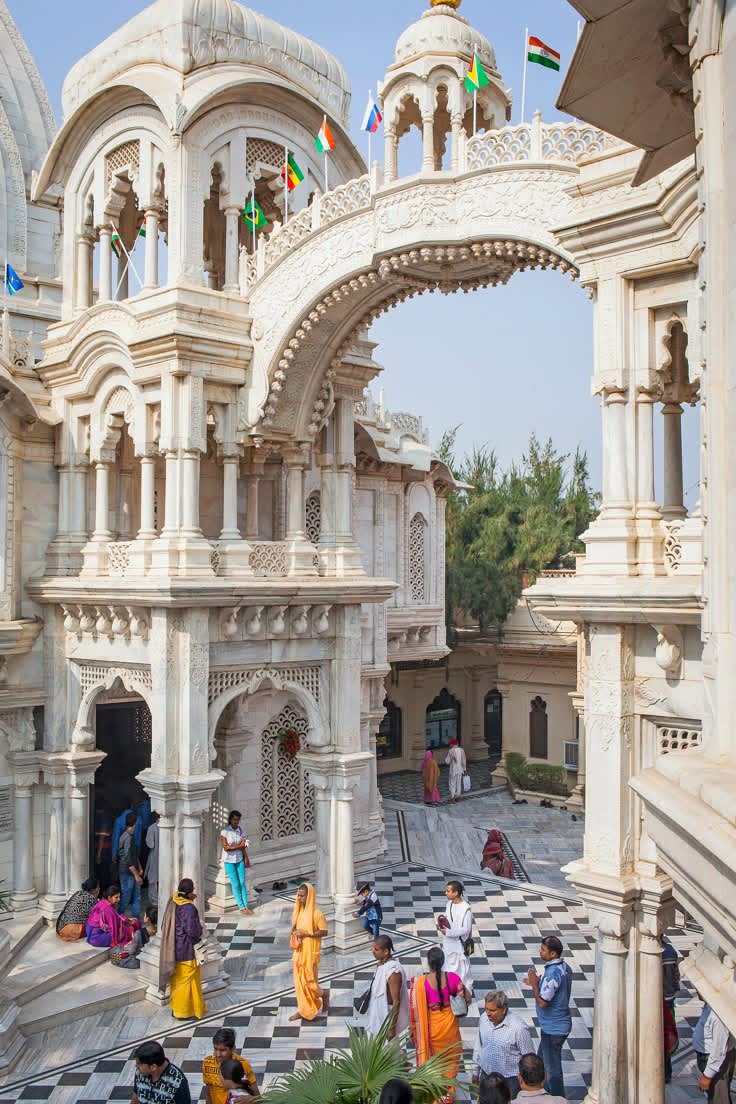
- Vrindavan is where Lord Krishna spent his childhood — famous for the Banke Bihari Temple, Prem Mandir, ISKCON Temple, and the sacred Yamuna River. The entire town breathes devotion.
Best Places Similar
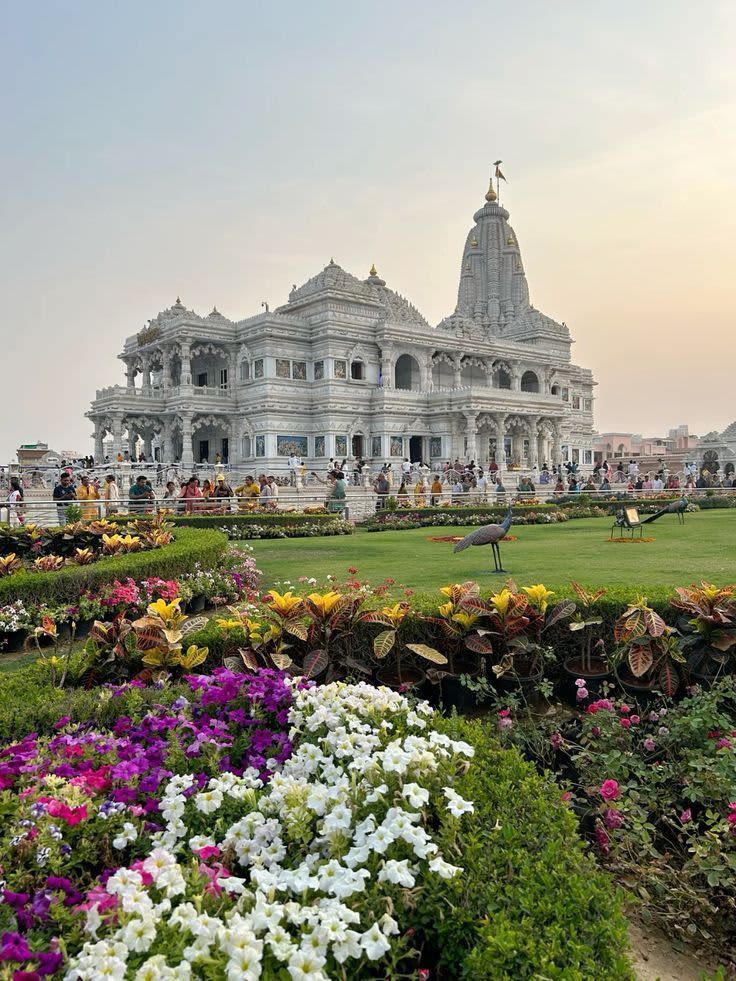
Mathura
Mathura, situated on the western bank of the Yamuna River in Uttar Pradesh, is one of Hinduism's most sacred cities and the birthplace of Lord Krishna — the beloved deity whose life and teachings form the foundation of the Bhagavad Gita. The city's Krishna Janmabhoomi temple complex marks the exact spot of Krishna's birth, while the ghats along the Yamuna, the Dwarkadhish Temple, and dozens of ancient temples make Mathura a vibrant center of Vaishnava devotion. The Holi festival celebrated in Mathura and nearby Vrindavan is one of India's most ecstatic and visually spectacular events, drawing visitors from across the globe.
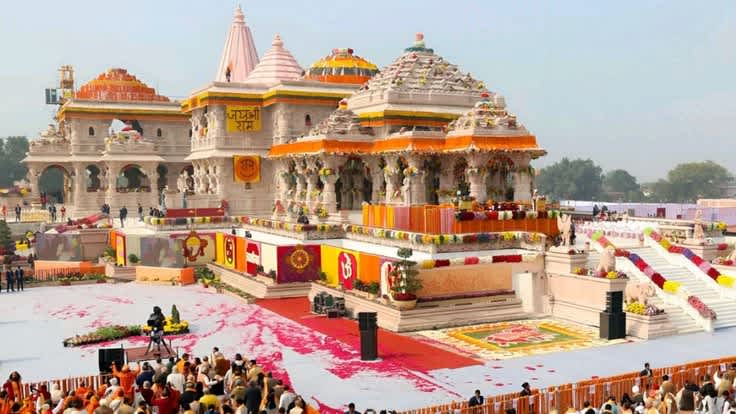
Ayodhya
Ayodhya, situated on the banks of the Sarayu River in Uttar Pradesh, is one of the seven sacred cities (Sapta Puri) of Hinduism and the legendary birthplace of Lord Rama — one of the most revered deities in the Hindu faith. The newly constructed Ram Mandir at the Ram Janmabhoomi site has transformed Ayodhya into one of India's most visited and rapidly developing pilgrimage destinations. The city's ancient ghats, the Kanak Bhawan temple, the Hanuman Garhi shrine, and the magical experience of the evening aarti on the Sarayu make Ayodhya a profoundly spiritual destination with deep historical and cultural significance.
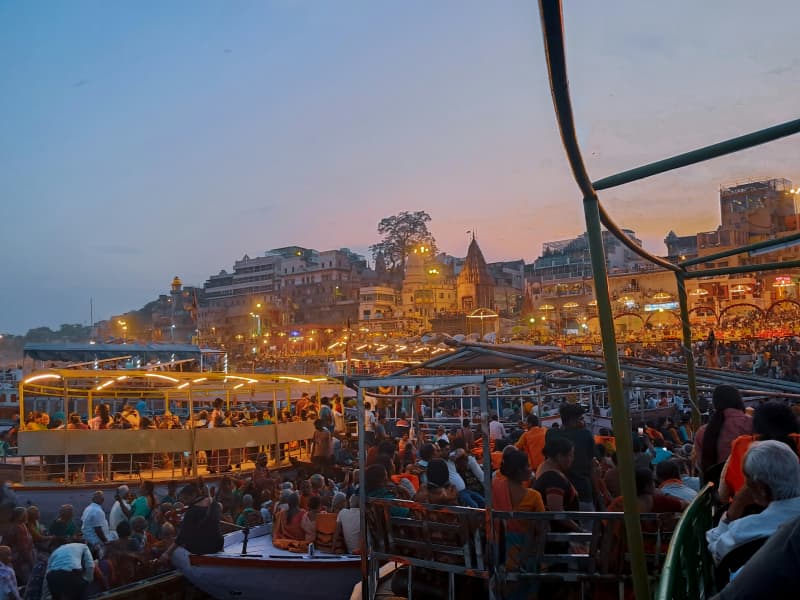
Varanasi
Varanasi, one of the world's oldest continuously inhabited cities and Hinduism's most sacred destination, sits on the banks of the Ganges in Uttar Pradesh and is believed by Hindus to be the city where dying releases one from the cycle of rebirth. The ghats of Varanasi — 84 in all — are the spiritual heartbeat of India, where the faithful bathe at dawn, priests perform elaborate fire rituals, and funeral pyres burn perpetually at the Manikarnika Ghat. The ancient temples, the labyrinthine old city lanes, the evening Ganga Aarti ceremony, and the profound sense of mortality and transcendence make Varanasi the most spiritually intense city in India.
Nearby destinations
Mathura
10 km · Mathura, situated on the western bank of the Yamuna River in Uttar Pradesh, is one of Hinduism's most sacred cities and the birthplace of Lord Krishna — the beloved deity whose life and teachings form the foundation of the Bhagavad Gita. The city's Krishna Janmabhoomi temple complex marks the exact spot of Krishna's birth, while the ghats along the Yamuna, the Dwarkadhish Temple, and dozens of ancient temples make Mathura a vibrant center of Vaishnava devotion. The Holi festival celebrated in Mathura and nearby Vrindavan is one of India's most ecstatic and visually spectacular events, drawing visitors from across the globe.
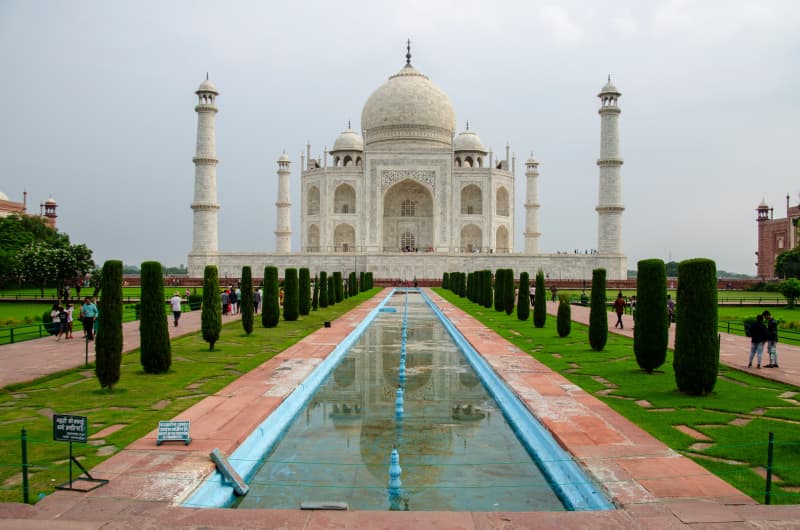
Agra
54 km · Agra, situated on the banks of the Yamuna River in Uttar Pradesh, is home to the Taj Mahal — one of the Seven Wonders of the World and perhaps the most celebrated monument to love ever built — attracting millions of visitors each year with its transcendent marble beauty at sunrise and sunset. The city also shelters the magnificent Agra Fort, a UNESCO World Heritage Site, and the deserted imperial city of Fatehpur Sikri nearby. Together these sites make Agra the crown jewel of India's Golden Triangle tourist circuit and a non-negotiable stop on any visit to the Indian subcontinent.
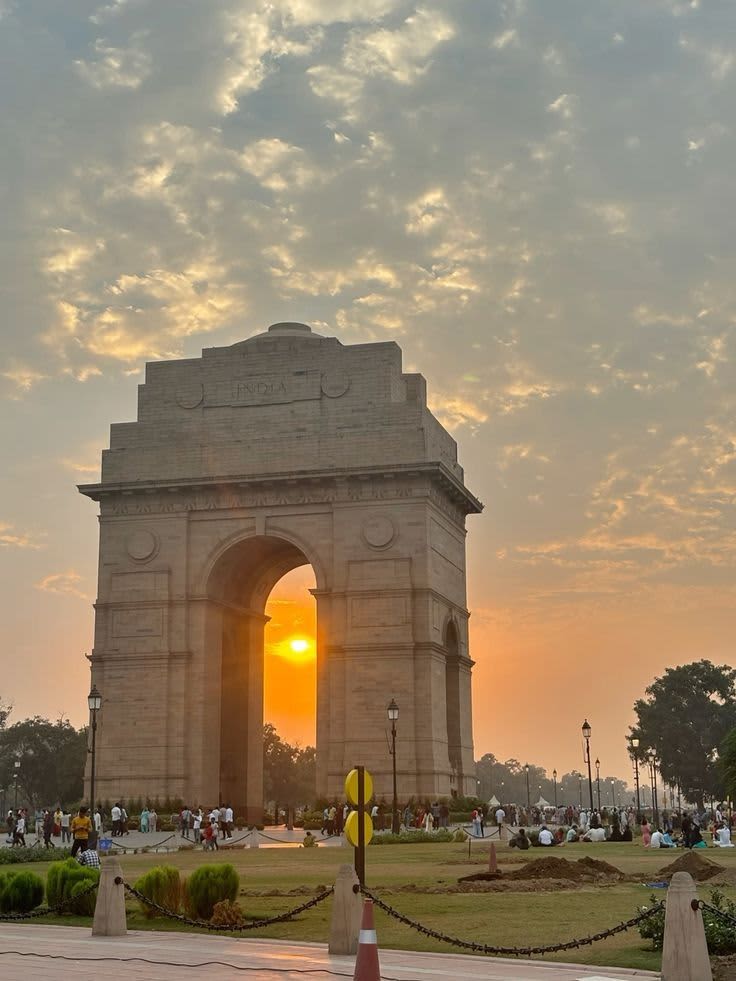
Delhi
124 km · Delhi, India's sprawling national capital, is one of the world's oldest continuously inhabited cities and a living tapestry of civilizations spanning 5,000 years, from the medieval lanes of Shahjahanabad to the wide boulevards of Lutyens' Delhi. UNESCO World Heritage Sites like the Red Fort, Humayun's Tomb, and the Qutub Minar stand alongside the modern parliament buildings and a world-class metro system. Delhi's extraordinary street food scene — from Old Delhi's parathas to Chandni Chowk's jalebis — and its vibrant markets, Mughal monuments, and cultural institutions make it an endlessly compelling destination.