Best places to visit in Vrindavan
Best places to visit in Vrindavan
Vrindavan, a sacred town on the Yamuna River near Mathura in Uttar Pradesh, is revered as the place where young Krishna spent his childhood, and every corner of this town resonates with devotional music, temple bells, and the fragrance of flowers and incense. The town's 5,000-plus temples — including the grand Banke Bihari Mandir, the Radha Raman Temple, and the ISKCON complex — are centers of intense Vaishnava worship that pulsates with joy and bhakti. The enchanting Yamuna ghats, the Nidhivan forest sacred to Radha-Krishna lore, and the festival of Radhashtami make Vrindavan one of India's most spiritually alive and emotionally moving destinations.
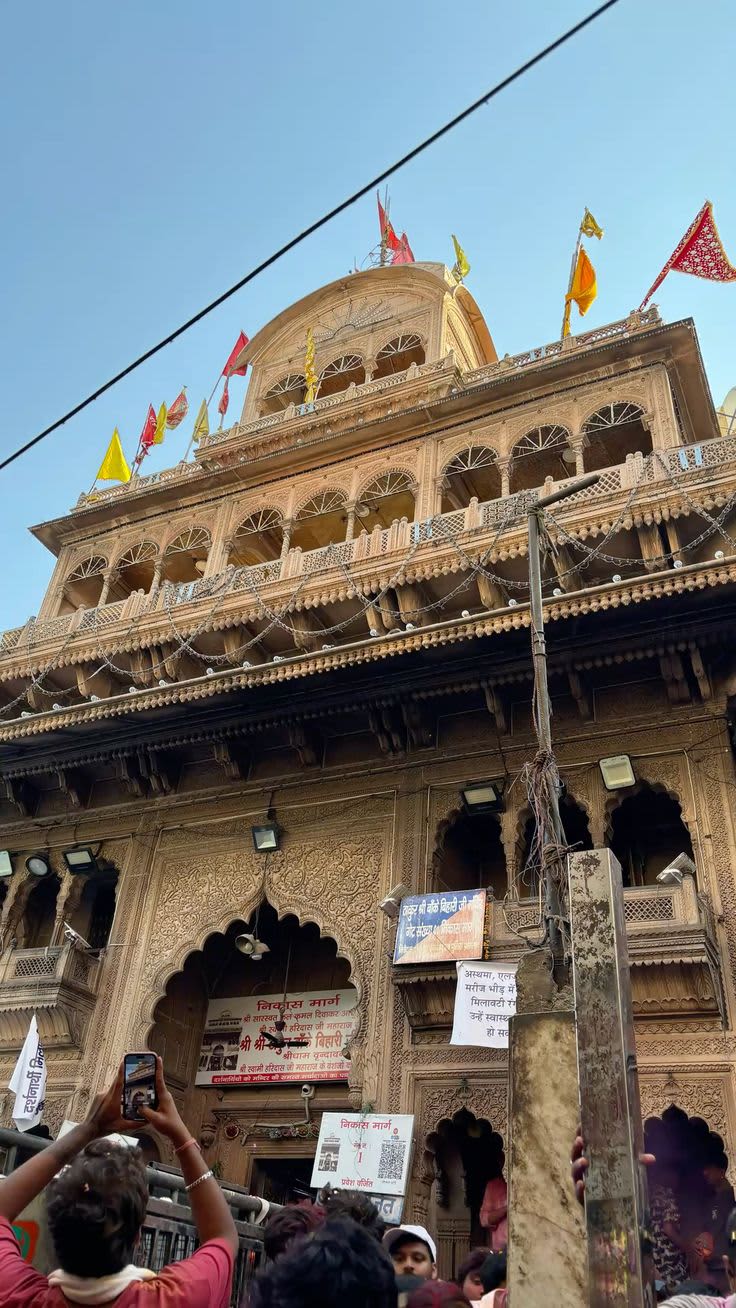
Banke Bihari Temple
→Banke Bihari Temple is the most beloved and emotionally charged Krishna temple in Vrindavan — a 19th-century haveli-style shrine where the enchanting Banke Bihari (Lord Krishna in a tribhanga pose) is revealed behind a swaying curtain, with the curtain closing every few seconds to prevent devotees from fainting with divine bliss (prema). The most visited temple in Vrindavan, it reaches a fever pitch of devotion during Holi, Janmashtami, and Radha Ashtami festivals.
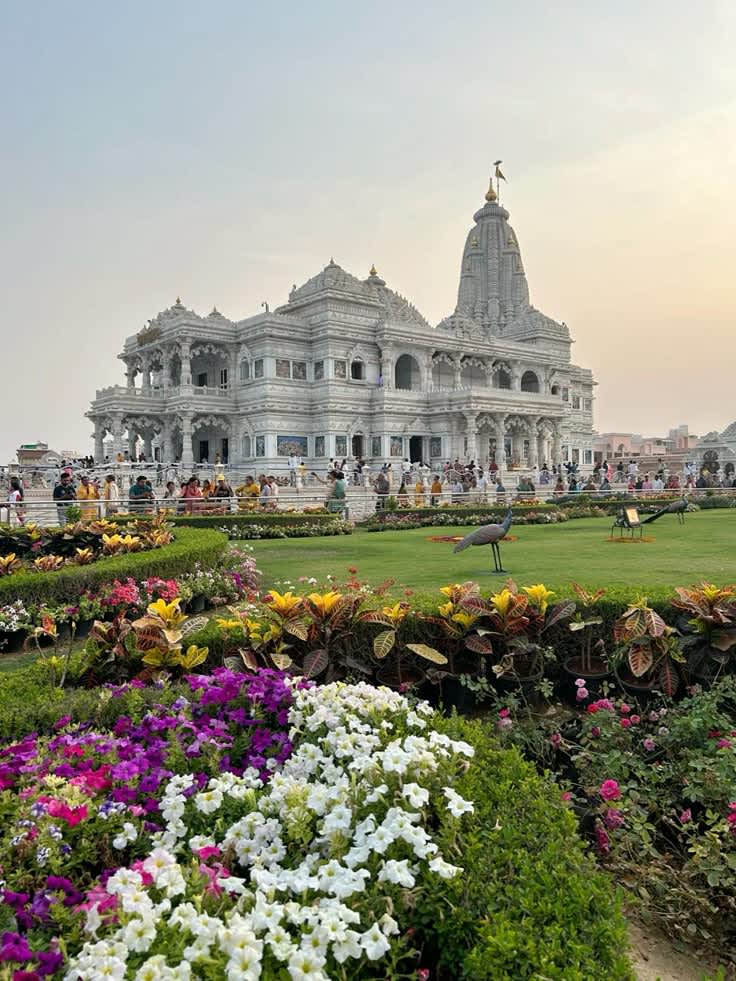
Prem Mandir
→Prem Mandir is Vrindavan's most visually spectacular temple — a gleaming white Italian marble complex built by Jagadguru Kripalu Maharaj, inaugurated in 2012. Depicting the divine love story of Radha-Krishna and Ram-Sita through ornate carvings and mechanical dioramas, it is particularly spectacular after dark when coloured lights illuminate the entire complex. One of the top Vrindavan sightseeing attractions for all visitors. Free entry. Musical fountain show from 7–8 PM nightly.
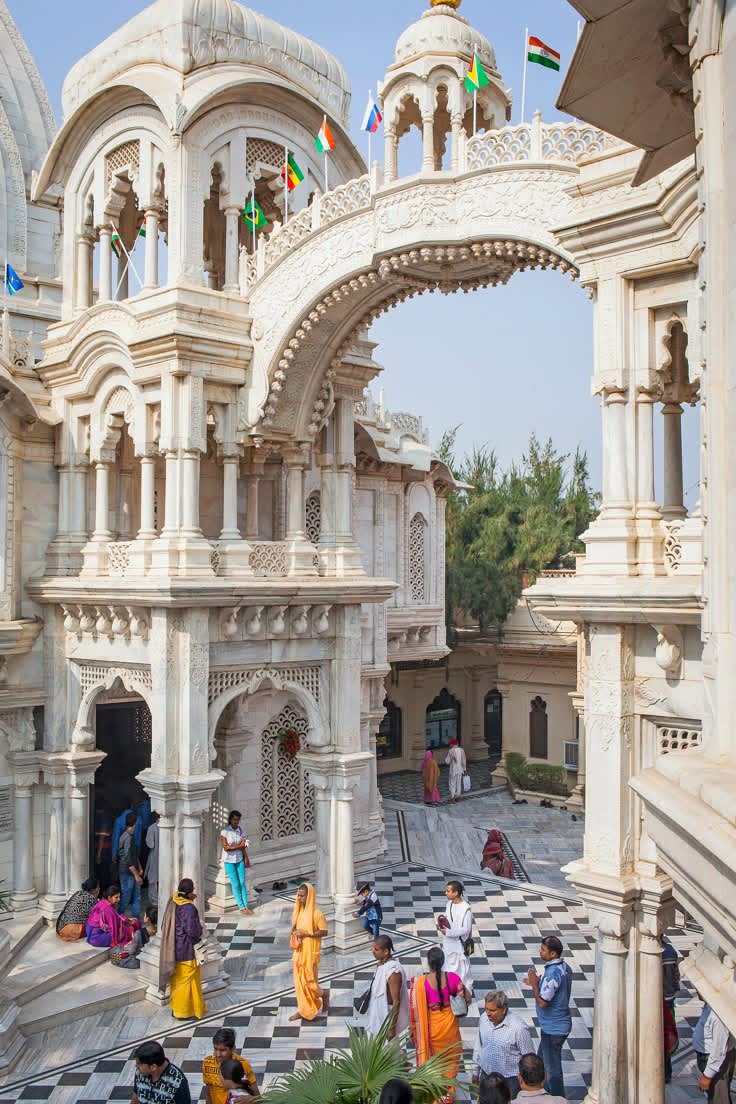
ISKCON Temple
→ISKCON Vrindavan — the Sri Krishna Balaram Mandir — is one of the most important ISKCON temples in the world, built by Srila Prabhupada in 1975 in a blend of white marble and traditional Rajasthani sandstone. The marble deities of Krishna-Balaram, Radha-Shyamsundar, and Gaura-Nitai are magnificently adorned. The temple features a museum, a guest house, and a vegetarian restaurant. A top Vrindavan pilgrimage and heritage destination for devotees and international visitors alike.
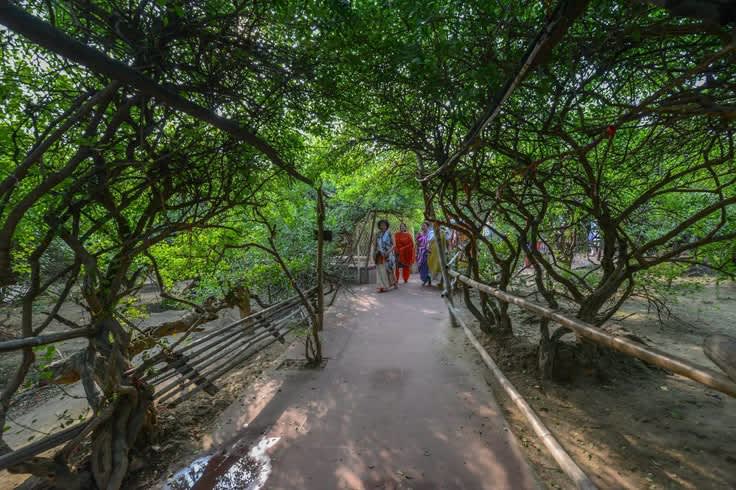
Nidhivan
→Nidhivan is Vrindavan's most sacred and mysterious forest — a dense grove of intertwined trees where Lord Krishna is believed to perform the Raas Lila dance with Radha and the gopis every night. After sunset, the forest is locked and no living being — human or animal — is allowed to remain inside. The forest trees are peculiarly gnarled and hollow, and devotees report inexplicable phenomena. One of Vrindavan's most spiritually intense and mystically enigmatic sites.
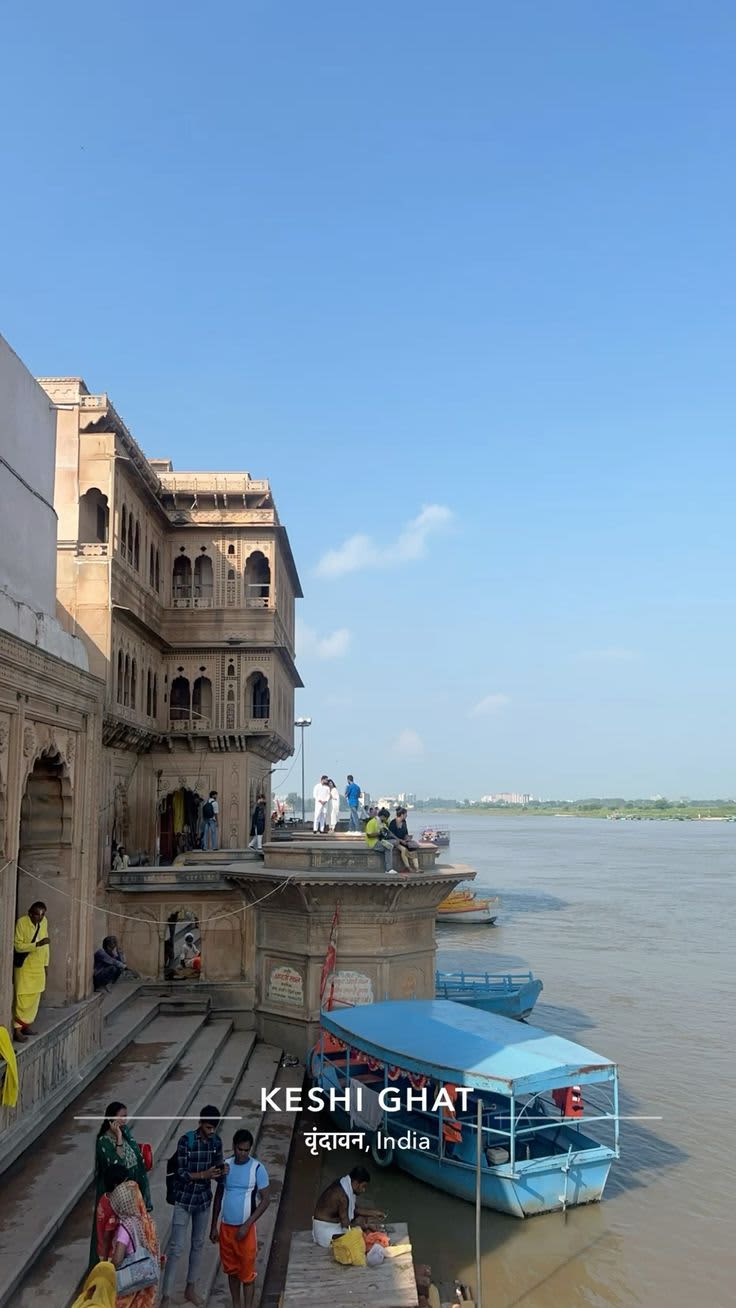
Kesi Ghat
→The Yamuna River flows through Vrindavan as the sacred Kalindi — the river of Lord Krishna's childhood, where he played with the gopis, bathed the cows, and performed divine leelas on its banks. The Keshi Ghat and Imli Tala are the most atmospheric and spiritually significant riverfront spots. An evening boat ride on the Yamuna at dusk, with temple bells ringing and oil lamps floating on the current, is the most serene and enchanting Vrindavan experience.
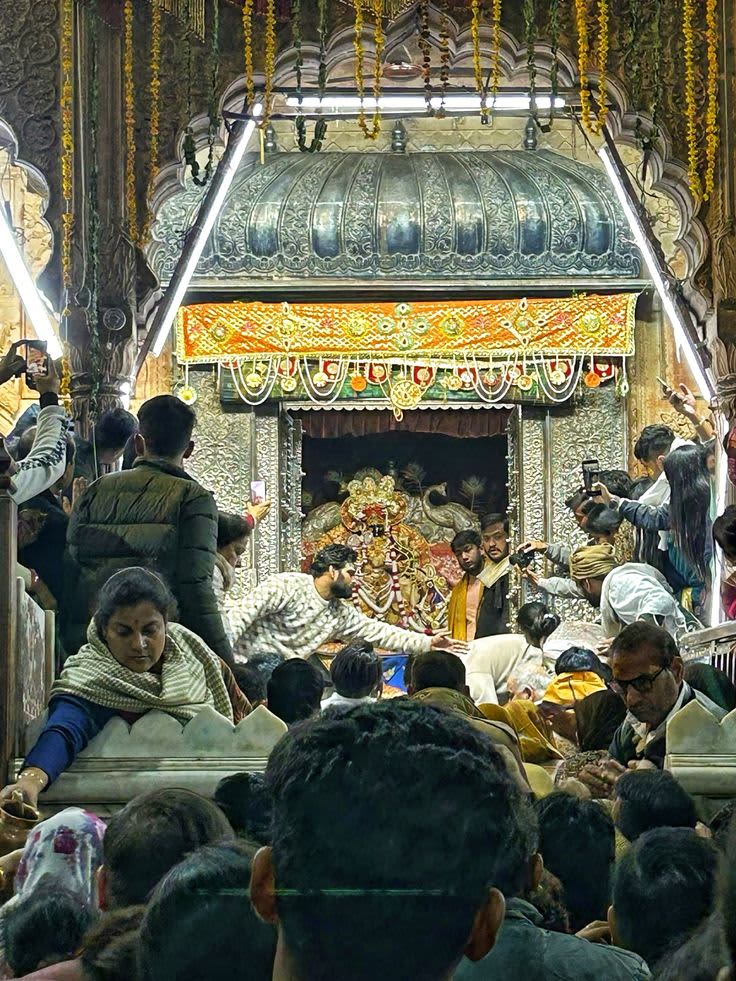
Radha Vallabh Temple
→Radha Vallabh Temple in Vrindavan is a deeply important 16th-century Vaishnava shrine dedicated to Sri Radha Vallabh (Lord Krishna as the beloved of Radha) — one of the rare temples where Radha is considered the supreme deity. Founded by the Braj saint Hit Harivansh in 1585, it is one of the most revered temples in Vrindavan's Braj cultural heritage. The shrine's intimate atmosphere, evening arti, and the unique Radha-centric theology make it a top spiritual destination in Vrindavan.