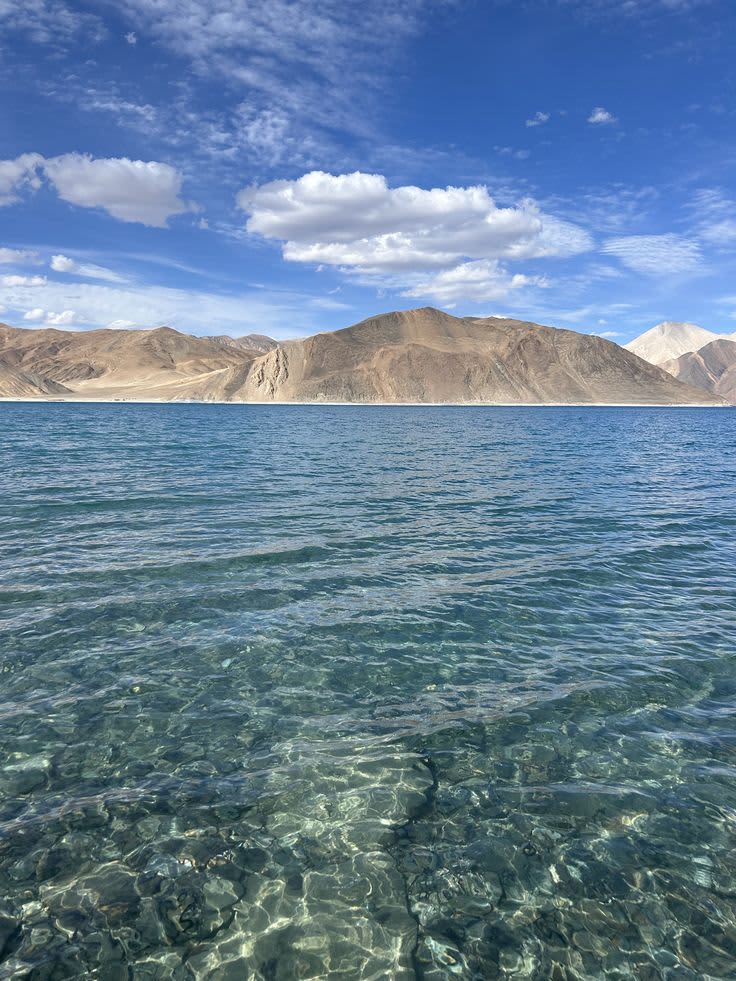
Pangong Lake, one of the world's highest brackish lakes at an altitude of 4,350 meters, stretches 134 kilometers across the India-China border in Ladakh and is famed for its dramatic color-shifting wa...

Pangong Lake
Lake of the Great Hollow
Jammu and Kashmir, India
4.8
Color-changing waters3 Idiots filming locationIndo-China border
lakemountain
Duration: 1–2 Days
Budget/day: ₹2,500 – ₹6,000
Best season: May – Sep
Altitude: 4,350 m
Nearest airport: Kushok Bakula Rimpochee Airport, Leh (160 km)
Nearest railway: No nearby railway. Jammu (700 km) is the nearest major station.
Best places to visit in Pangong Lake
Things to do in Pangong Lake
- No photoPhotographyView full guide
Throughout your stay
Photography
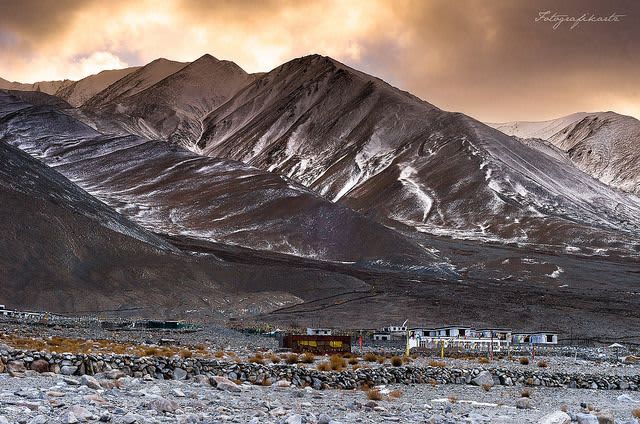
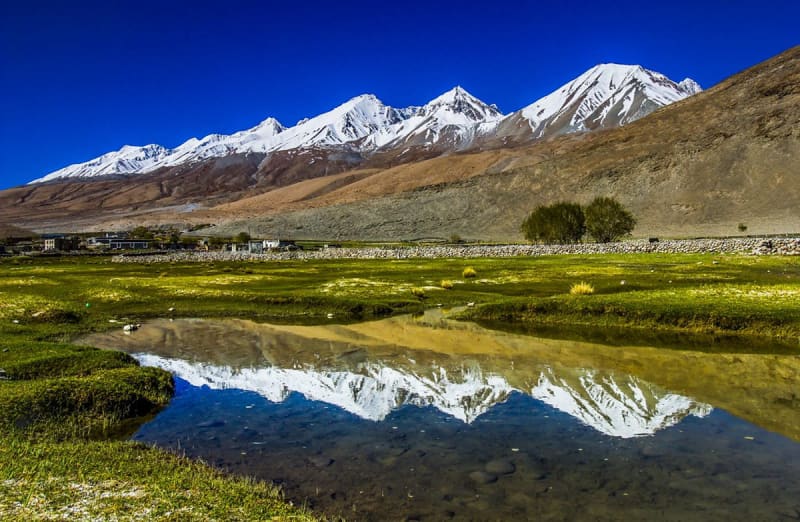
Photograph Pangong Tso's extraordinary colour transitions — the lake shifts from azure to turquoise to deep blue to green as clouds and sunlight interact with its 134 km length. The ever-changing light on the surrounding barren khaki mountains and the lake's mirror-like surface create extraordinary compositions at every hour.
- No photoNature / AdventureView full guide
1–2 nights
Camping by the Lake
Camp on the gravelly shores of Pangong Tso in tents operated by local Changpa nomad families — watching the lake change colours at dawn and dusk, sleeping to the sound of absolute silence at 4,350 m altitude, and waking to crystalline Himalayan air.
- No photoAstronomy / NatureView full guide
2–4 hours (9 PM – 1 AM)
Stargazing
Experience world-class stargazing at Pangong Tso — the lake's extreme altitude (4,350 m), zero humidity, and total absence of artificial light create perfect conditions for seeing the Milky Way core, Andromeda Galaxy with the naked eye, and meteors streaking across a jet-black sky.
Best Time to Visit and Weather Info
Best time: May to September
The lake is frozen and inaccessible from November to March. Passes to the lake open in late April or May.
Summer
Best Time ⭐May – Sep
5°C – 25°C
The lake is accessible, its vivid blue and turquoise colours are at their finest, and migratory birds are present.
- Acclimatize in Leh for 2 days before visiting
- Carry sun protection — UV levels are extreme at high altitude
Winter
Avoid 🔴Jan – Mar
-20°C – 5°C
The lake freezes over. The Chang La and other passes are closed. Extremely cold and inaccessible for most visitors.
- Only accessible for very experienced winter expeditions
- Roads are completely blocked by snow
Shoulder
Okay 🟡Apr & Oct
-5°C – 15°C
Transitional period. Roads may be partially open. Weather is unpredictable.
- Check road status before departing Leh
- Nights are very cold — carry heavy sleeping gear
How to Reach
✈️By Air
Airport: Kushok Bakula Rimpochee Airport, Leh (160 km from Pangong Lake)
Duration: ~5 hrs by road
Daily flights from Delhi. From Leh, take a shared taxi or hire a private jeep to Pangong via Chang La.
Taxi: ₹4,000 – ₹7,000 (Leh to Pangong, return)
Airlines: IndiGo, Air India, GoAir
🚂By Train
Station: No railway in Ladakh. Nearest is Jammu Tawi (~700 km)
Train to Jammu, then bus or taxi to Leh (2 days by road), then continue to Pangong.
- Jammu Mail — Delhi (~10 hrs to Jammu)
🚌By Road
From Leh, the route goes via Chang La Pass (5,360 m) — one of the highest motorable passes in the world.
- Leh: 160 km, 5–6 hrs via Chang La Pass
- Manali (via Leh): ~530 km, 2 days via Manali-Leh Highway
Itineraries
Local Food
Food options near Pangong are limited to basic camps and local homestays. Carry snacks and stay in camps near Spangmik village.
Thukpa
Tibetan noodle soup with vegetables or meat — perfect for the cold altitude.
Where: Camps and homestays near Spangmik
₹100 – ₹180
Momos
Steamed dumplings stuffed with vegetables or meat, a Ladakhi staple.
Where: Any camp near the lake
₹80 – ₹150
Butter Tea (Po Cha)
Salted tea churned with yak butter — an acquired taste but essential at high altitude.
Where: Homestays and local camps
₹30 – ₹60
Skyu
Traditional Ladakhi pasta stew with root vegetables and lamb.
Where: Local homestays
₹100 – ₹200
Tsampa
Roasted barley flour mixed with butter tea — a traditional Ladakhi staple food.
Where: Homestays
₹50 – ₹80
Apricot Jam
Sweet local apricot preserves grown in Ladakh, often served with bread.
Where: Leh market and camps
₹100 – ₹200 per jar
Food options near the lake are very limited. Eat well in Leh before departing and carry energy bars for the journey.
FAQs
- Pangong Lake is famous for its stunning colour-shifting waters (blue to turquoise to green), its appearance in the film '3 Idiots', and its location straddling India and China.
Best Places Similar

Nubra Valley
Nubra Valley, a high-altitude cold desert in northern Ladakh accessible via the exhilarating Khardung La Pass — one of the world's highest motorable roads — is a surreal landscape of sand dunes, apple orchards, and Buddhist monasteries flanked by towering Himalayan peaks. The sight of double-humped Bactrian camels against the backdrop of golden sand dunes at Hunder is one of the most iconic and unexpected images in the Indian Himalayas. The ancient Diskit Monastery with its giant Maitreya Buddha statue overlooking the valley is a deeply moving cultural highlight of any Ladakh itinerary.
Ladakh
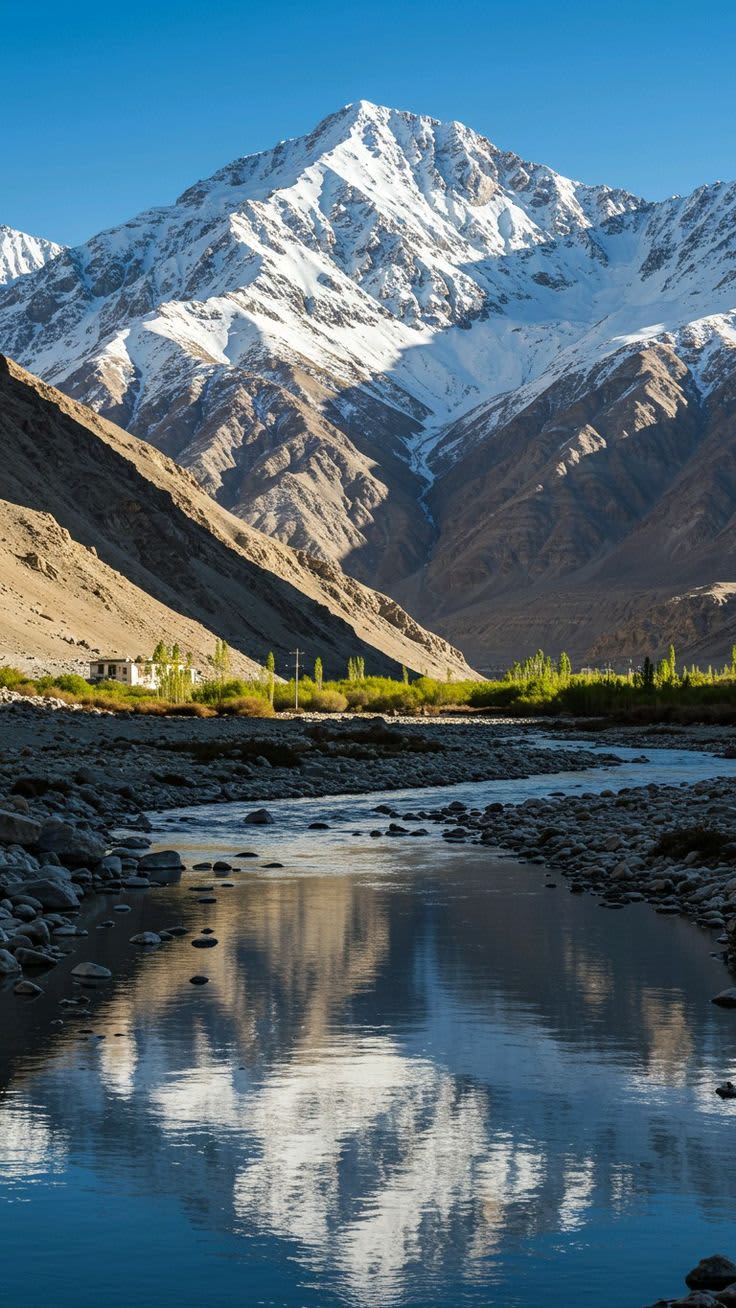
Ladakh, the Land of High Passes, is India's largest, least populated, and perhaps most spectacular region — a high-altitude desert where ancient Buddhist culture thrives amid one of the world's most dramatic landscapes of barren mountains, glacial rivers, and impossibly blue skies. The region's legendary monasteries at Hemis, Thiksey, Lamayuru, and Alchi preserve centuries of Tibetan Buddhist art and learning, while the landscape hosts some of the planet's most ambitious adventure routes. From the azure waters of Pangong and Tso Moriri lakes to the frozen Chadar trek on the Zanskar River, Ladakh is a destination of superlatives that every traveler should experience.
Leh
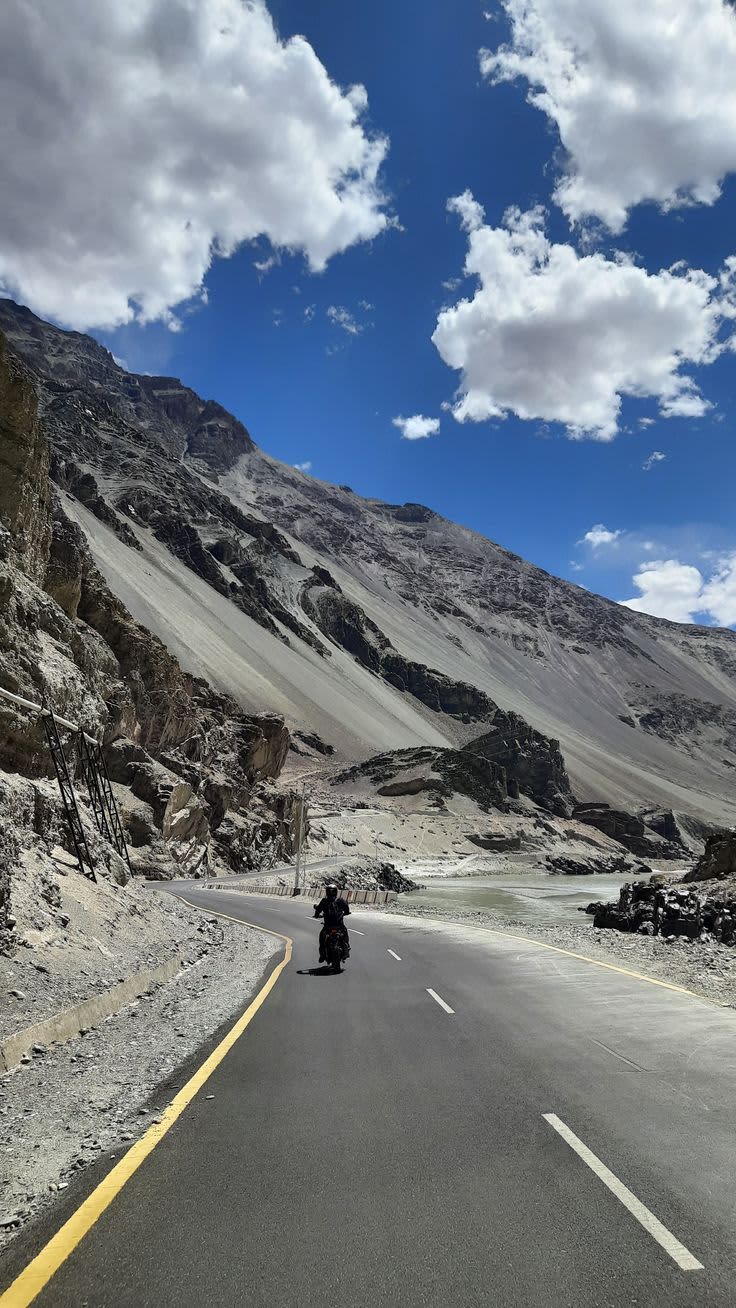
Leh, the capital of the union territory of Ladakh at an altitude of 3,500 meters, is one of the most dramatic and culturally rich destinations in all of India, situated in a high-altitude desert valley flanked by the Karakoram and Himalayan ranges. The 9th-century Leh Palace overlooking the town, the fluttering prayer flags at Shanti Stupa, and the ancient monasteries of Hemis and Thiksey are landmarks that define this Buddhist heartland. Leh serves as the hub for epic road trips on the Manali-Leh and Srinagar-Leh highways and for organizing expeditions to Pangong Lake, Nubra Valley, and the Zanskar region.
Nearby destinations
Leh
132 km · Leh, the capital of the union territory of Ladakh at an altitude of 3,500 meters, is one of the most dramatic and culturally rich destinations in all of India, situated in a high-altitude desert valley flanked by the Karakoram and Himalayan ranges. The 9th-century Leh Palace overlooking the town, the fluttering prayer flags at Shanti Stupa, and the ancient monasteries of Hemis and Thiksey are landmarks that define this Buddhist heartland. Leh serves as the hub for epic road trips on the Manali-Leh and Srinagar-Leh highways and for organizing expeditions to Pangong Lake, Nubra Valley, and the Zanskar region.
Ladakh
132 km · Ladakh, the Land of High Passes, is India's largest, least populated, and perhaps most spectacular region — a high-altitude desert where ancient Buddhist culture thrives amid one of the world's most dramatic landscapes of barren mountains, glacial rivers, and impossibly blue skies. The region's legendary monasteries at Hemis, Thiksey, Lamayuru, and Alchi preserve centuries of Tibetan Buddhist art and learning, while the landscape hosts some of the planet's most ambitious adventure routes. From the azure waters of Pangong and Tso Moriri lakes to the frozen Chadar trek on the Zanskar River, Ladakh is a destination of superlatives that every traveler should experience.
Nubra Valley
156 km · Nubra Valley, a high-altitude cold desert in northern Ladakh accessible via the exhilarating Khardung La Pass — one of the world's highest motorable roads — is a surreal landscape of sand dunes, apple orchards, and Buddhist monasteries flanked by towering Himalayan peaks. The sight of double-humped Bactrian camels against the backdrop of golden sand dunes at Hunder is one of the most iconic and unexpected images in the Indian Himalayas. The ancient Diskit Monastery with its giant Maitreya Buddha statue overlooking the valley is a deeply moving cultural highlight of any Ladakh itinerary.