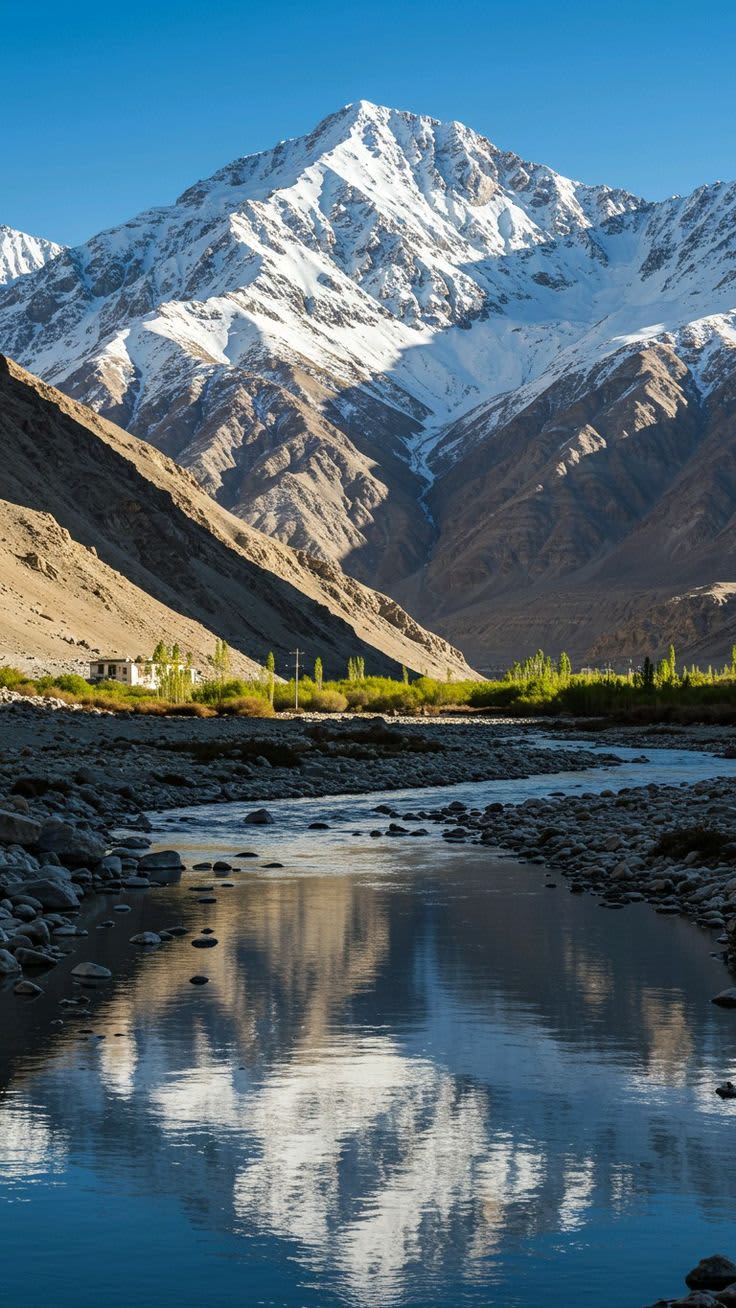
Ladakh, the Land of High Passes, is India's largest, least populated, and perhaps most spectacular region — a high-altitude desert where ancient Buddhist culture thrives amid one of the world's most d...
Ladakh
Land of High Passes
Ladakh, India
5
Pangong LakeManali-Leh HighwayMonasteries
mountain
Duration: 7–14 Days
Budget/day: ₹2,500 – ₹8,000
Best season: Jun – Sep
Altitude: 2,500 m – 5,400 m
Nearest airport: Kushok Bakula Rimpochee Airport, Leh
Nearest railway: No railway in Ladakh. Jammu is the nearest major railhead (~750 km).
Best places to visit in Ladakh


Things to do in Ladakh
 Adventure / MotorcycleView full guide
5–8 days (one way from Manali)
Bike Trip
Ride the legendary Manali–Leh Highway (479 km) or Srinagar–Leh Highway (434 km) — two of the world's most dramatic motorcycle routes crossing 5 high-altitude passes including Rohtang (3,978 m), Baralacha La (4,890 m), Tanglang La (5,328 m), and Khardung La (5,359 m — one of the world's highest motorable roads).
 Spiritual / CulturalView full guide
Full day to explore multiple gompas
Monastery Visits
Explore Ladakh's ancient Buddhist monasteries — Hemis (largest in Ladakh, famous for its June festival), Thiksey (resembles the Potala Palace in Lhasa), Diskit (2nd century, with a 32-metre Maitreya Buddha statue), Lamayuru (dubbed 'Moonland' for its lunar landscape setting), and Alchi (1,000-year-old murals).
 Trekking / AdventureView full guide
2 to 14 days
Trekking
Explore Ladakh's epic trekking routes — the Markha Valley Trek (5 days; crossing Kongmaru La 5,150 m), the Sham Valley Trek ('Lamayuru to Alchi' — 4 days; gentler), the challenging Stok Kangri summit (6,153 m; non-technical mountaineering peak), or the remote Zanskar Valley traverse (10+ days).
Best Time to Visit and Weather Info
Best time: June to September
Most high passes and roads are only open June–October. Winter Ladakh (January–February) is possible but very extreme.
Summer
Best Time ⭐Jun – Sep
5°C – 30°C
All roads, passes (Khardung La, Chang La, Umling La), and destinations open. Festivals, treks, and motorcycle expeditions are in full swing.
- Acclimatize for minimum 2 days in Leh before exploring
- ILP permits for restricted areas must be arranged in Leh
Winter
Extreme ❄️Jan – Feb
-20°C – 0°C
Most roads blocked. Chadar Trek (frozen Zanskar River) is the famous winter experience for adventurous trekkers.
- Only the Chadar Trek is the main winter activity
- Most hotels and tourist infrastructure closed
How to Reach
✈️By Air
Airport: Kushok Bakula Rimpochee Airport, Leh (Within Leh city)
Duration: Direct 1.5 hr flight from Delhi
Daily flights from Delhi, Mumbai, and Srinagar. Flying is the fastest and most comfortable option.
Taxi: ₹200 – ₹400 (Airport to Leh Market)
Airlines: IndiGo, Air India, GoAir
🚂By Train
Station: Nearest railway: Jammu Tawi (~750 km)
No train connectivity to Ladakh. Take a train to Jammu, then road journey via Srinagar or Manali.
- Jammu Mail — Delhi (~10 hrs to Jammu)
🚌By Road
The legendary road journeys to Leh are part of the Ladakh experience. Two main routes are open in summer.
- Manali: 480 km, 2 days via Rohtang – Baralacha La – Tanglang La (Jun–Oct)
- Srinagar: 434 km, 2 days via Kargil – Lamayuru (May–Nov)
- Delhi (via Manali): 1,000+ km, 3–4 days total via Chandigarh – Manali – Leh
Itineraries
Local Food
Ladakhi cuisine is a remarkable blend of Tibetan and Central Asian flavours, shaped by the high altitude, harsh climate, and the Silk Route trading history.
Thukpa
Noodle broth soup — the staple of every Ladakhi meal, available in yak meat, chicken, or vegetable versions.
Where: Any restaurant in Leh
₹100 – ₹200
Skyu
Thick pasta stew with hand-rolled dough pieces and root vegetables — a traditional Ladakhi winter staple.
Where: Traditional Ladakhi restaurants
₹100 – ₹180
Chhurpi (Yak Cheese)
Hard, dried yak cheese — available soft (eaten with meals) or rock-hard (chewed for hours like candy).
Where: Markets in Leh and villages
₹80 – ₹200
Butter Tea
Salty, buttery, thick tea — an acquired taste that is nutritionally essential at high altitude.
Where: Monasteries, guesthouses, and homes throughout Ladakh
₹20 – ₹60
Ladakhi Apricot Products
Sun-dried apricots, apricot oil, and jam from Nubra, Hunza-style — exported worldwide.
Where: Markets in Leh and Nubra
₹150 – ₹500
Tigur (Wild Rose Hip Juice)
Tart, vitamin-rich juice from wild rose hips — a Ladakhi health tonic.
Where: Local markets
₹80 – ₹150
Ladakhi cuisine is best experienced in a family homestay. Most home stays in villages serve freshly cooked traditional meals using local barley, dairy, and seasonal produce.
FAQs
- Ladakh is famous for its otherworldly landscapes, ancient Tibetan Buddhist monasteries (Hemis, Thiksey, Lamayuru), Pangong Tso, Nubra Valley, Khardung La, the Manali-Leh motorcycle expedition, and the Chadar Trek on the frozen Zanskar River.
Best Places Similar
Leh
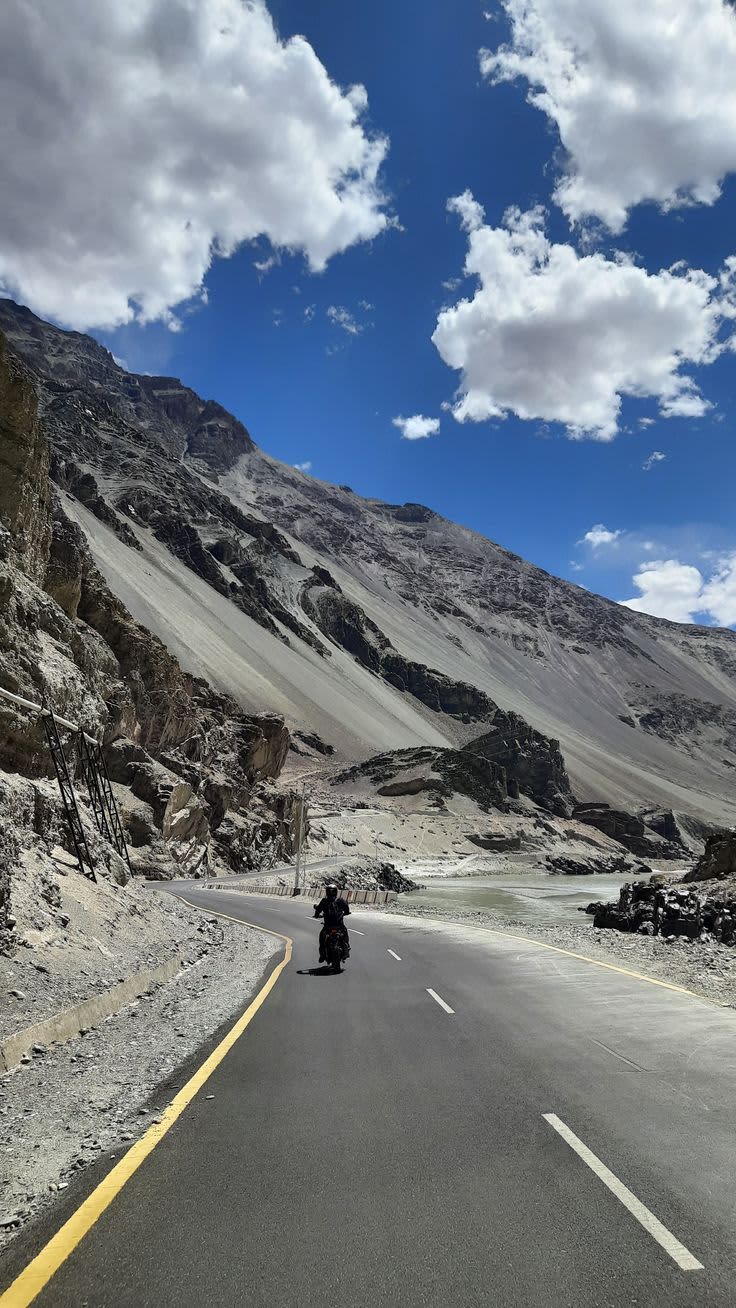
Leh, the capital of the union territory of Ladakh at an altitude of 3,500 meters, is one of the most dramatic and culturally rich destinations in all of India, situated in a high-altitude desert valley flanked by the Karakoram and Himalayan ranges. The 9th-century Leh Palace overlooking the town, the fluttering prayer flags at Shanti Stupa, and the ancient monasteries of Hemis and Thiksey are landmarks that define this Buddhist heartland. Leh serves as the hub for epic road trips on the Manali-Leh and Srinagar-Leh highways and for organizing expeditions to Pangong Lake, Nubra Valley, and the Zanskar region.

Nubra Valley
Nubra Valley, a high-altitude cold desert in northern Ladakh accessible via the exhilarating Khardung La Pass — one of the world's highest motorable roads — is a surreal landscape of sand dunes, apple orchards, and Buddhist monasteries flanked by towering Himalayan peaks. The sight of double-humped Bactrian camels against the backdrop of golden sand dunes at Hunder is one of the most iconic and unexpected images in the Indian Himalayas. The ancient Diskit Monastery with its giant Maitreya Buddha statue overlooking the valley is a deeply moving cultural highlight of any Ladakh itinerary.

Pangong Lake
Pangong Lake, one of the world's highest brackish lakes at an altitude of 4,350 meters, stretches 134 kilometers across the India-China border in Ladakh and is famed for its dramatic color-shifting waters that transition from azure to turquoise to green and back in a single day. Made internationally famous by the Bollywood film '3 Idiots,' the lake's surreal reflection of surrounding snowcapped mountains makes it one of the most photographed landscapes in India. A sunrise or sunset at Pangong is an awe-inspiring, once-in-a-lifetime experience.
Nearby destinations
Leh
0 km · Leh, the capital of the union territory of Ladakh at an altitude of 3,500 meters, is one of the most dramatic and culturally rich destinations in all of India, situated in a high-altitude desert valley flanked by the Karakoram and Himalayan ranges. The 9th-century Leh Palace overlooking the town, the fluttering prayer flags at Shanti Stupa, and the ancient monasteries of Hemis and Thiksey are landmarks that define this Buddhist heartland. Leh serves as the hub for epic road trips on the Manali-Leh and Srinagar-Leh highways and for organizing expeditions to Pangong Lake, Nubra Valley, and the Zanskar region.
Nubra Valley
44 km · Nubra Valley, a high-altitude cold desert in northern Ladakh accessible via the exhilarating Khardung La Pass — one of the world's highest motorable roads — is a surreal landscape of sand dunes, apple orchards, and Buddhist monasteries flanked by towering Himalayan peaks. The sight of double-humped Bactrian camels against the backdrop of golden sand dunes at Hunder is one of the most iconic and unexpected images in the Indian Himalayas. The ancient Diskit Monastery with its giant Maitreya Buddha statue overlooking the valley is a deeply moving cultural highlight of any Ladakh itinerary.
Pangong Lake
132 km · Pangong Lake, one of the world's highest brackish lakes at an altitude of 4,350 meters, stretches 134 kilometers across the India-China border in Ladakh and is famed for its dramatic color-shifting waters that transition from azure to turquoise to green and back in a single day. Made internationally famous by the Bollywood film '3 Idiots,' the lake's surreal reflection of surrounding snowcapped mountains makes it one of the most photographed landscapes in India. A sunrise or sunset at Pangong is an awe-inspiring, once-in-a-lifetime experience.