Jaipur, the Pink City and capital of Rajasthan, is one of India's most vibrant and photogenic destinations, famous for its rose-tinted heritage architecture, colorful bazaars overflowing with textiles...
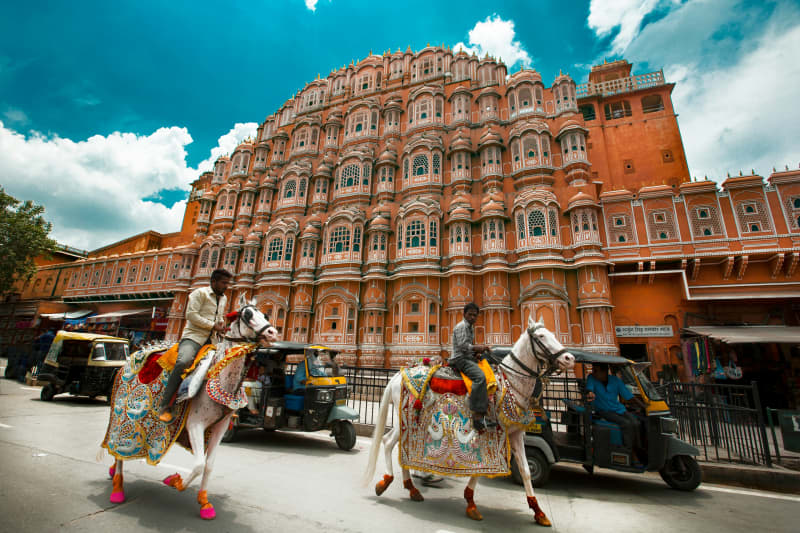
Jaipur
The Pink City
Rajasthan, India
4.7
Amber FortHawa MahalCity Palace
heritagecity
Duration: 2–3 Days
Budget/day: ₹1,500 – ₹7,000
Best season: Oct – Mar
Altitude: 431 m
Nearest airport: Jaipur International Airport (13 km from city)
Nearest railway: Jaipur Railway Station (city centre)
Best places to visit in Jaipur


Things to do in Jaipur
 HeritageView full guide
2–3 hours
Amber Fort Tour
Explore the magnificent Amer (Amber) Fort — a hilltop Rajput citadel built in 1592 by Raja Man Singh, combining Rajput and Mughal architectural styles. Highlights include the Diwan-e-Aam (public hall), Sheesh Mahal (Mirror Palace — 1 million mirror mosaic reflecting a single candle), Sukh Niwas (pleasure palace with air-cooled water channels), and panoramic views of Maota Lake.
 Heritage / CulturalView full guide
2–3 hours
City Palace Visit
Tour the sprawling City Palace complex in Jaipur's heart — still partly inhabited by the royal Jaipur family. Includes the Mubarak Mahal (textile museum), Chandra Mahal (7-storey palace), Diwan-i-Khas with world's largest pure silver vessels (Ganges water carriers for the Maharaja's England voyage), and the Maharaja Sawai Man Singh II Museum.
 Cultural / HeritageView full guide
30–45 minutes (one way)
Elephant Ride
Ascend to Amber Fort on decorated Rajasthani elephants — a centuries-old practice that brings you to the fort's Suraj Pol (Sun Gate) in regal style. Each elephant is assigned a mahout (handler) and carries two passengers in a decorated howdah (seat).
Best Time to Visit and Weather Info
Best time: October to March
Summer (April–June) is very hot. Monsoon (July–September) brings relief but humidity.
Winter
Best Time ⭐Oct – Mar
5°C – 25°C
Perfect weather for exploring the Pink City's magnificent forts, palaces, and bazaars. The Jaipur Literature Festival (January) is a major global cultural event.
- Book a hot air balloon ride over Amber Fort at sunrise
- Visit the Jaipur Literature Festival (last week of January)
Monsoon
Okay 🟡Jul – Sep
25°C – 38°C
The Aravalli range turns green. Jal Mahal (Water Palace) is surrounded by a full lake. Fewer tourists.
- Jal Mahal surrounded by the Mansagar Lake is stunning in monsoon
- Fewer crowds at forts and palaces
Summer
Very Hot 🔴Apr – Jun
30°C – 45°C
Intense heat. Outdoor sightseeing is harsh. Most visiting is restricted to early morning.
- Visit before 9 AM and after 5 PM
- Heritage havelis and museums are good indoor options
How to Reach
✈️By Air
Airport: Jaipur International Airport (Sanganer) (13 km from city centre)
Duration: ~30 mins by cab
Direct flights from Delhi, Mumbai, Bengaluru, and Kolkata. Multiple airlines operate.
Taxi: ₹300 – ₹600
Airlines: IndiGo, Air India, SpiceJet, Vistara
🚂By Train
Station: Jaipur Railway Station (city centre)
Well-connected from Delhi (4.5 hrs), Agra, and Mumbai. The Palace on Wheels luxury tourist train also stops in Jaipur.
- Shatabdi Express — Delhi (New Delhi) (4.5 hrs)
- Ajmer Shatabdi — Delhi (New Delhi) (4.5 hrs)
🚌By Road
Excellent expressways from Delhi and Agra. Rajasthan Roadways and private Volvo buses available.
- Delhi: 281 km, 5 hrs via NH-48 (Delhi-Jaipur Expressway)
- Agra: 238 km, 4.5 hrs via NH-21
- Udaipur: 400 km, 7 hrs via NH-58
Itineraries
Local Food
Jaipur is Rajasthan's food capital — famous for its royal Rajput cuisine, sweet shops, and one of India's liveliest street food cultures.
Dal Baati Churma
Rajasthan's signature dish — hard wheat balls baked in tandoor, served with five-lentil dal and sweet churma.
Where: Chokhi Dhani, LMB, Rawat Mishtan Bhandar
₹200 – ₹400
Pyaaz Kachori
Flaky deep-fried pastry stuffed with spiced onion filling — Jaipur's most famous street snack.
Where: Rawat Mishtan Bhandar, MI Road (since 1944)
₹30 – ₹60 per piece
Laal Maas
Royal Rajasthani fiery mutton curry — slow-cooked with Mathania red chilies and yogurt.
Where: Spice Court, 1135 AD at Amer Fort
₹350 – ₹600
Ghevar
Honeycomb disc-shaped sweet soaked in sugar syrup, topped with cream and saffron — a Rajasthani festival specialty.
Where: LMB (Laxmi Mishthan Bhandar), MI Road
₹200 – ₹500 per kg
Mishri Mawa Kachori
Sweet deep-fried pastry stuffed with mawa (milk solids) and sugar — a Jaipur dessert unique.
Where: Rawat Mishtan Bhandar
₹40 – ₹70 per piece
Rajasthani Thali
Complete royal thali with dal baati, gatte ki sabzi, ker sangri, bajra roti, and desserts.
Where: Chokhi Dhani (cultural village) or Samode Haveli
₹500 – ₹1,200
MI Road, Johari Bazaar, and Bapu Bazaar are Jaipur's main food hubs. LMB (since 1954) and Rawat Mishtan Bhandar (since 1944) are the legendary institutions.
FAQs
- Jaipur, the 'Pink City', is famous for Amber Fort, Hawa Mahal, City Palace, Jantar Mantar (UNESCO), Jal Mahal, Nahargarh Fort, block-printed textiles, gemstones, and its royal Rajput heritage.
Best Places Similar
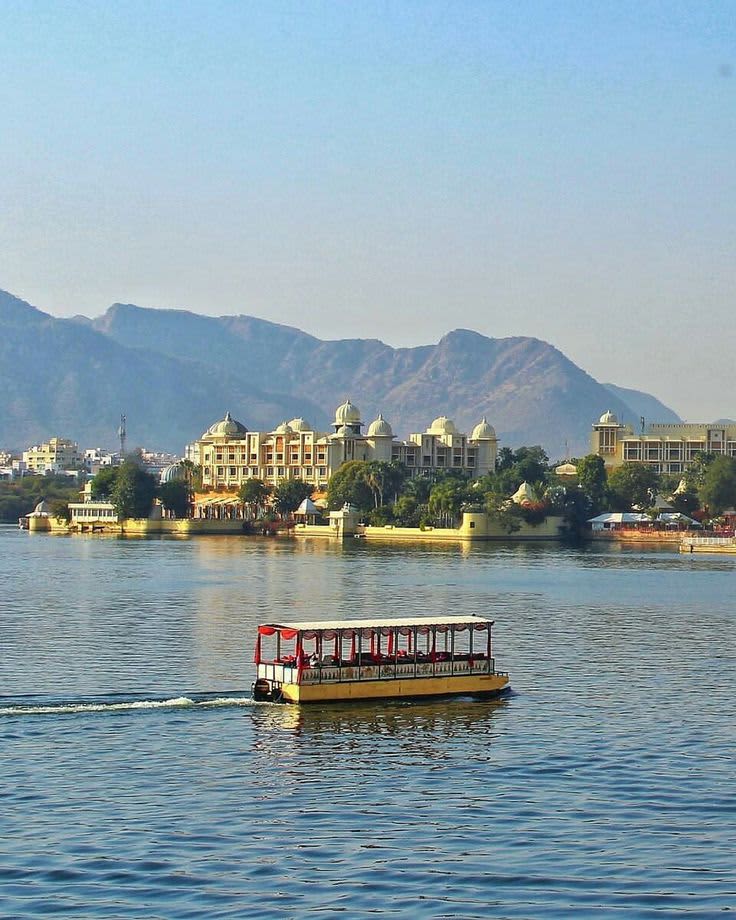
Udaipur
Udaipur, the City of Lakes in Rajasthan, is widely considered one of the most romantic cities in India, a dreamlike destination of shimmering lake palaces, white marble temples, and haveli-lined ghats reflected in the placid waters of Lake Pichola. The iconic Lake Palace — seemingly floating on the waters of Pichola — and the grand City Palace complex are among the finest examples of Rajput architecture anywhere in India. Udaipur's vibrant arts scene, exquisite handicrafts, and the mesmerizing evening boat rides on the lake make it a city that captures hearts and refuses to let go.
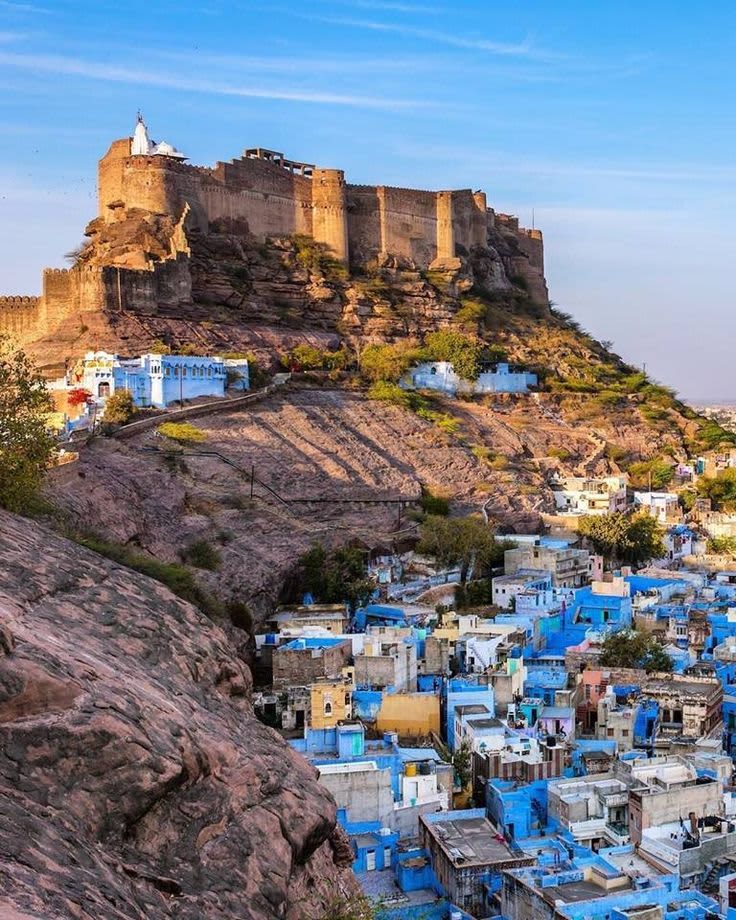
Jodhpur
Jodhpur, the Blue City of Rajasthan, is dominated by the magnificent Mehrangarh Fort — one of India's largest and best-preserved forts — rising 150 meters above a sea of indigo-painted houses in the old city below, creating one of the most dramatic urban vistas on earth. The city's blue color, traditionally used by Brahmin residents to distinguish their homes, has now been adopted across the old city, giving it its poetic nickname. The bustling Clock Tower market, the ornate Umaid Bhawan Palace, and the narrow lanes of the old city teeming with spice merchants and craftspeople make Jodhpur an unmissable Rajasthani experience.
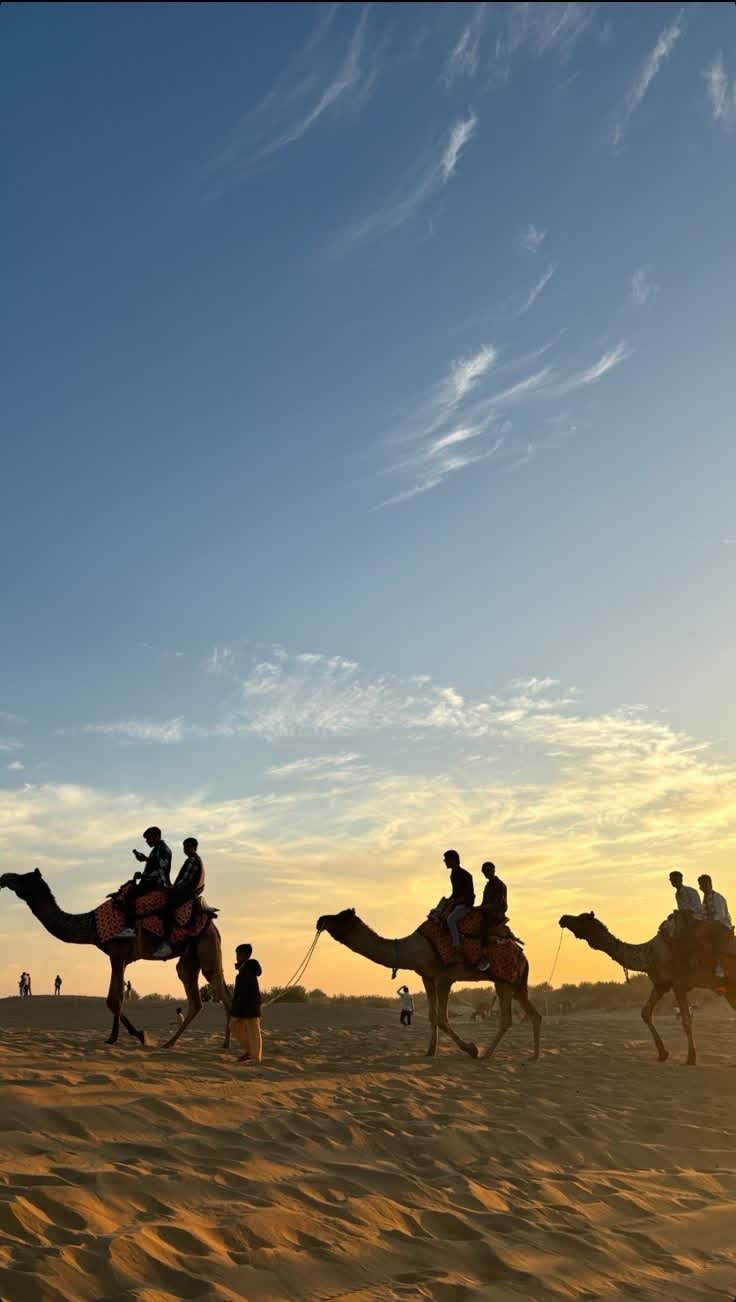
Jaisalmer
Jaisalmer, the Golden City of Rajasthan, rises like a mirage from the Thar Desert with its honey-colored sandstone fort, havelis, and temples that seem to glow in the desert light — earning it its poetic name. The living Jaisalmer Fort, one of the largest fully preserved fortified cities in the world and a UNESCO World Heritage Site, still houses a thriving community within its medieval ramparts. Camel safaris into the sweeping sand dunes of Sam and Khuri, overnight camps under the vast desert sky, and the intricately carved Patwon Ki Haveli make Jaisalmer a destination of extraordinary romance and adventure.
Nearby destinations

Ranthambore National Park
122 km · Ranthambore National Park in Rajasthan is one of India's largest and most famous tiger reserves, renowned for offering some of the most reliable tiger sightings in the country, particularly around its ancient lakes. The ruined 10th-century Ranthambore Fort, a UNESCO World Heritage Site, rises dramatically above the forest and adds a unique historical dimension to wildlife safaris. Beyond tigers, the park shelters leopards, sloth bears, striped hyenas, and abundant birdlife, making every game drive an adventure in this iconic Rajasthani wilderness.
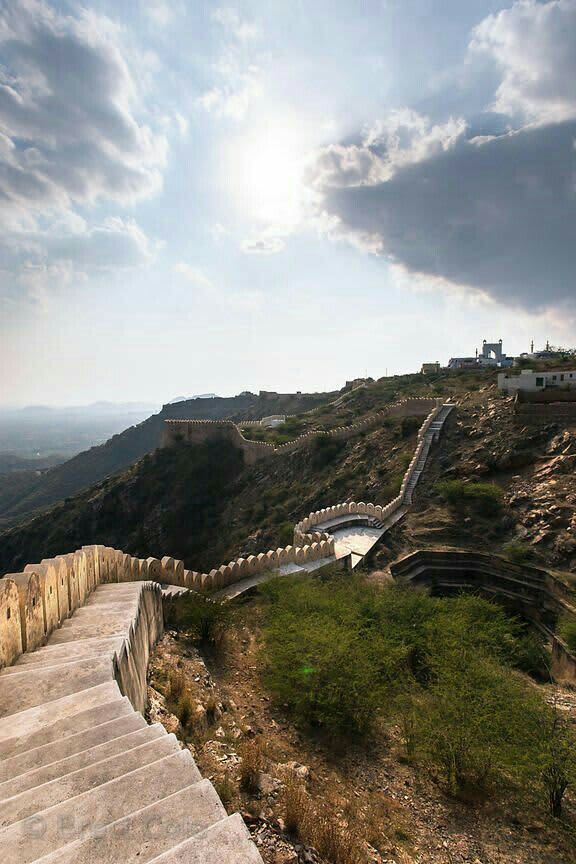
Ajmer
125 km · Ajmer, a city in the heart of Rajasthan, is one of the most important Islamic pilgrimage sites in South Asia, home to the Dargah Sharif — the tomb of the Sufi saint Khwaja Moinuddin Chishti, who is revered by Muslims and Hindus alike as a symbol of love, tolerance, and universal brotherhood. Millions of pilgrims visit the Dargah each year, particularly during the annual Urs festival, to seek blessings at the shrine's gilded tomb. The 12th-century Adhai Din Ka Jhonpra mosque and the stunning Ana Sagar Lake, where Emperor Jahangir built a beautiful marble pavilion, make Ajmer a city of remarkable composite heritage and spiritual significance.
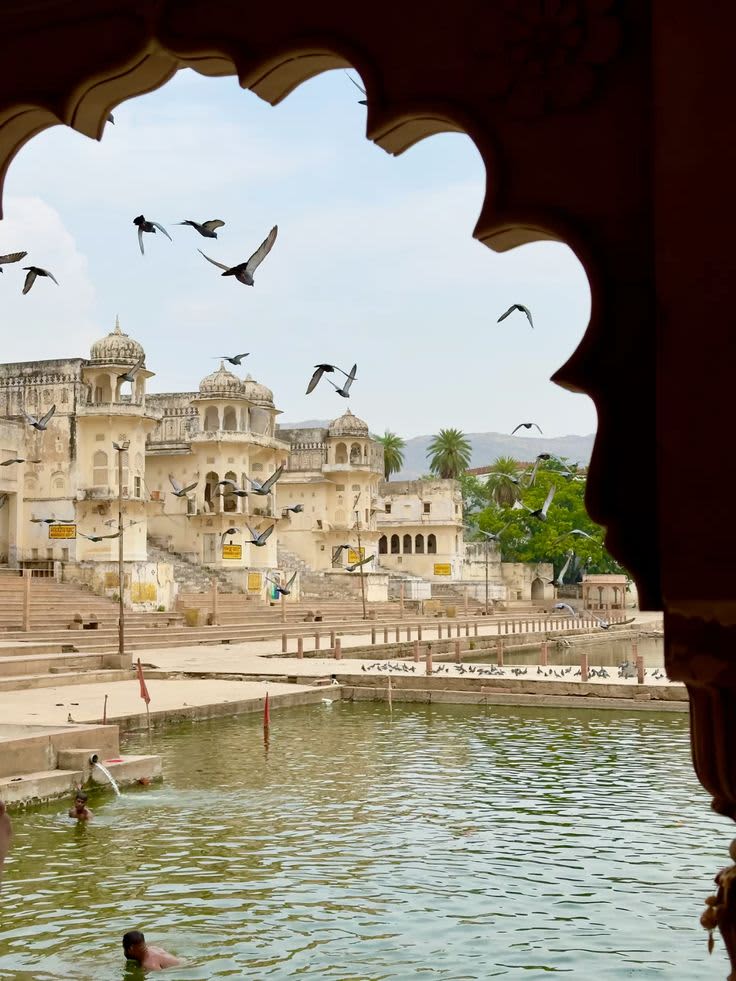
Pushkar
131 km · Pushkar, a sacred lake town in Rajasthan's Ajmer district, is built around the holy Pushkar Lake and is one of the five sacred dhams (pilgrimage sites) in Hinduism, home to the Brahma Temple — one of the very few temples in the world dedicated to the creator god Brahma. The 52 ghats surrounding the lake are the scene of continuous ritual activity and evening aarti ceremonies, while the flower-filled bazaars and the proliferation of ashrams and yoga centers give Pushkar a genuinely spiritual and otherworldly atmosphere. Every November, the Pushkar Camel Fair transforms the desert surrounds into the world's largest camel fair and a spectacular pageant of Rajasthani folk culture.