Varanasi, one of the world's oldest continuously inhabited cities and Hinduism's most sacred destination, sits on the banks of the Ganges in Uttar Pradesh and is believed by Hindus to be the city wher...
Banaras
Spiritual Capital of India
Uttar Pradesh, India
4.9
Ganga GhatsAncient TemplesSpiritual Hub
spiritual
Duration: 2–3 Days
Budget/day: ₹1,500 – ₹5,000
Best season: Oct – Mar
Altitude: 80 m
Nearest airport: Lal Bahadur Shastri International Airport, Varanasi (26 km)
Nearest railway: Varanasi Junction (in-city)
Best places to visit in Banaras


Things to do in Banaras
 SpiritualView full guide
1 hour
Ganga Aarti
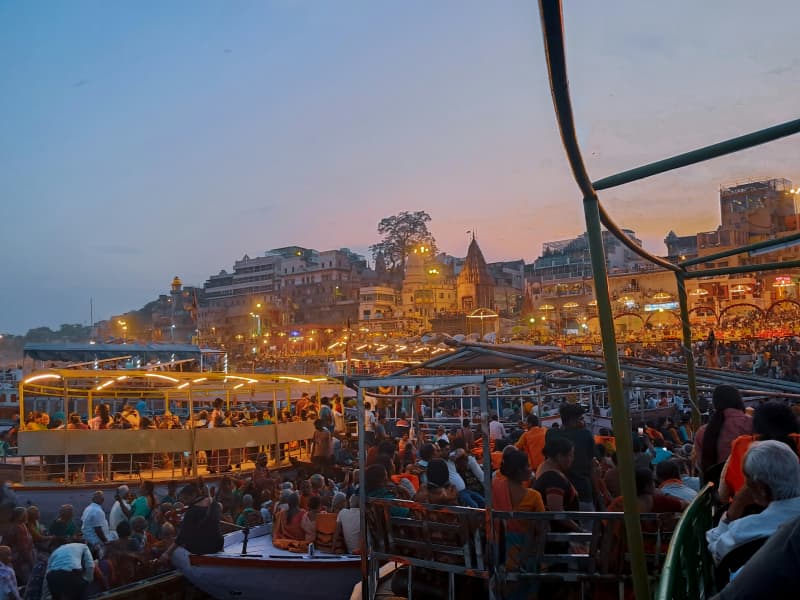
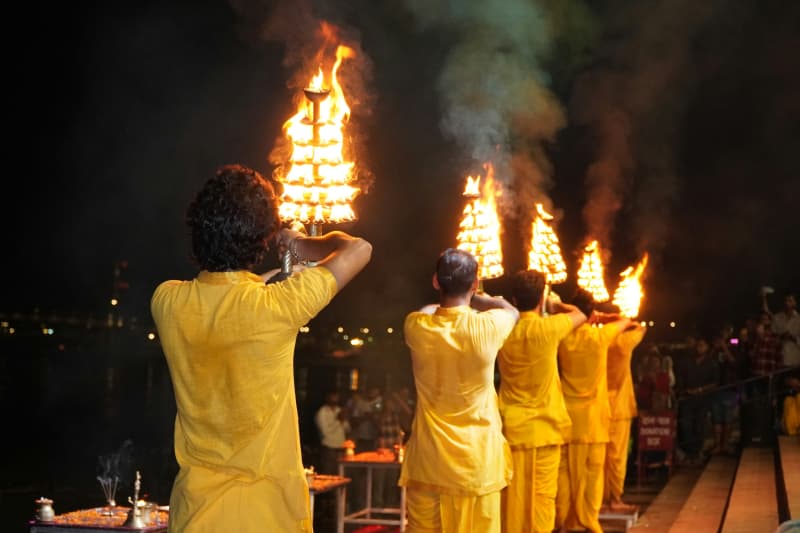
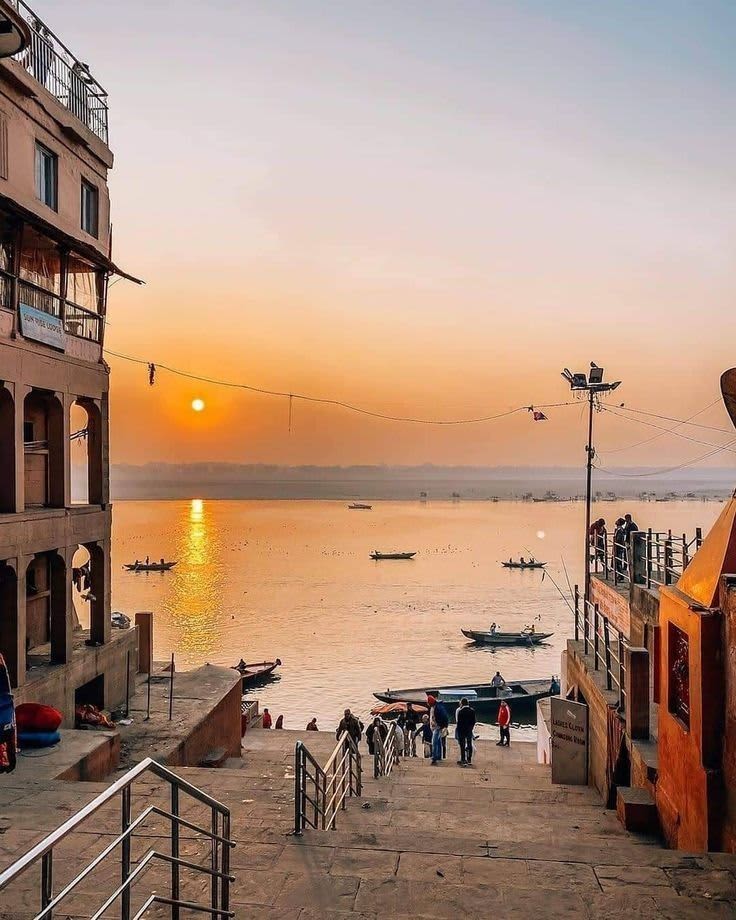
Witness the magnificent Ganga Aarti at Dashashwamedh Ghat — Varanasi's most spectacular spiritual ceremony performed nightly by a group of priests wielding large flaming lamps in synchronised motions, accompanied by conch shells, bells, and chanting. Over 3,000 visitors attend nightly, making it one of the subcontinent's most visually overwhelming rituals.
 Spiritual / CulturalView full guide
2–4 hours
Ghats Walk
Walk the 84 ghats (stone-stepped riverbanks) of Varanasi stretching 6.5 km along the Ganges — each with a distinct character: Assi Ghat (yoga and chai hub), Dashashwamedh (the main aarti ghat), Manikarnika and Harishchandra (the sacred cremation ghats), Scindia Ghat (partially submerged temple), and the quieter upstream ghats.
 Spiritual / SightseeingView full guide
1–2 hours
Boat Ride
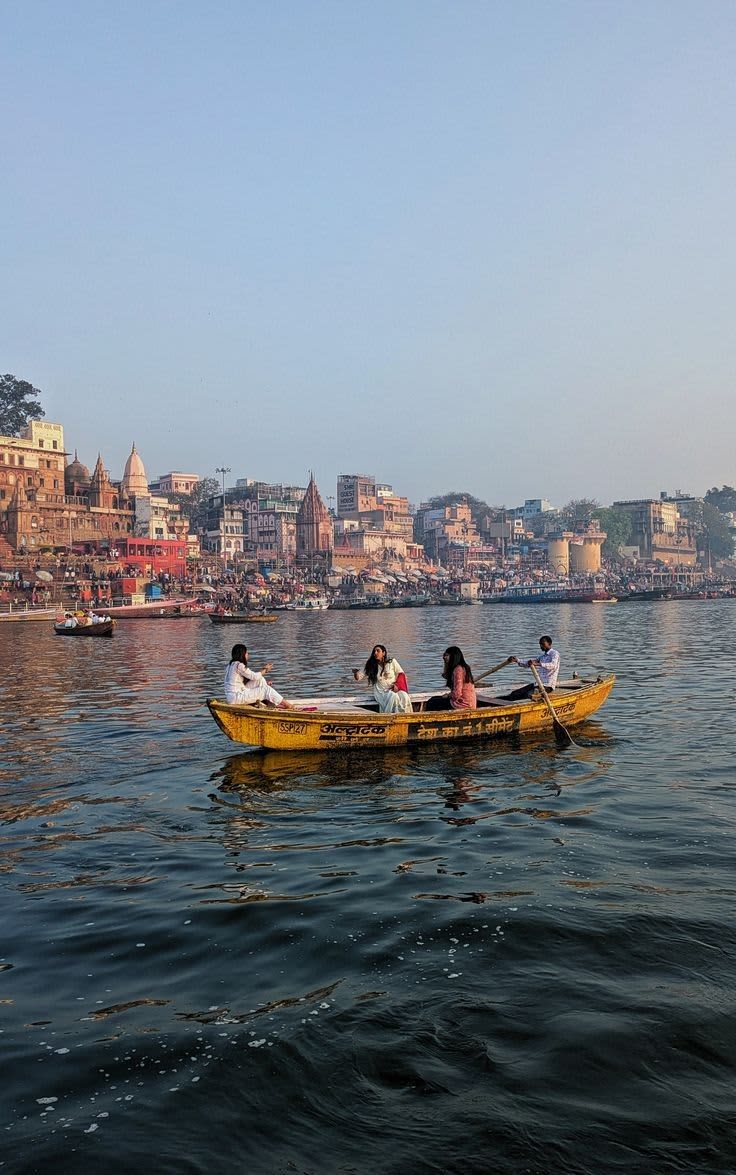
Glide along the Ganges at dawn in a wooden rowing boat — the most iconic Varanasi experience. From the water, you see the entire riverfront ghats panorama: terracotta-coloured palaces, temples, and cremation grounds rising from the curved western bank as the sun emerges behind you from the flat eastern bank.
Best Time to Visit and Weather Info
Best time: October to March
Dev Deepawali in November (Kartik Purnima) is spectacular — thousands of diyas on all 84 ghats. Winter is the most comfortable season.
Winter
Best Time ⭐Oct – Mar
8°C – 25°C
Cool weather, misty morning boat rides on the Ganga, stunning Ganga Aarti, and Dev Deepawali make this the ideal season.
- Take a boat ride at sunrise on the Ganga — absolutely unmissable
- Attend the Ganga Aarti at Dashashwamedh Ghat at sunset
Summer
Good 🟡Apr – Jun
25°C – 46°C
Hot and humid. Fewer tourists. The city's spiritual energy remains unchanged.
- Visit ghats early morning
- Boat rides at 5 AM are comfortable
Monsoon
Good 🟡Jul – Sep
28°C – 38°C
Heavy rains and Ganga floods. Many ghats submerge. But the city maintains its mystical aura.
- Lower ghats may be submerged — stick to upper ghats
- Boat rides are still possible
How to Reach
✈️By Air
Airport: Lal Bahadur Shastri International Airport, Varanasi (26 km)
Duration: ~45 mins
Flights from Delhi, Mumbai, Bengaluru, Kolkata. Prepaid taxis available outside.
Taxi: ₹500 – ₹800
Airlines: IndiGo, Air India, SpiceJet, Vistara
🚂By Train
Station: Varanasi Junction / Manduadih (Kashi) Station
Varanasi is well connected by rail to all major Indian cities. The Kashi (Manduadih) station is close to the old city.
- Vande Bharat Express — Delhi (8 hrs)
- Kashi Vishwanath Express — Delhi (12 hrs)
- Mahanagari Express — Mumbai (28 hrs)
🚌By Road
Connected by highway to Delhi, Agra, Lucknow, and Patna. UP State buses and private Volvos available.
- Delhi: 780 km, 11–12 hrs via Agra Expressway + NH-19
- Lucknow: 300 km, 5 hrs via NH-27
- Prayagraj: 120 km, 2.5 hrs via NH-19
- Ayodhya: 200 km, 4 hrs via NH-27
Itineraries
Local Food
Varanasi is a food lover's paradise. From the finest street food to chai culture, the city has its own culinary universe.
Kashi Chaat
Tamatar chaat — a Varanasi signature with crispy ingredients in tangy tomato gravy.
Where: Deena Chaat, Godowlia Crossing
₹30 – ₹60
Baati Chokha
Baked wheat balls served with mashed brinjal and potato — a rustic Eastern UP specialty.
Where: Kashi Baati Chokha, Assi Ghat area
₹80 – ₹150
Malaiyo
Winter-only frothy milk dessert dusted with saffron and pistachios — a morning street delicacy (Oct–Feb only).
Where: Street vendors near Dashashwamedh Ghat
₹30 – ₹60
Blue Lassi
Thick, flavored lassi served in earthen kulhads — a Varanasi institution since 1925.
Where: Blue Lassi Shop, near Manikarnika Ghat
₹60 – ₹100
Thandai
Chilled milk drink blended with nuts, spices, and rose — especially popular during Holi.
Where: Any street stall near Assi or Dashashwamedh Ghat
₹40 – ₹80
Kachori Sabzi
Crispy kachoris with spiced aloo sabzi — the quintessential Varanasi breakfast.
Where: Shri Ram Bhandar, Bengali Tola
₹30 – ₹60
Varanasi is largely vegetarian near the ghats. Some areas serve non-vegetarian food. The city is famous for its lassi and chai culture.
FAQs
- Varanasi (Kashi/Banaras) is one of the world's oldest continuously inhabited cities and the holiest city in Hinduism. It is famous for the 84 Ghats on the Ganga, Kashi Vishwanath Temple, Ganga Aarti at Dashashwamedh Ghat, morning boat rides, and its silk (Banarasi sarees).
Best Places Similar
Prayagraj
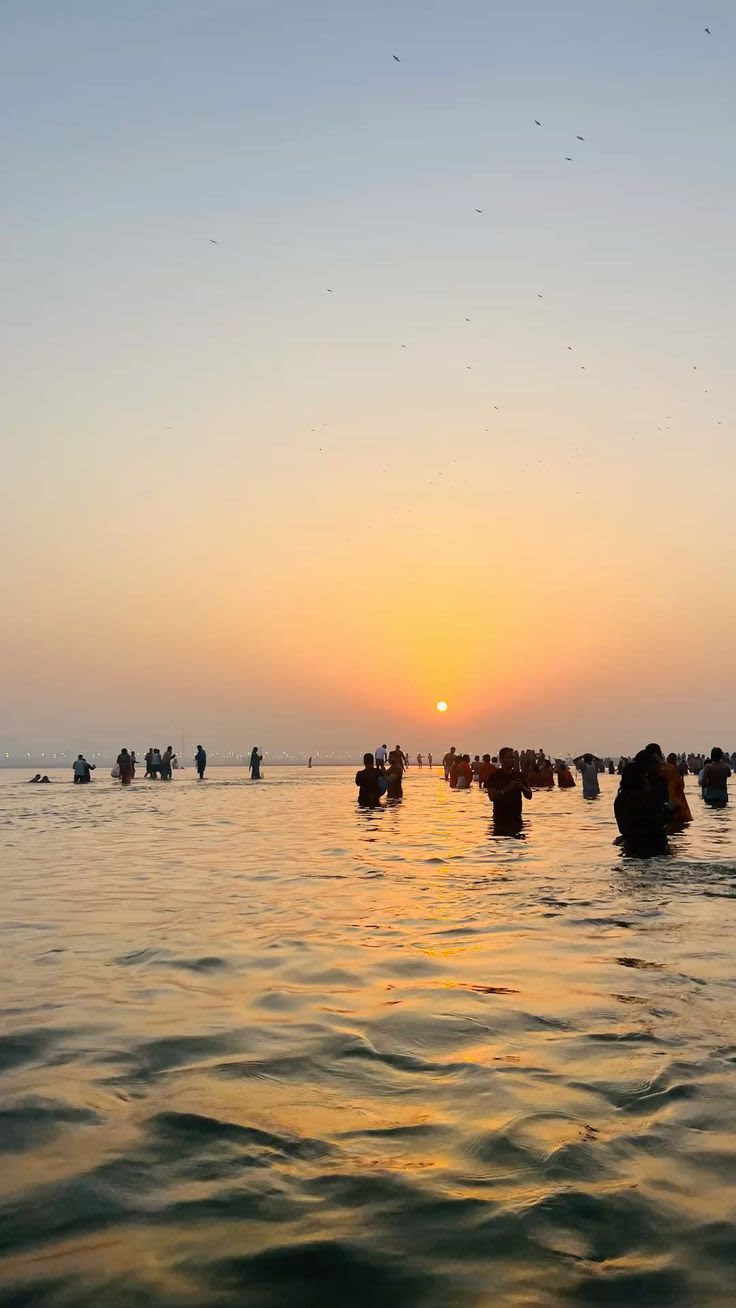
Prayagraj, formerly known as Allahabad, is one of Hinduism's most sacred cities, situated at the Triveni Sangam — the holy confluence of the Ganges, Yamuna, and the mythical Saraswati rivers — a site of such spiritual significance that bathing here is believed to wash away all sins. Every 12 years, the Maha Kumbh Mela held at Prayagraj becomes the world's largest human gathering, drawing over 100 million pilgrims in a single season. The Kumbh Mela 2026 and 2036 promises to be a once-in-a-generation event. Beyond the ghats, the Allahabad Fort, the Anand Bhawan museum (former home of the Nehru-Gandhi family), and the beautiful Khusro Bagh make Prayagraj a city of great historical depth.
Haridwar
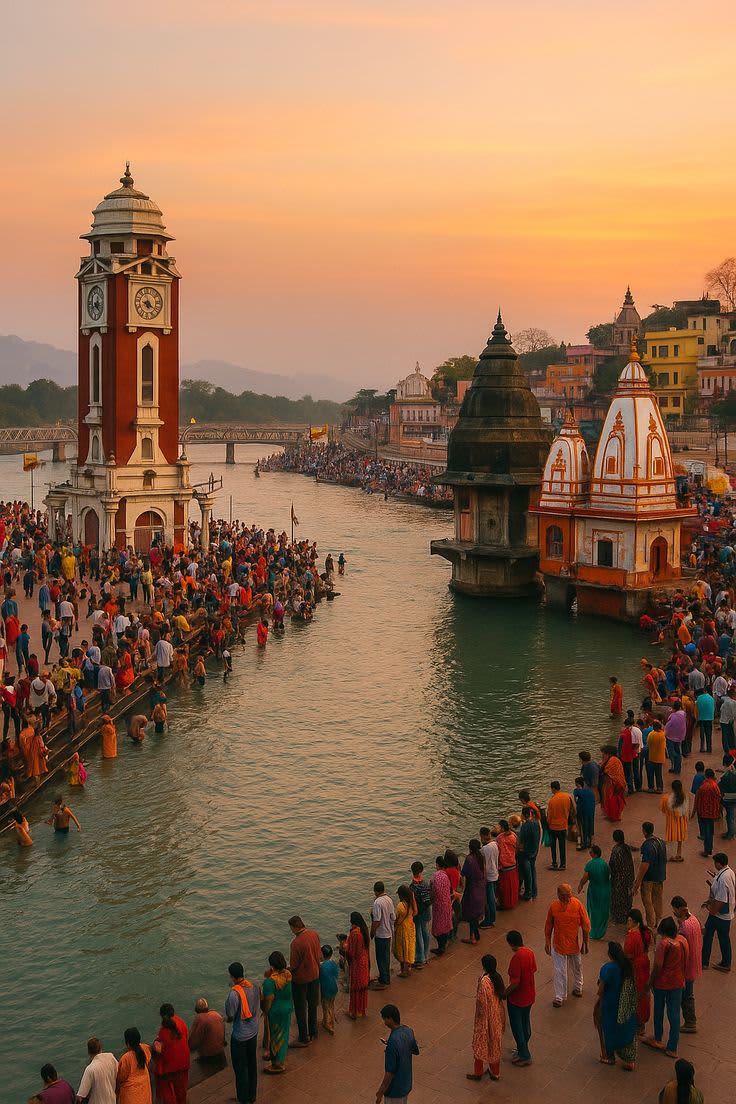
The holy city of Haridwar translates to "Gateway to God," and this breathtaking destination, replete with ancient temples and sacred ghats, is a magnet for religious pilgrims from all over the globe. Religious festivals like Kumbh Mela and Kanwar Yatra hold further draw, and visitors can't help but be compelled by the city's aura of intense spirituality. Don't miss the iconic Har ki Pauri ghat and the hilltop Chandi Devi Temple.
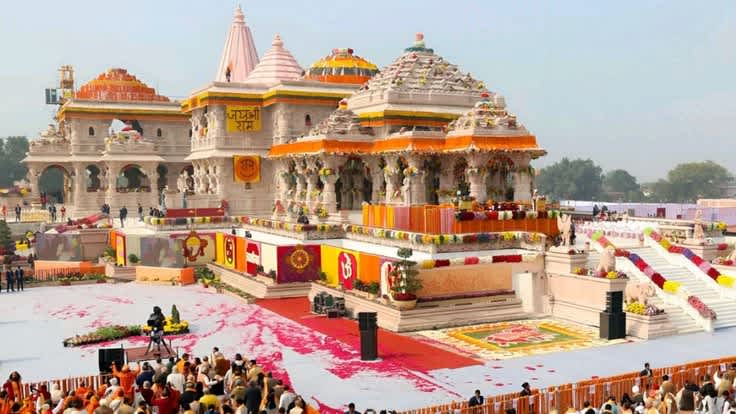
Ayodhya
Ayodhya, situated on the banks of the Sarayu River in Uttar Pradesh, is one of the seven sacred cities (Sapta Puri) of Hinduism and the legendary birthplace of Lord Rama — one of the most revered deities in the Hindu faith. The newly constructed Ram Mandir at the Ram Janmabhoomi site has transformed Ayodhya into one of India's most visited and rapidly developing pilgrimage destinations. The city's ancient ghats, the Kanak Bhawan temple, the Hanuman Garhi shrine, and the magical experience of the evening aarti on the Sarayu make Ayodhya a profoundly spiritual destination with deep historical and cultural significance.
Nearby destinations
Prayagraj
114 km · Prayagraj, formerly known as Allahabad, is one of Hinduism's most sacred cities, situated at the Triveni Sangam — the holy confluence of the Ganges, Yamuna, and the mythical Saraswati rivers — a site of such spiritual significance that bathing here is believed to wash away all sins. Every 12 years, the Maha Kumbh Mela held at Prayagraj becomes the world's largest human gathering, drawing over 100 million pilgrims in a single season. The Kumbh Mela 2026 and 2036 promises to be a once-in-a-generation event. Beyond the ghats, the Allahabad Fort, the Anand Bhawan museum (former home of the Nehru-Gandhi family), and the beautiful Khusro Bagh make Prayagraj a city of great historical depth.
Ayodhya
181 km · Ayodhya, situated on the banks of the Sarayu River in Uttar Pradesh, is one of the seven sacred cities (Sapta Puri) of Hinduism and the legendary birthplace of Lord Rama — one of the most revered deities in the Hindu faith. The newly constructed Ram Mandir at the Ram Janmabhoomi site has transformed Ayodhya into one of India's most visited and rapidly developing pilgrimage destinations. The city's ancient ghats, the Kanak Bhawan temple, the Hanuman Garhi shrine, and the magical experience of the evening aarti on the Sarayu make Ayodhya a profoundly spiritual destination with deep historical and cultural significance.

Lucknow
264 km · Lucknow, the capital of Uttar Pradesh and the City of Nawabs, is a magnificent and cultured city renowned across India for its exquisite Nawabi-era architecture, the refined Urdu spoken in its bazaars, the legendary tehzeeb (etiquette) of its people, and some of the finest cuisine India has to offer. The Bara Imambara complex with its mesmerizing Bhool Bhulaiya labyrinth, the elegant Residency ruins from the 1857 uprising, and the Rumi Darwaza modeled on a Lucknow gateway in Turkey are architectural landmarks of great distinction. The Hazratganj promenade, the kebab trail on Tunday Kababi street, and the chikankari embroidery bazaars make Lucknow one of India's most pleasurably civilized cities to explore.