Things to do in Trimbakeshwar
Things to do in Trimbakeshwar
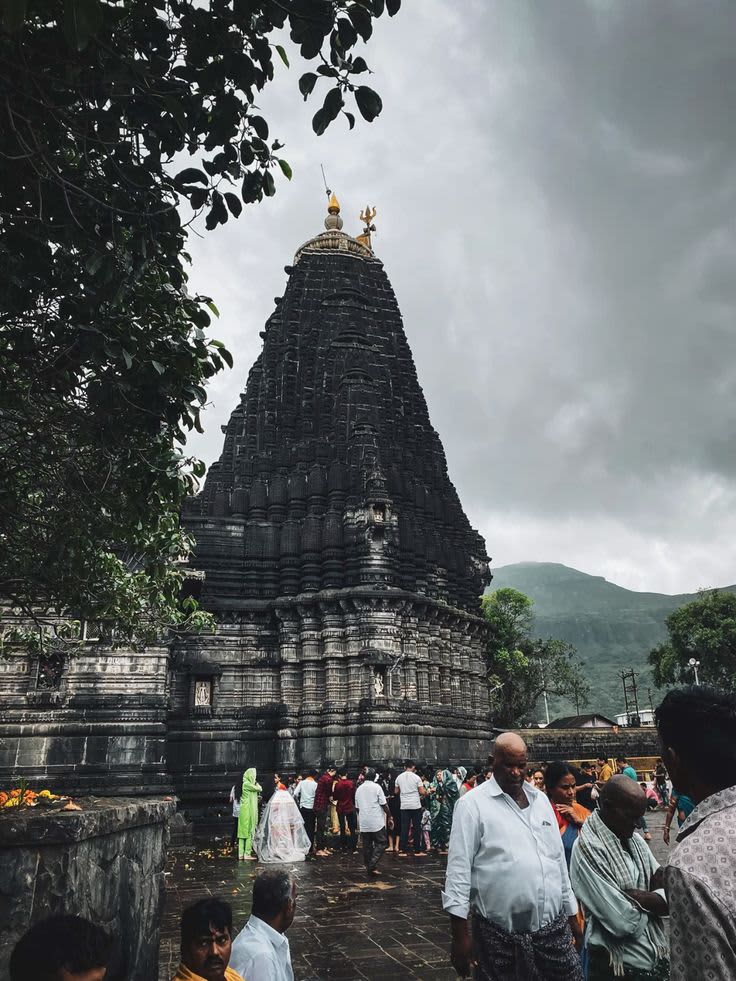
Trimbakeshwar, situated at the source of the sacred Godavari River near Nashik in Maharashtra, is one of the twelve Jyotirlingas — the most sacred shrines of Lord Shiva in Hinduism. The magnificent Trimbakeshwar Shiva Temple, built in the Hemadpanthi style of black stone, is unique in housing a Jyotirlinga with three faces representing Brahma, Vishnu, and Shiva. The temple town is also the starting point of the Brahmagiri mountain trek, from the summit of which the Godavari River originates, making it a deeply sacred and scenically beautiful pilgrimage destination.
- No photoSpiritualView full guide
1–2 hours
Trimbakeshwar Jyotirlinga darshan
The main temple at Trimbakeshwar houses one of the most sacred Jyotirlinga shrines in Hinduism — a lingam said to be the origin point of the holy Godavari river. The black stone temple dates to the 18th century and was built by Peshwa Nanasaheb, with an architectural style that differs markedly from the temple traditions of North India. The inner sanctum holds the tri-faced lingam in a gold crown, a sight of profound religious significance.
- No photoSpiritual TrekView full guide
4–5 hours (round trip)
Brahmagiri mountain trek to Godavari source
A 4-kilometre trek from Trimbakeshwar town climbs the Brahmagiri plateau to a small sacred kund at 4,250 feet where the Godavari river originates as a spring from the earth. The trail passes through dense forest, past rock-cut caves and small shrines, and the summit offers 360-degree views over the Sahyadri range. It is one of the most spiritually significant treks in Maharashtra.
- No photoSpiritual TrekView full guide
3–4 hours (round trip)
Anjneri Hill trek (birthplace of Hanuman)
The forested Anjneri Hill near Trimbakeshwar is believed by many Hindu traditions to be the birthplace of Lord Hanuman — a claim that gives the already beautiful trek a layer of spiritual weight. The summit plateau is ringed by towering basalt columns and has a small temple marking the sacred spot. The views from the top over the surrounding Nasik wine country and Sahyadri hills are outstanding.
- No photoSpiritualView full guide
30–45 minutes
Kushavarta Kund ritual bath
Kushavarta Kund is a sacred tank near the Trimbakeshwar temple considered the origin point and symbolic head of the Godavari river. During Kumbh Mela years, millions of pilgrims converge here for a ritual bath. Even outside Kumbh, the tank has a powerful atmosphere — priests conducting last rites, pilgrims immersed in prayer, and the sound of temple bells from the nearby sanctum.
- No photoSpiritual & HeritageView full guide
2–3 hours (including drive)
Panchavati and Ram Ghat day trip
Just 28 kilometres from Trimbakeshwar, Nashik's Panchavati area contains five sacred banyan trees marking the spot where Lord Rama, Sita, and Lakshmana lived during their forest exile. The Sita Gufa cave where Sita is said to have sheltered, and the Ram Ghat where their morning ablutions took place, are deeply atmospheric sites — ancient, intimate, and charged with the weight of the Ramayana.