Things to do in Shirdi
Things to do in Shirdi
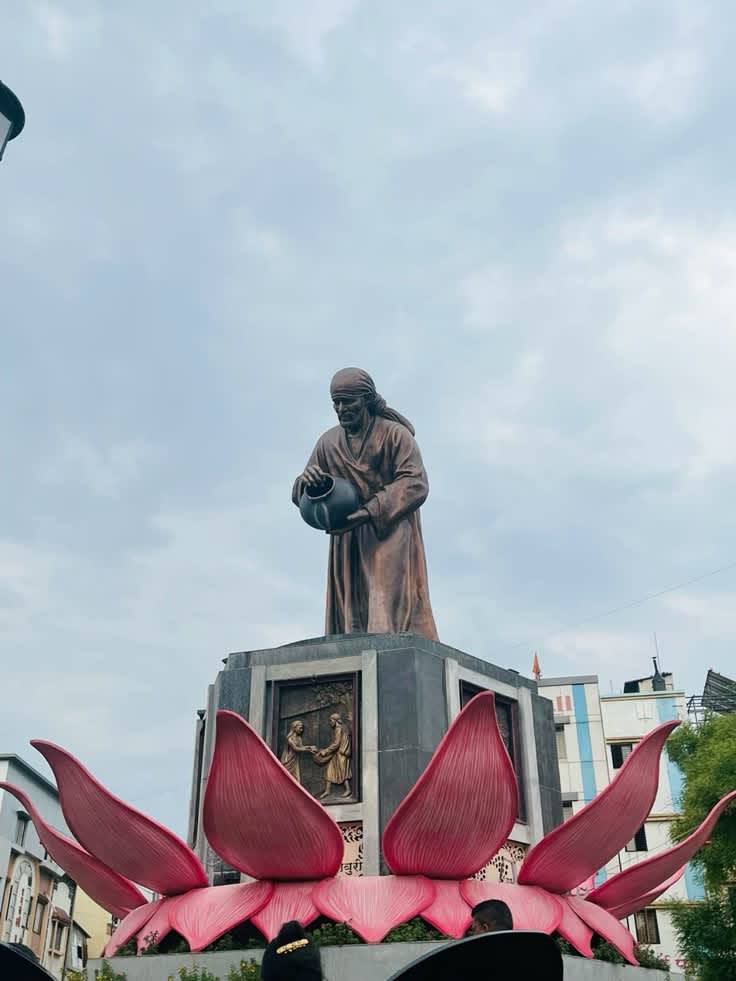
Shirdi, a small town in Maharashtra's Ahmednagar district, is one of the most visited pilgrimage destinations in India — home to the Shri Sai Baba Samadhi Mandir, the shrine of the revered saint Sai Baba of Shirdi, who is worshipped by both Hindus and Muslims as a manifestation of God and whose teachings of love, forgiveness, and brotherhood continue to attract millions of devotees from across India and the world. The Samadhi Mandir housing the marble idol of Sai Baba, the Dwarkamai mosque where Sai Baba lived for much of his life, and the Chavadi where he slept on alternate nights are the three most sacred sites in the Shirdi complex, creating a deeply moving spiritual circuit for devotees of every faith.
- No photoSpiritualView full guide
2–4 hours (including queuing time)
Sai Baba Temple Darshan
The Sai Baba Samadhi Mandir at Shirdi is one of the most visited pilgrimage sites in all of Asia — welcoming over 25,000 to 100,000 devotees daily who come to seek blessings at the white marble samadhi (resting place) of the beloved saint Sai Baba of Shirdi. The main darshan queue winds through a vast temple complex beautifully maintained by the Shri Saibaba Sansthan Trust. The atmosphere inside — incense, devotional songs, and the quiet reverence of thousands of pilgrims — is deeply moving even for non-religious visitors.
- No photoSpiritual / HeritageView full guide
1–1.5 hours
Dwarkamai Mosque & Chavadi Visit
Before the grand Samadhi Temple was built, Sai Baba lived, received devotees, and performed miracles from two deeply humble locations — Dwarkamai, a small dilapidated mosque where he resided for 60 years, and Chavadi, a small rest house where he slept on alternate nights. Both are now preserved exactly as they were during Sai Baba's lifetime, with personal belongings, his grinding stone, and the sacred dhuni (eternal fire) still burning in Dwarkamai. These intimate spaces are deeply beloved by serious devotees.
- No photoSpiritual / CulturalView full guide
1 hour
Shri Saibaba Sansthan Heritage Museum
The museum operated by the Shri Saibaba Sansthan Trust displays an extraordinary collection of original photographs of Sai Baba (he was one of the most photographed saints of his era), personal belongings, rare documents, and artistic interpretations of key events in his life. For anyone wanting to understand who Sai Baba was beyond the mythology — his teachings, his daily routines, his relationship with both Muslim and Hindu devotees — this museum provides a thoughtful and well-curated biographical narrative.
- No photoSpiritual / CulturalView full guide
3–4 hours (including travel from Shirdi)
Shani Shingnapur Temple Day Trip
Just 65 km from Shirdi, Shani Shingnapur is one of Maharashtra's most extraordinary villages — a community where, by tradition, no house has doors or locks, operating on the belief that Lord Shani (Saturn) personally protects all residents. The powerful Shani idol at the temple centre (a naturally occurring black stone block) draws devotees from across Maharashtra, and walking through the lockless village and interacting with its deeply faithful residents is a genuinely fascinating cultural experience.
- No photoSpiritual / CulturalView full guide
45 minutes–1 hour
Prasadalaya Community Dining Experience
The Shri Saibaba Sansthan Trust operates the Prasadalaya — one of the world's largest community kitchens — which serves free, nutritious meals to over 50,000 pilgrims every single day, funded entirely by devotee donations. Joining the queue and eating the simple, lovingly prepared prasad meal alongside pilgrims from every corner of India and the world is a powerful, humbling experience that embodies Sai Baba's core teaching: 'Sabka Malik Ek' — everyone's God is one.