Things to do in Sabarimala
Things to do in Sabarimala
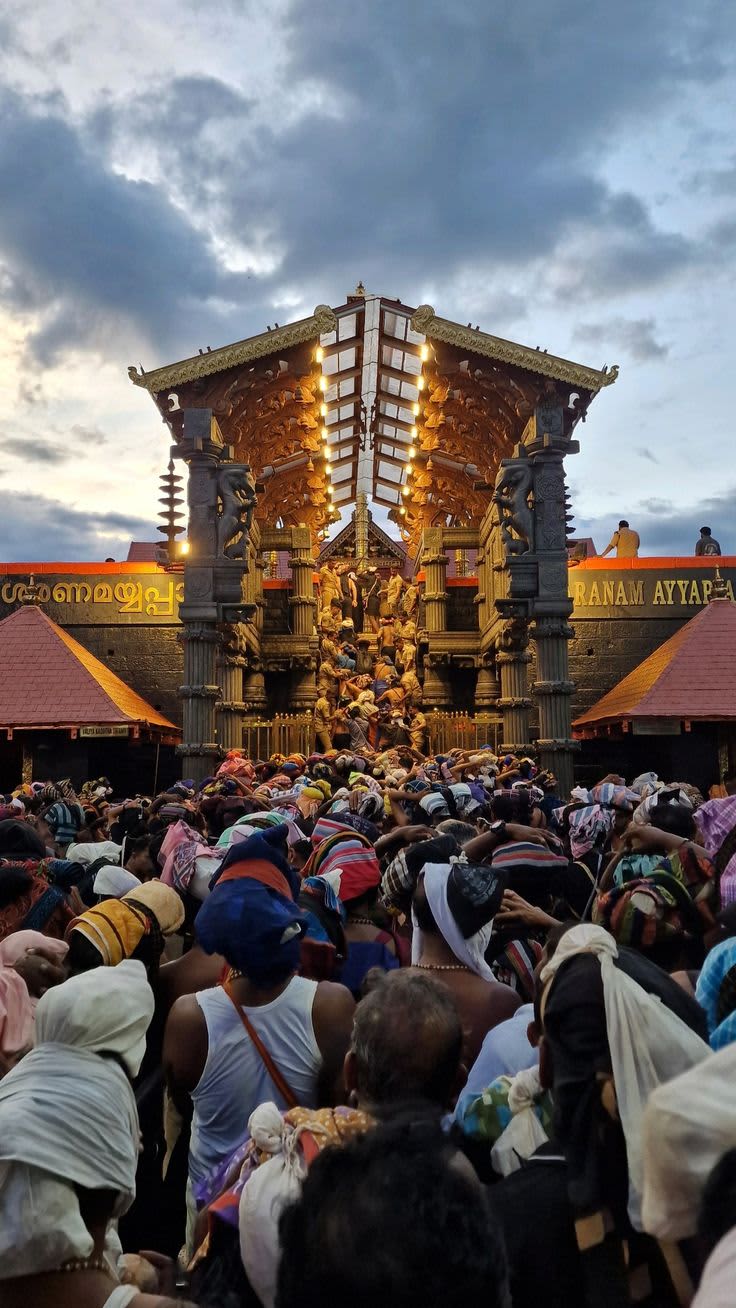
Sabarimala, nestled in the forested hills of the Western Ghats in Kerala, is one of the largest Hindu pilgrimage sites in the world and the abode of Lord Ayyappa — a deity embodying dharma, celibacy, and universal brotherhood. The annual pilgrimage season from November to January sees millions of devotees, clad in traditional black attire, undertaking the challenging 5-kilometer trek through dense jungle to reach the hilltop shrine. The journey to Sabarimala is as much a physical and spiritual ordeal as it is an act of devotion, passing through the sacred 18 golden steps before reaching the temple.
- No photoSpiritual & TrekView full guide
5–7 hours (trek round trip); 41-day preparation beforehand
Lord Ayyappa pilgrimage trek
One of the most spiritually demanding and physically rigorous pilgrimages in India, the Sabarimala yatra requires 41 days of strict fasting and celibacy before the trek itself — a 4.8 km climb through Kerala's dense Periyar forest to the hilltop shrine at 914 metres. Millions of devotees in black dress, carrying irumudi (two-compartment bundle) on their heads, make this journey each year during the Mandala-Makaravilakku season, creating a river of devotion flowing through the jungle.
- No photoSpiritualView full guide
Full evening/night
Makaravilakku festival witnessing
On Makaravilakku night in January, the sacred Makara Jyothi star appears on the Ponnambalamedu hills above Sabarimala — a celestial phenomenon that is one of the most extraordinary sights in all of Indian religious life. The hilltop erupts in chants and the millions of pilgrims gathered on the slopes light their own diyas in response. It is a moment of collective devotion of almost indescribable scale.
- No photoWildlifeView full guide
2–3 hours (boat safari)
Periyar Tiger Reserve safari (nearby)
Just 75 kilometres from Sabarimala, the Periyar Tiger Reserve around Thekkady is one of Kerala's finest wildlife sanctuaries and one of India's most celebrated. A boat cruise on the Periyar Lake watches herds of wild elephants come to the water's edge to drink, while tiger, gaur, and sambar move through the surrounding forest. It is the perfect companion experience to the Sabarimala pilgrimage for nature lovers.
- No photoSpiritual & CulturalView full guide
2–3 hours (ritual timing varies)
Erumeli Petta ritual and procession
The traditional Sabarimala pilgrimage route passes through Erumeli village, where devotees participate in the Petta Thullal — a ritual mock procession in which pilgrims dance in traditional dress, waving coconuts and chanting, as a re-enactment of Lord Ayyappa's battle with the demoness Mahishi. It is a raucous, joyful, and utterly authentic piece of living religious tradition.
- No photoSpiritualView full guide
30–45 minutes
Pampa river ritual bath
The Pampa river — the most sacred river in Kerala — flows at the base of the Sabarimala hill, and all pilgrims traditionally bathe here before beginning the final trek to the shrine. The sight of thousands of black-clad devotees immersed in the river, chanting Swamiye Sharanam Ayyappa in unison, is one of the most powerful expressions of collective faith you will encounter anywhere in India.