Things to do in Pattadakal
Things to do in Pattadakal
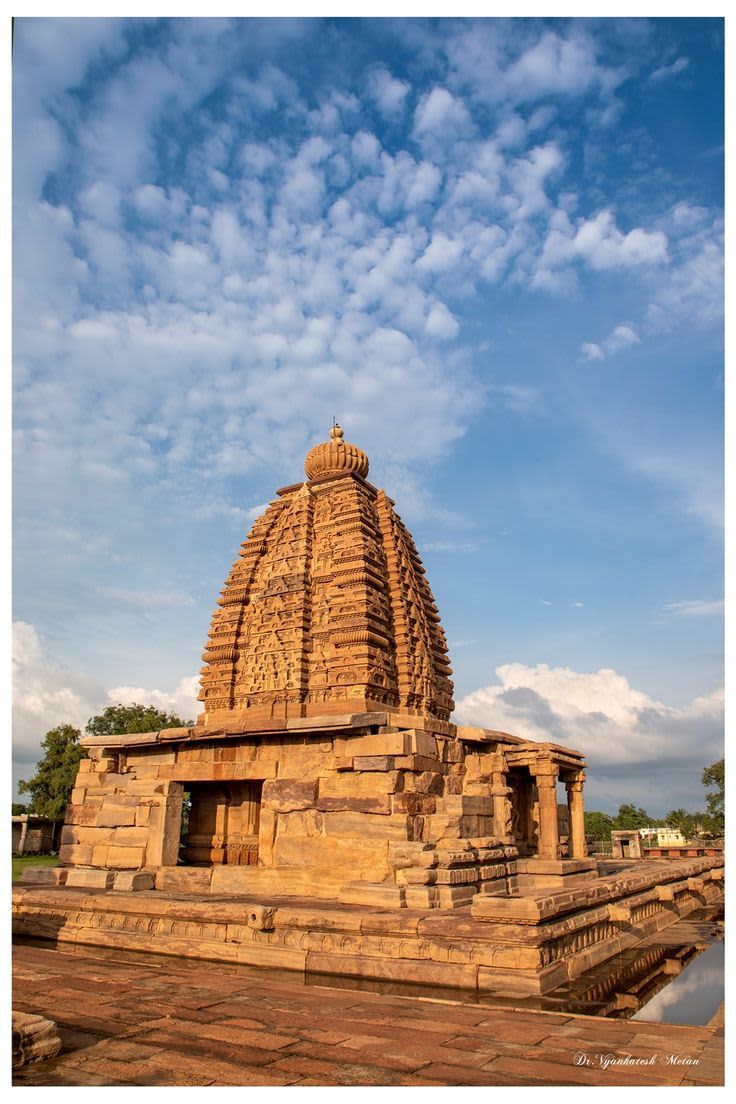
Pattadakal, a UNESCO World Heritage Site on the banks of the Malaprabha River in Karnataka, is a remarkable gallery of 8th-century Chalukyan temples that uniquely showcases the evolution of two distinct South Indian temple architectural styles — the nagara (northern) and dravidian (southern) — side by side. The Virupaksha Temple, built by Queen Lokamahadevi to commemorate the Chalukyan victory over the Pallavas, is the most impressive of the complex's ten temples and served as the model for the famous Kailasanatha Temple at Ellora. Visiting Pattadakal as part of a Chalukyan heritage trail with Badami and Aihole is one of the most richly rewarding historical journeys in all of South India.
- No photoHeritage / SpiritualView full guide
1.5–2 hours
Virupaksha Temple Exploration
The Virupaksha Temple at Pattadakal is the crown jewel of a UNESCO World Heritage Site — a 8th-century Dravidian masterpiece commissioned by Queen Lokamahadevi to celebrate her husband's military victory over the Pallavas. Modelled on the Kailasanatha Temple at Kanchipuram, its towering shikhara, intricately carved outer walls, and stunning interior pillars covered in scenes from the Ramayana and Mahabharata make it one of the most accomplished temple buildings in all of South India.
- No photoHeritageView full guide
2–3 hours
UNESCO Temple Complex Walk
Pattadakal's temple complex contains ten major temples built between the 7th and 8th centuries by successive Chalukya rulers — making it a unique open-air textbook of early Indian temple architecture. You can literally walk from a simple early Chalukya shrine to a fully evolved Dravidian temple within a few hundred metres and watch the architectural style evolve in real time. The Sangameshvara, Mallikarjuna, and Jain Narayana temples are all highlights of this extraordinary group.
- No photoEducational / CulturalView full guide
2–2.5 hours
Guided Sculpture & Iconography Tour
The temple walls of Pattadakal are essentially an encyclopedia of Hindu, Buddhist, and Jain iconography carved in stone — but without a guide, most visitors walk right past the most incredible details. A certified INTACH or ASI guide will decode the sculptural programmes: identifying the Shaiva, Vaishnava, and Shakta panels, explaining the mythological narratives unfolding across the friezes, and pointing out the stylistic differences between Nagara (North Indian) and Vesara (hybrid) architectural forms present in the same complex.
- No photoPhotography / HeritageView full guide
1–1.5 hours
Sunrise Photography at the Complex
Pattadakal's warm brown sandstone temples glow like amber in the early morning light — and because the complex rarely gets crowded before 9 AM, you have the extraordinary opportunity to photograph some of India's finest UNESCO heritage temples in near-total solitude. The flat surrounding landscape lets you frame the shikhara towers against a clean horizon, and the quality of soft morning light makes every carved surface pop with texture and detail.