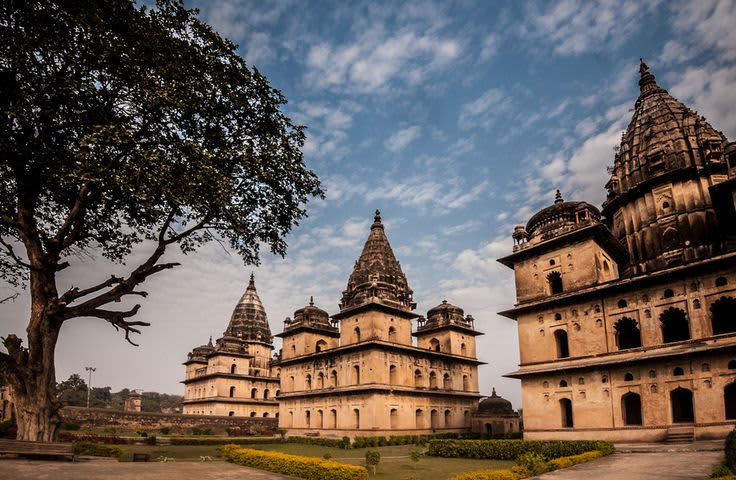
Orchha, a small medieval town on the Betwa River in Madhya Pradesh, is one of India's most underrated historical gems — a perfectly preserved Bundela-era capital of palaces, cenotaphs, and temples tha...
Orchha
Hidden Gem Frozen in Time
Madhya Pradesh, India
4.7
PalacesTemplesBetwa River
heritage
Duration: 1–2 Days
Budget/day: ₹1,000 – ₹3,500
Best season: Oct – Mar
Altitude: 183 m
Nearest airport: Gwalior Airport (180 km); Khajuraho Airport (170 km)
Nearest railway: Jhansi Railway Station (15 km)
Best places to visit in Orchha


Things to do in Orchha
- No photoHistoricalView full guide
3–4 hours
Orchha Fort Complex & Palaces
Orchha's fort complex rising from a rocky island in the Betwa River is one of Madhya Pradesh's most atmospheric heritage sites. Wander through the Raj Mahal with its stunning painted ceilings, climb the multi-storey Jahangir Mahal built to honour a Mughal emperor's visit, and explore the crumbling Rai Praveen Mahal — named after a legendary poet-dancer. The interplay of Rajput and Mughal architecture here is absolutely breathtaking.
- No photoCulturalView full guide
45 minutes
Orchha Sound & Light Show at Fort
When darkness falls over Orchha, the fort walls come alive with the Sound & Light Show — a cinematic retelling of Orchha's founding by Rudra Pratap Singh, its complex relationship with the Mughal empire, and the story of Ram Raja Temple. The show is conducted in Hindi but the visual spectacle of light dancing across 400-year-old stone is universally gripping.
- No photoSpiritualView full guide
1–1.5 hours
Ram Raja Temple Morning Darshan
Orchha's Ram Raja Temple is the only place in India where Lord Ram is worshipped as a king — complete with a police guard of honour at every prayer. Situated in a converted royal palace, the temple follows a strict schedule of aartis and the gun salute offered to Ram here is a uniquely moving ritual you won't witness anywhere else in the country. The early morning darshan, when the temple opens with lamps and bells, is especially peaceful.
Best Time to Visit and Weather Info
Best time: October to March
Summer is very hot. Monsoon makes the Betwa River beautiful but roads can be difficult.
Winter
Best Time ⭐Oct – Mar
8°C – 28°C
Perfect weather for exploring the palaces, cenotaphs, and temples on the Betwa River. Light and sound show at Raj Mahal is atmospheric in winter evenings.
- Don't miss the evening light and sound show at Raj Mahal
- Boat ride on the Betwa River at sunrise or sunset is magical
How to Reach
✈️By Air
Airport: Gwalior (180 km) or Khajuraho (170 km) airports (180 km from Gwalior)
Duration: ~4 hrs by road
Fly to Gwalior or Khajuraho, then taxi to Orchha via Jhansi.
Taxi: ₹3,000 – ₹5,000 (Gwalior to Orchha)
Airlines: IndiGo, Air India
🚂By Train
Station: Jhansi Railway Station (15 km from Orchha)
Jhansi is a major junction on the Delhi–Mumbai mainline. From Jhansi, take a taxi or auto to Orchha (30 mins).
- Shatabdi Express — Delhi (Hazrat Nizamuddin) (~5 hrs to Jhansi)
- Bhopal Shatabdi — Delhi (Hazrat Nizamuddin) (~5 hrs to Jhansi)
🚌By Road
Orchha is 15 km from Jhansi and accessible by local bus or auto. Well-connected to major MP cities.
- Jhansi: 15 km, 30 mins via Orchha Road
- Gwalior: 120 km, 2.5 hrs via NH-44 via Jhansi
- Khajuraho: 170 km, 3.5 hrs via Chatarpur
Local Food
Orchha is a small heritage town — food is simple Bundelkhandi cuisine from a handful of local dhabas and the MP Tourism guesthouse.
Dal Bafla
The MP staple — wheat balls soaked in ghee served with five-lentil dal.
Where: Dhabas in Orchha market
₹120 – ₹200
Bundi Raita
Gram flour pearl drops in chilled yogurt with cumin and green chili — cooling side dish.
Where: Local dhabas
₹60 – ₹100
Moong Dal Halwa
Rich, ghee-laden yellow lentil pudding — a Bundela royal dessert tradition.
Where: Sweet shops in town
₹80 – ₹150
Chila
Savoury gram flour crepe — a simple, filling Bundelkhand breakfast.
Where: Morning stalls near the ghat
₹40 – ₹70
River Catch Fish Curry
Fresh fish from the Betwa River cooked with local spices — available at some local homes and basic restaurants.
Where: Select local eateries near the river
₹150 – ₹250
MP Tourism Dinner
The Sheesh Mahal hotel (MP Tourism, inside the palace) serves reliable meals in a heritage setting.
Where: Sheesh Mahal Hotel Restaurant, Orchha Fort
₹200 – ₹500 per person
Orchha has very limited restaurants. The Sheesh Mahal Hotel (a restored palace) is the best dining option. Book accommodation with meals included.
FAQs
- Orchha is famous for its remarkably preserved 16th–17th century Bundela palaces (Raj Mahal, Jahangir Mahal, Raj Praveen Mahal), a series of grand river-side cenotaphs (chhatris), and the Ram Raja Temple where Lord Ram is worshipped as a king.
Best Places Similar
Khajuraho
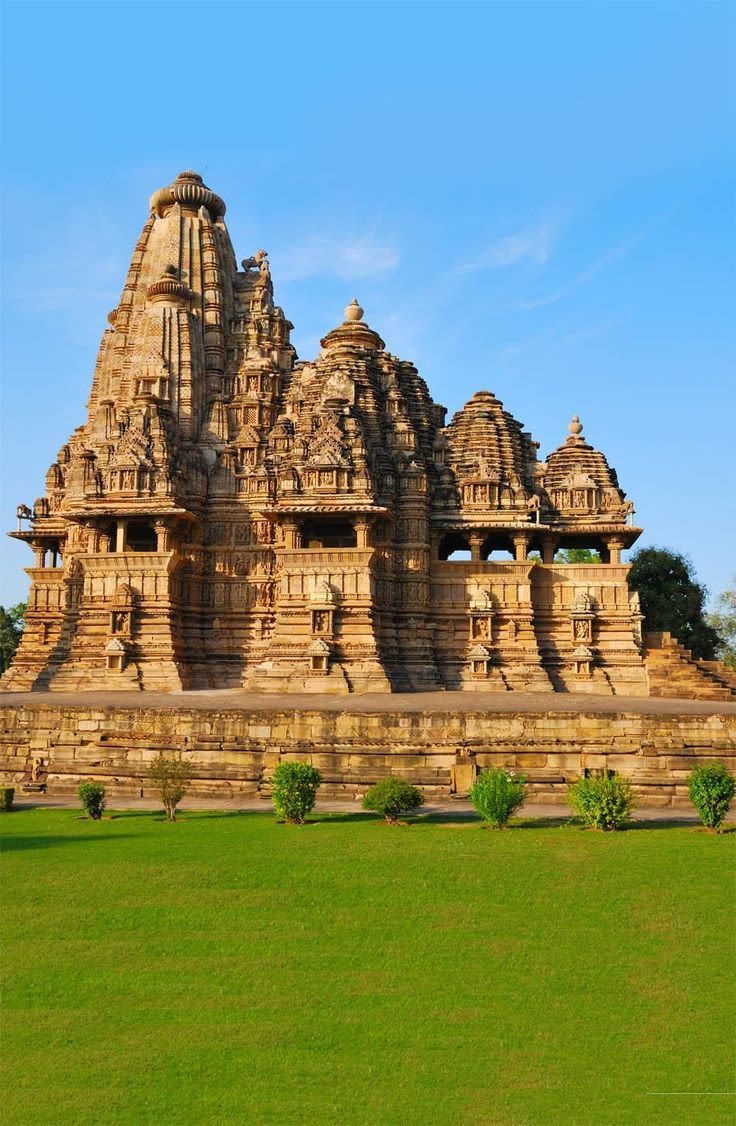
Khajuraho, a small town in Madhya Pradesh, is home to one of India's most extraordinary UNESCO World Heritage Sites — a group of medieval Hindu and Jain temples built by the Chandela dynasty between 950 and 1050 CE, celebrated worldwide for their exquisite erotic sculptures that represent only a fraction of the temples' vast iconographic program. The three temple complexes — Western, Eastern, and Southern — contain 20 surviving temples of the original 85, each a masterpiece of Nagara-style architecture adorned with thousands of meticulously carved figures depicting every aspect of human life, divine beings, and erotic union. The annual Khajuraho Dance Festival held in front of the illuminated temple facades is a cultural highlight of India's classical arts calendar.
Gwalior
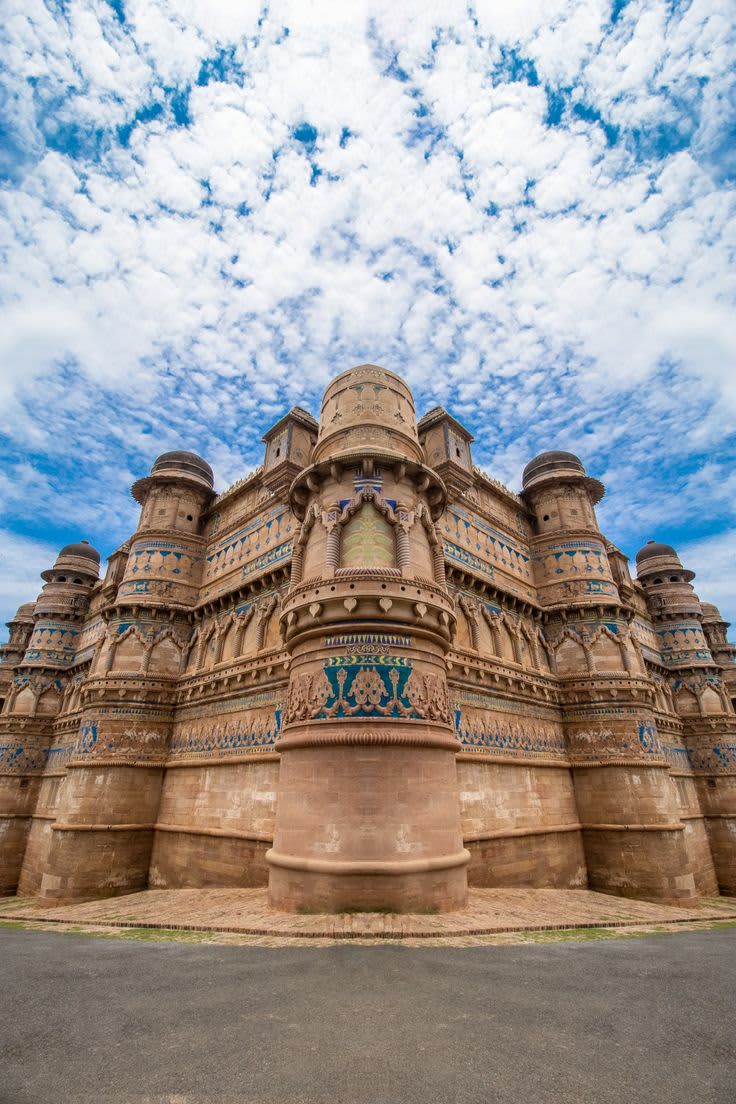
Gwalior, in Madhya Pradesh, is dominated by one of India's most spectacular forts — the Gwalior Fort, rising 100 meters on a rocky hill above the city, described by the Mughal Emperor Babur as the pearl among fortresses of Hind. The fort complex encompasses palaces including the magnificent Man Mandir Palace with its brilliant tile work, Jain rock-cut sculptures, temples, and water tanks spanning over a thousand years of architectural history. The city also celebrates its deep musical heritage as the birthplace of the Gwalior Gharana, one of the most prestigious classical music traditions in Hindustani music, through the Tansen Music Festival held each November.
Agra
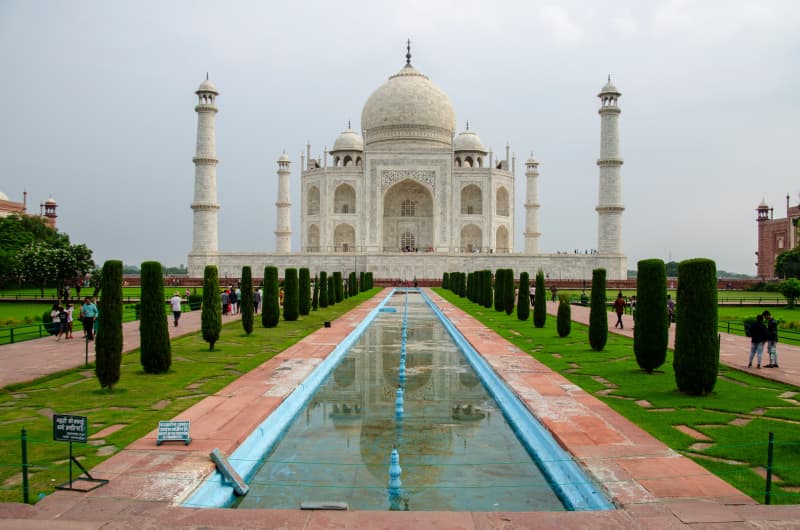
Agra, situated on the banks of the Yamuna River in Uttar Pradesh, is home to the Taj Mahal — one of the Seven Wonders of the World and perhaps the most celebrated monument to love ever built — attracting millions of visitors each year with its transcendent marble beauty at sunrise and sunset. The city also shelters the magnificent Agra Fort, a UNESCO World Heritage Site, and the deserted imperial city of Fatehpur Sikri nearby. Together these sites make Agra the crown jewel of India's Golden Triangle tourist circuit and a non-negotiable stop on any visit to the Indian subcontinent.
Nearby destinations
Gwalior
107 km · Gwalior, in Madhya Pradesh, is dominated by one of India's most spectacular forts — the Gwalior Fort, rising 100 meters on a rocky hill above the city, described by the Mughal Emperor Babur as the pearl among fortresses of Hind. The fort complex encompasses palaces including the magnificent Man Mandir Palace with its brilliant tile work, Jain rock-cut sculptures, temples, and water tanks spanning over a thousand years of architectural history. The city also celebrates its deep musical heritage as the birthplace of the Gwalior Gharana, one of the most prestigious classical music traditions in Hindustani music, through the Tansen Music Festival held each November.
Khajuraho
141 km · Khajuraho, a small town in Madhya Pradesh, is home to one of India's most extraordinary UNESCO World Heritage Sites — a group of medieval Hindu and Jain temples built by the Chandela dynasty between 950 and 1050 CE, celebrated worldwide for their exquisite erotic sculptures that represent only a fraction of the temples' vast iconographic program. The three temple complexes — Western, Eastern, and Southern — contain 20 surviving temples of the original 85, each a masterpiece of Nagara-style architecture adorned with thousands of meticulously carved figures depicting every aspect of human life, divine beings, and erotic union. The annual Khajuraho Dance Festival held in front of the illuminated temple facades is a cultural highlight of India's classical arts calendar.
Agra
213 km · Agra, situated on the banks of the Yamuna River in Uttar Pradesh, is home to the Taj Mahal — one of the Seven Wonders of the World and perhaps the most celebrated monument to love ever built — attracting millions of visitors each year with its transcendent marble beauty at sunrise and sunset. The city also shelters the magnificent Agra Fort, a UNESCO World Heritage Site, and the deserted imperial city of Fatehpur Sikri nearby. Together these sites make Agra the crown jewel of India's Golden Triangle tourist circuit and a non-negotiable stop on any visit to the Indian subcontinent.