Things to do in Madurai
Things to do in Madurai
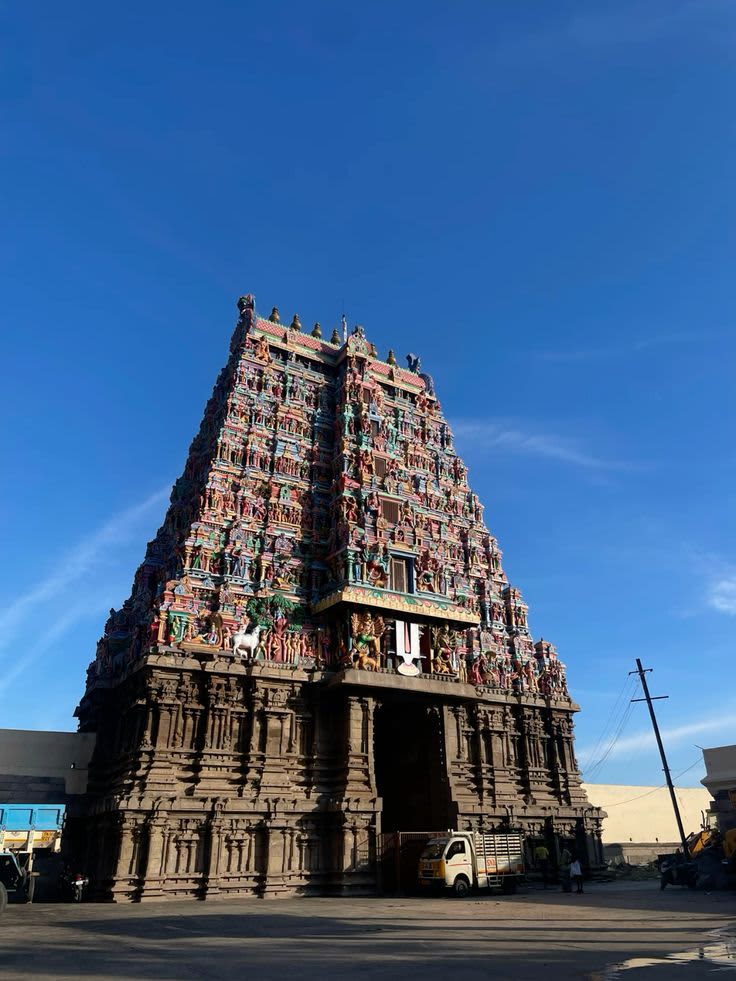
Madurai, one of the oldest continuously inhabited cities in the world and a major pilgrimage hub in Tamil Nadu, is centered on the awe-inspiring Meenakshi Amman Temple — a Dravidian architectural masterpiece with 14 elaborately sculpted gopurams that tower over the city's skyline. Dedicated to the goddess Meenakshi and her consort Sundareswarar (Shiva), the temple complex with its celebrated Hall of Thousand Pillars and sacred Golden Lotus Tank draws millions of devotees and travelers each year. Madurai's vibrant jasmine flower markets, street food culture, and the evening temple ceremony make it one of South India's most atmospheric and spiritually alive cities.
- No photoSpiritual & HeritageView full guide
2–4 hours
Meenakshi Amman Temple exploration
The Meenakshi Amman Temple is one of the greatest masterpieces of Dravidian architecture ever built — a 45-acre complex of towering gopurams covered in thousands of hand-carved and brightly painted deities, corridors of columns stretching hundreds of metres, sacred tanks reflecting the towers in still water, and the constant sound of music, bells, and chanting. It is not just a temple but an entire sacred city, and no number of photographs can prepare you for the scale and intensity of being inside it.
- No photoHeritageView full guide
1–1.5 hours
Thirumalai Nayakkar Mahal palace tour
The 17th-century palace of King Thirumalai Nayakkar is a magnificent example of Dravidian and Baroque architecture — an unusual Indo-Italian hybrid with massive 12-metre stone columns, an enormous central octagonal courtyard, and stuccoed ceilings that give the space an almost Mediterranean grandeur. Less visited than the temple, it offers a quieter but equally impressive glimpse into Madurai's royal history.
- No photoCulture & FoodView full guide
2–3 hours
Old city bazaar and street food walk
Madurai's ancient bazaar lanes radiating from the temple are among the most intense and aromatic market experiences in South India — jasmine flower sellers, silk saree shops, brass lamp vendors, and street food stalls serving jigarthanda, kari dosas, and filter coffee in a barely-changed medieval streetscape. This is where the city's 2,500-year mercantile history plays out daily in full sensory colour.
- No photoSpiritual & NatureView full guide
2–3 hours
Alagar Koil temple and hill walk
Twenty kilometres from Madurai, the Alagar Koil (Kallazhagar Temple) is dedicated to Lord Vishnu and perched dramatically at the base of the Alagar Hills. The temple complex is ancient and ornate, and a trail leads up through the rocky hillside behind it past a series of smaller shrines and through forested terrain with resident peacocks and langurs to a viewpoint overlooking the plains.
- No photoCultural & HeritageView full guide
2–2.5 hours (both sites)
Koodal Azhagar and Gandhi Museum visit
The Gandhi Museum in Madurai is one of the finest Gandhi museums in India — housed in a 17th-century palace and containing a remarkable collection of documents, photographs, and the blood-stained dhoti Gandhi wore when he was assassinated. Adjacent to the museum, the 12th-century Koodal Azhagar Temple is a multi-storeyed Vishnu shrine of great antiquity and architectural interest, rarely visited by tourists but deeply revered locally.