Things to do in Ellora Caves
Things to do in Ellora Caves
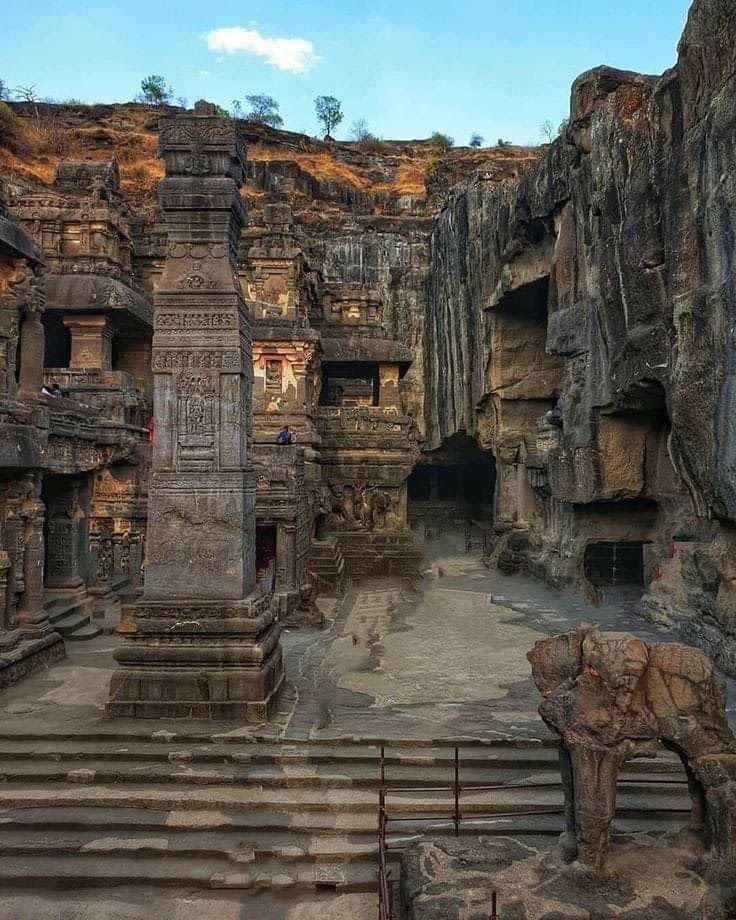
Ellora, a UNESCO World Heritage Site in Maharashtra, is perhaps the greatest testament to India's tradition of religious tolerance and artistic ambition — a 2-kilometer stretch of cliff containing 34 remarkable rock-cut monasteries and temples representing Buddhism, Hinduism, and Jainism, created between the 6th and 11th centuries CE. The centerpiece is the awe-inspiring Kailasa Temple (Cave 16) — entirely carved out of a single basalt rock face from the top down in a feat of engineering that remains miraculous to this day, a monolithic reproduction of Mount Kailash dedicated to Shiva. The Buddhist viharas and chaityas, the towering Jain temples, and the dynamic Hindu sculptures of Shiva make Ellora a journey through the artistic genius of ancient India.
- No photoHeritage / SpiritualView full guide
2–2.5 hours (Kailasa alone)
Kailasa Temple (Cave 16) Exploration
The Kailasa Temple at Ellora is, without question, one of the greatest architectural achievements in human history — a monolithic temple carved top-down from a single basalt cliff face between 757–783 CE. Covering twice the area of the Parthenon and carved to twice its height, the entire structure — pillared halls, elephant sculptures, soaring towers — was created by removing 400,000 tonnes of rock without a single load-bearing structure. Walking around it, you genuinely struggle to believe it was made by human hands.
- No photoHeritage / SpiritualView full guide
5–6 hours (full trail)
Full 34-Cave Trail (Buddhist, Hindu & Jain)
What makes Ellora unique among all the world's rock-cut heritage sites is the co-existence of Buddhist (Caves 1–12), Hindu (Caves 13–29), and Jain (Caves 30–34) monuments on a single hill — created over five centuries between the 6th and 11th centuries. Walking the full cave trail is a profound journey through India's spiritual pluralism: the serene Buddhist monasteries, the exuberant Shaiva carvings, and the delicately painted Jain sanctuaries collectively tell the story of medieval India's extraordinary religious creativity.
- No photoHeritageView full guide
Full day (10–12 hours)
Ellora Ajanta Combined Day Tour
Both Ajanta and Ellora are UNESCO World Heritage Sites and together they represent the absolute pinnacle of ancient Indian rock-cut art and architecture. A combined day tour (covering Ellora in the morning, then Ajanta in the afternoon or vice versa — they are 100 km apart) is the most efficient way to experience both, and many travellers consider this two-site circuit to be the most culturally significant day trip anywhere in India. Aurangabad serves as the ideal base for this classic Maharashtra heritage tour.
- No photoHeritage / PhotographyView full guide
1–1.5 hours
Jain Caves (Caves 30–34) Photography Walk
The Jain caves at the northern end of the Ellora complex — particularly the Indra Sabha (Cave 32) and Jagannath Sabha (Cave 33) — are among the finest examples of Jain art anywhere in India, yet they receive far fewer visitors than the more famous Hindu section. The Indra Sabha's two-storey excavation is breathtaking: richly painted ceilings, lotus medallions, and extraordinarily detailed reliefs of the Tirthankaras carved with a delicacy that rivals anything at Ajanta. A photographer's paradise.