Best places to visit in Delhi
Best places to visit in Delhi
Delhi, India's sprawling national capital, is one of the world's oldest continuously inhabited cities and a living tapestry of civilizations spanning 5,000 years, from the medieval lanes of Shahjahanabad to the wide boulevards of Lutyens' Delhi. UNESCO World Heritage Sites like the Red Fort, Humayun's Tomb, and the Qutub Minar stand alongside the modern parliament buildings and a world-class metro system. Delhi's extraordinary street food scene — from Old Delhi's parathas to Chandni Chowk's jalebis — and its vibrant markets, Mughal monuments, and cultural institutions make it an endlessly compelling destination.

Red Fort
→Red Fort — Lal Qila — is Delhi's most iconic UNESCO World Heritage Site and India's most powerful symbol of independence, built by Mughal Emperor Shah Jahan in 1648. The Prime Minister hoists the national flag from its ramparts every Independence Day (August 15). Its massive red sandstone walls enclose palaces, gardens, museums, and the stunning Rang Mahal. On the Golden Triangle India tour circuit, it is the essential first stop for every Delhi sightseeing itinerary.

Qutub Minar
→Qutub Minar is the world's tallest brick minaret at 72.5 m — a UNESCO World Heritage Site and Delhi's oldest standing monument, built by Qutb ud-Din Aibak in 1193. The surrounding Qutub Complex houses the remarkable Iron Pillar (Ashoka Pillar) that has resisted rust for 1,600 years, and the earliest mosque in India. One of the top Delhi tourist places and a Golden Triangle tour highlight, best visited at sunrise for photography before the crowds arrive.
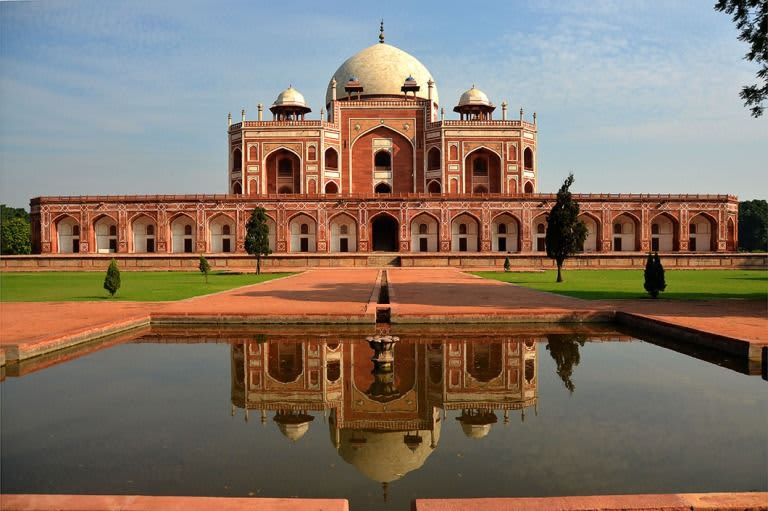
Humayun's Tomb
→Humayun's Tomb is a UNESCO World Heritage Site and the architectural forerunner of the Taj Mahal — the first garden-tomb in the Indian subcontinent, built in 1565 by Mughal Emperor Humayun's wife Hamida Banu Begum. Set in a magnificent Charbagh Persian garden, it inspired Mughal architecture for centuries. A top New Delhi sightseeing attraction and essential Golden Triangle India tour stop. The best-preserved Mughal monument in Delhi after the Red Fort.

India Gate
→India Gate is Delhi's most beloved national monument — a 42-metre war memorial designed by Sir Edwin Lutyens, built in 1931 to honour 82,000 Indian soldiers who died in World War I. The eternal Amar Jawan Jyoti flame burns beneath its arch as a tribute to fallen soldiers. Surrounded by vast lawns and the Kartavya Path ceremonial boulevard, it is Delhi's top free attraction for families, patriots, and evening walks. A must on every Delhi sightseeing tour.
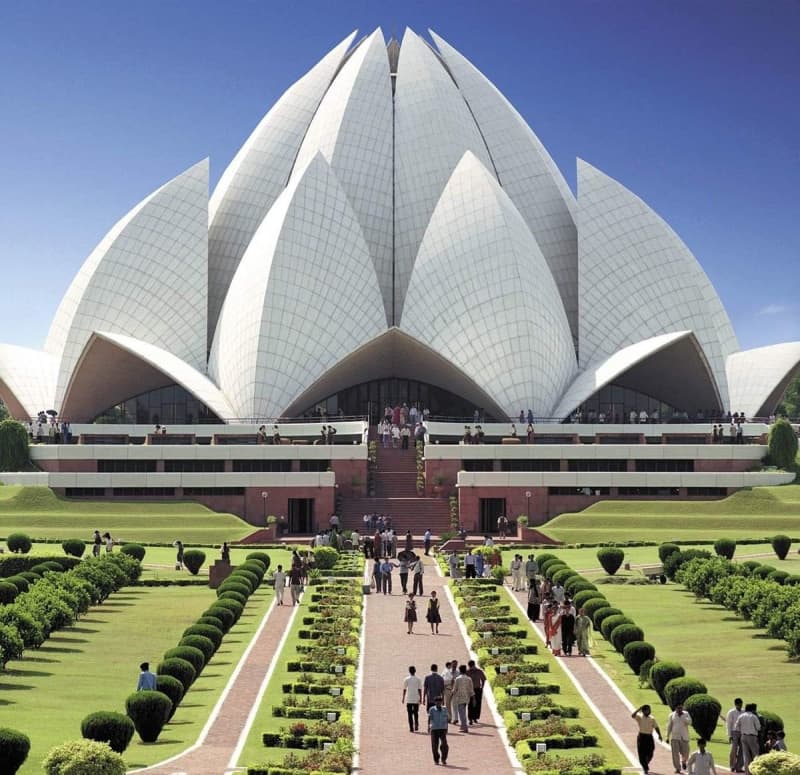
Lotus Temple
→The Lotus Temple in New Delhi is a stunning Bahá'í House of Worship shaped like an unfolding 27-petal white marble lotus flower — one of the most visited buildings in the world, attracting over 10,000 visitors daily. Open to people of all religions for prayer and meditation, it has won multiple architecture awards. Set in beautiful gardens in south Delhi, it is a symbol of unity, peace, and spiritual inclusivity. Free entry. Closed Mondays. A top Delhi family attraction.

Jama Masjid
→Jama Masjid Delhi is one of the largest and most iconic mosques in India, built by Mughal Emperor Shah Jahan in 1656. Located in Old Delhi, it is renowned for its grand red sandstone architecture, vast courtyard, and towering minarets that offer stunning panoramic views of the city. A symbol of Mughal heritage, it remains an active place of worship and a must-visit landmark for history lovers and travelers.
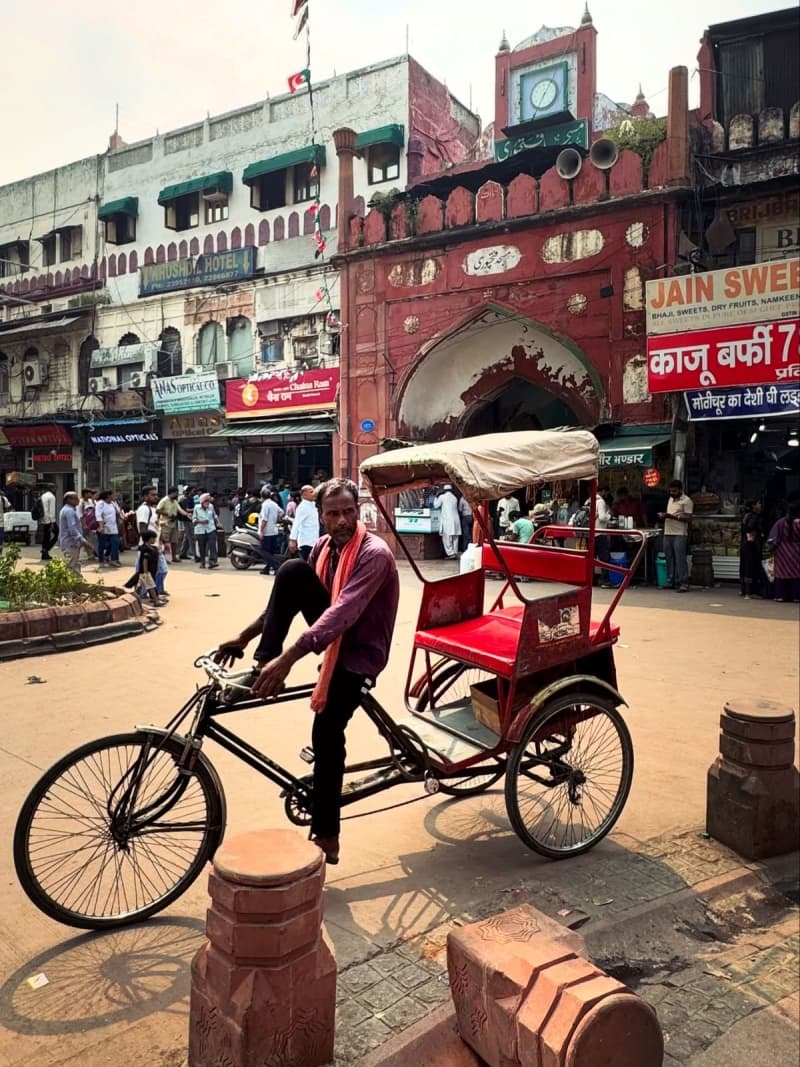
Chandni Chowk
→Chandni Chowk is Old Delhi's legendary 17th-century bazaar — one of Asia's oldest and largest wholesale markets, a labyrinth of over a thousand shops selling spices, textiles, jewellery, electronics, and street food. Built by Mughal Emperor Shah Jahan, it is the ultimate Delhi food and shopping experience. Don't miss the paranthas of Paranthe Wali Gali, the oldest jalebis of Jalebi Wala, and the street food of Chaat Wali Gali. A top Old Delhi sightseeing stop.

Akshardham Temple
→Swaminarayan Akshardham is one of the world's largest Hindu temple complexes — a breathtaking 240-acre spiritual-cultural campus on the banks of the Yamuna in New Delhi. The central monument, featuring 20,000 hand-carved figures and 234 ornate pillars in pink sandstone, was built in just 5 years without steel. A Guinness World Record holder, it features exhibitions on India's heritage, a musical fountain show, and a boat ride. Free entry to grounds; exhibitions ticketed.