Best places to visit in Agra
Best places to visit in Agra
Agra, situated on the banks of the Yamuna River in Uttar Pradesh, is home to the Taj Mahal — one of the Seven Wonders of the World and perhaps the most celebrated monument to love ever built — attracting millions of visitors each year with its transcendent marble beauty at sunrise and sunset. The city also shelters the magnificent Agra Fort, a UNESCO World Heritage Site, and the deserted imperial city of Fatehpur Sikri nearby. Together these sites make Agra the crown jewel of India's Golden Triangle tourist circuit and a non-negotiable stop on any visit to the Indian subcontinent.

Taj Mahal
→The Taj Mahal is India's most iconic monument and one of the Seven Wonders of the World — a UNESCO World Heritage Site built by Mughal Emperor Shah Jahan between 1631 and 1648 as an eternal tribute to his wife Mumtaz Mahal. The white marble mausoleum changes colour with the light — rose at dawn, brilliant white at noon, golden at sunset. Arrive at sunrise for the most magical experience. Closed Fridays. Book ASI tickets online to skip queues. An unmissable Agra tour highlight.

Agra Fort
→Agra Fort is a UNESCO World Heritage Site and one of India's finest Mughal fortresses, built by Emperor Akbar in 1565 from red sandstone and later enhanced by Shah Jahan in white marble. Inside its massive walls lie stunning palaces — the Khas Mahal, Diwan-i-Khas, Sheesh Mahal, and the Jahangiri Mahal. From its Musamman Burj tower, Shah Jahan spent his final years gazing at the Taj Mahal across the Yamuna. An essential Agra sightseeing attraction on the Golden Triangle India tour.
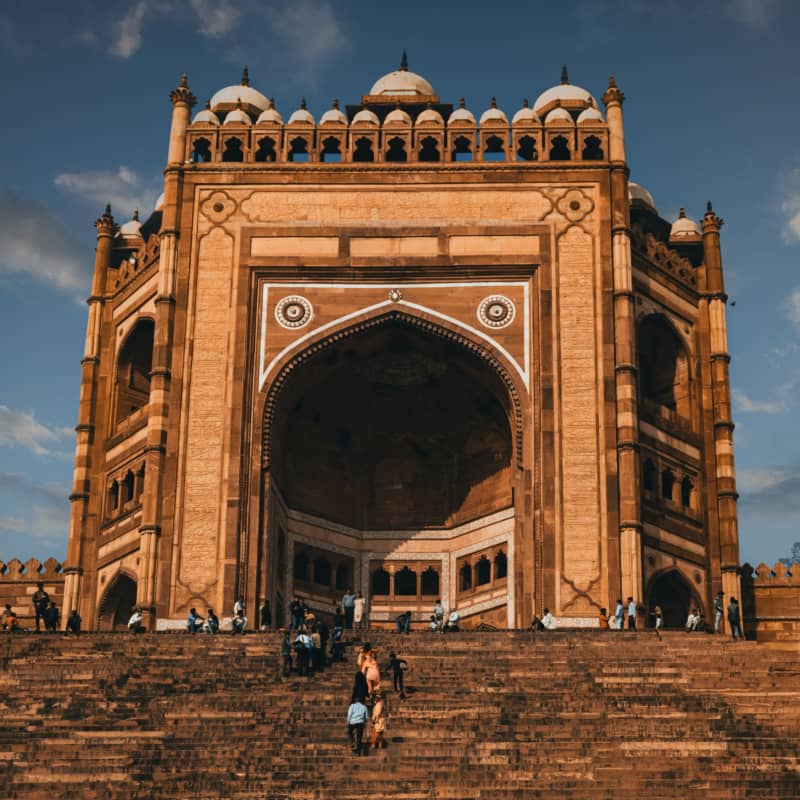
Fatehpur Sikri
→Fatehpur Sikri is a perfectly preserved UNESCO World Heritage Mughal ghost city 37 km from Agra — Emperor Akbar's magnificent red sandstone capital, built in 1571 and abandoned just 14 years later due to a water shortage. Its palaces, the colossal Buland Darwaza (world's largest gateway), Jodha Bai's palace, and the Dargah of Salim Chishti make it one of Rajasthan and Uttar Pradesh's finest architectural landmarks. An essential stop on the Agra–Jaipur Golden Triangle circuit.

Itmad-ud-Daulah's Tomb
→Itmad-ud-Daulah — known as the "Baby Taj" — is a stunning Mughal tomb on the Yamuna bank in Agra, built between 1622 and 1628 by Empress Nur Jahan for her father Mirza Ghiyas Beg. The first Mughal monument built entirely in white marble with exquisite pietra dura inlay work, it directly inspired the Taj Mahal. Less crowded than the Taj, it offers superb marble craftsmanship in an intimate riverside garden setting. A top Agra sightseeing attraction for architecture enthusiasts.
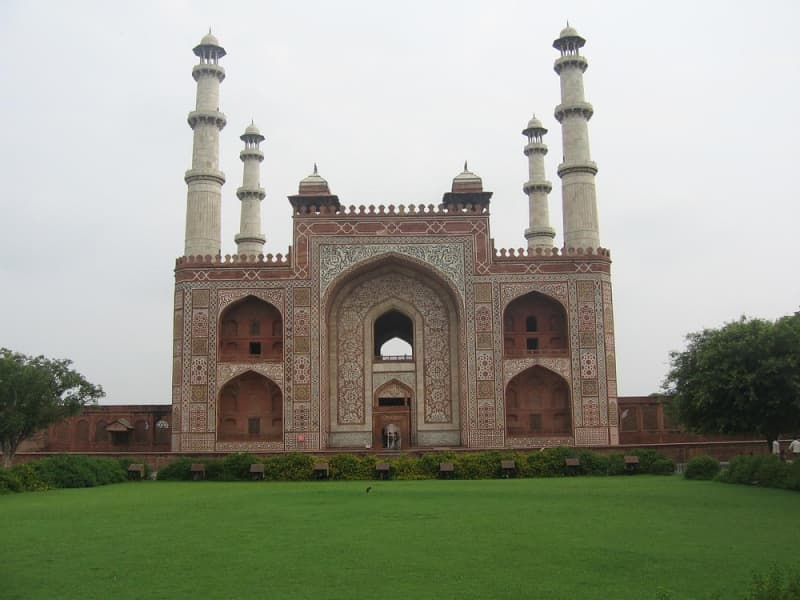
Akbar's Tomb
→Akbar's Tomb at Sikandra, 10 km from Agra, is the magnificent mausoleum of the greatest Mughal Emperor Akbar — a unique five-storey structure blending Hindu, Islamic, Buddhist, Jain, and Christian architectural elements, reflecting Akbar's syncretic philosophy of Din-i-Ilahi. Set in a stunning Charbagh garden populated by deer, monkeys, and peacocks, it is an important Agra heritage site and an essential stop for Mughal architecture enthusiasts visiting Uttar Pradesh.

Jama Masjid Agra
→Jama Masjid Agra, built by Shah Jahan in 1648 and dedicated to his daughter Jahanara Begum, is one of the largest mosques in Uttar Pradesh — a graceful red sandstone and white marble structure with distinctive striped domes and elegant minarets. Located opposite Agra Fort near the old city, it is an active place of worship and an important Mughal heritage monument in Agra. A serene, less-crowded complement to Agra's major UNESCO World Heritage monuments.