Things to do in Kanha National Park
Things to do in Kanha National Park
Kanha National Park, one of India's finest and largest tiger reserves spread across the Maikal Hills of Madhya Pradesh, was the inspiration for Rudyard Kipling's 'The Jungle Book' and remains one of the subcontinent's most pristine and biodiverse wilderness areas. The park is renowned not only for tiger sightings but for successfully reviving the critically endangered Barasingha (swamp deer) from the brink of extinction. Kanha's vast meadow-filled valleys, called maidans, teeming with spotted deer and gaur, and its dense sal forests make it one of India's most rewarding national park experiences.
- No photoWildlifeView full guide
3–4 hours per safari
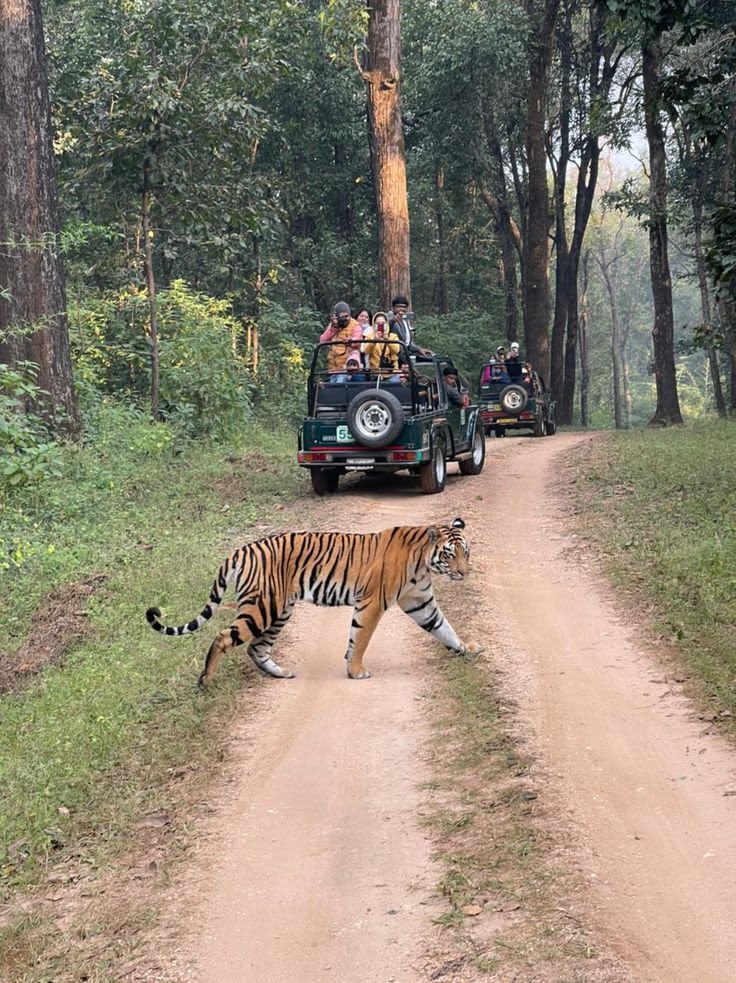
Tiger safari across the Kanha meadows
The vast, open meadows of Kanha — the park that inspired Rudyard Kipling's Jungle Book — are among the most beautiful landscapes in all of Indian wildlife tourism. Tigers move through these golden grasslands like emperors, often visible from hundreds of metres away across the open ground. The sheer scale and photogenic quality of Kanha's scenery sets it apart from every other tiger reserve in India.
- No photoWildlifeView full guide
Part of regular safari
Barasingha (swamp deer) spotting
Kanha is the sole place on earth where the hard ground barasingha — also called the swamp deer — was saved from extinction. Through decades of dedicated conservation work, their numbers have grown from fewer than 70 in the 1970s to over 700 today, and seeing a herd of these graceful, multi-tined deer in the Kanha meadows is one of the most emotionally moving wildlife moments in India.
- No photoCultural & NatureView full guide
2 hours
Jungle Book heritage walk
Rudyard Kipling set his immortal Jungle Book stories in the forests of the Seoni and Balaghat districts — the very region that became Kanha National Park. A naturalist-led heritage walk through the park grounds explores the landscapes that inspired Mowgli's world: the wolf dens, the bamboo thickets, the waterholes, and the ancient sal trees. It is a literary pilgrimage inside one of India's most important natural wonders.
- No photoWildlifeView full guide
Part of regular safari
Leopard and wild dog tracking
While tigers get top billing at Kanha, the park also has healthy populations of Indian leopards and the endangered Indian wild dog (dhole). Dhole packs are one of the most exciting wildlife sightings in India — cooperative hunters that can chase down sambar deer through the forest in disciplined packs. Kanha's mix of forest and open ground makes it one of the best parks in the country for dhole sightings.
- No photoNature & AdventureView full guide
1.5–2 hours
Stargazing and nature night walk
Deep inside central India with virtually zero light pollution, the skies above Kanha on a clear night are spectacular — the Milky Way visible as a proper band across the sky, thousands of stars reflecting off the still waterholes, and the sounds of the nocturnal forest all around. Some lodges offer guided night walks in the buffer zone with expert naturalists who interpret the forest by ear and torch alone.