Things to do in Badrinath
Things to do in Badrinath
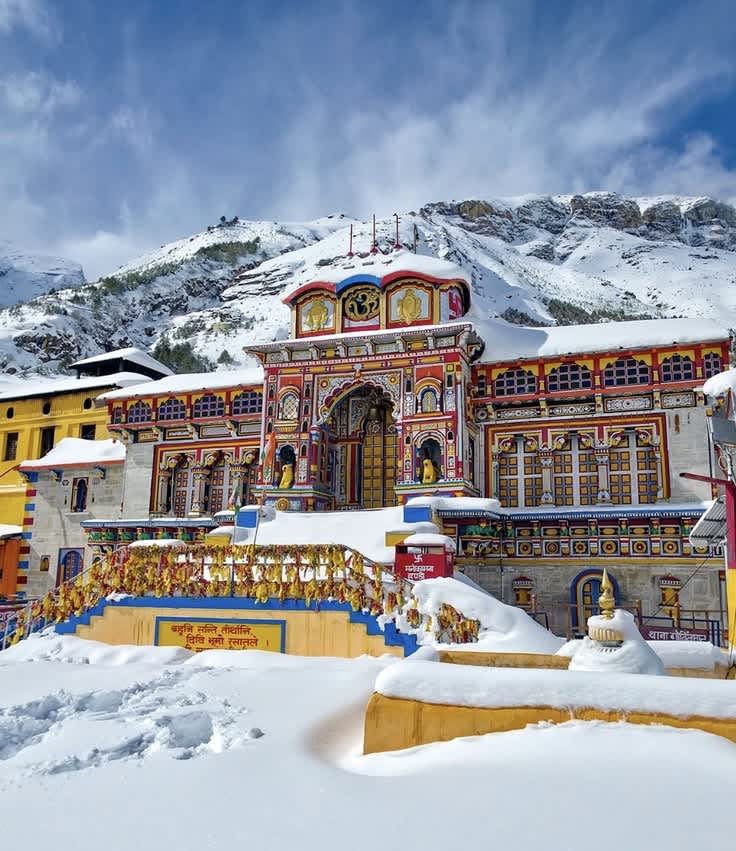
Badrinath, one of the most revered Vishnu shrines in Hinduism and the final destination on the Char Dham pilgrimage circuit, sits at 3,133 meters in the Garhwal Himalayas of Uttarakhand on the banks of the Alaknanda River. The colorful Badrinath Temple, framed by the towering Nilkantha Peak, draws hundreds of thousands of pilgrims during its six-month opening season each year. The nearby Tapt Kund hot springs for ritual bathing, the mythologically significant Brahma Kapal ghat, and the Valley of Flowers and Hemkund Sahib nearby make Badrinath a destination of extraordinary spiritual and natural richness.
- No photoSpiritualView full guide
2–3 hours (including queue)
Badrinath Dham Temple darshan
Set at 3,133 metres in the Garhwal Himalayas at the meeting point of the Alaknanda and Rishi Ganga rivers, the Badrinath Temple is one of the four sacred Char Dhams and one of the most important Vishnu shrines in Hinduism. The black stone idol of Badri Vishal sits beneath a gold roof, surrounded by peaks that rise above 7,000 metres, and the combination of high-altitude cold air, Himalayan grandeur, and intense devotional energy makes darshan here a deeply exceptional spiritual experience.
- No photoSpiritual & NatureView full guide
30–45 minutes
Tapt Kund hot springs bath
Immediately beside the Badrinath Temple, the Tapt Kund hot springs emerge from the earth at a natural temperature of 45 degrees Celsius — an extraordinary geological feature in an area dominated by glaciers and snow peaks. By tradition, all pilgrims bathe here before entering the temple for darshan. Immersing yourself in the steaming sulphurous water while surrounded by Himalayan peaks at over 3,000 metres is a genuinely other-worldly experience.
- No photoHeritage & ScenicView full guide
2–3 hours
Mana village — last village before Tibet
Just 3 kilometres from Badrinath, Mana is officially the last village on the Indian side of the Indo-China border — a fact announced proudly on a signboard at its entrance. The village is the winter home of the Bhotiya people and contains sites directly connected to the Mahabharata: the cave where Vyas dictated the epic to Ganesha, the Bhim Pul (a natural rock bridge thrown by Bhima), and the Saraswati river emerging from a crack in the mountain.
- No photoTrekView full guide
4–5 hours (round trip)
Vasudhara Falls trek
A 5-kilometre trek from Mana village through stunning Himalayan meadow terrain leads to Vasudhara — a 122-metre cascade dropping off a sheer cliff face with the glacial peaks of the Chaukhamba massif as backdrop. By tradition, water from the falls does not touch sinful people — it curves away and falls elsewhere. Whether you believe the legend or not, the waterfall in its setting is one of the most beautiful sights in Uttarakhand.
- No photoSpiritualView full guide
2–3 hours (both sites combined)
Charanpaduka and Brahma Kapal ritual
Charanpaduka is a flat rock 1.5 kilometres from the temple where the footprint of Lord Vishnu is imprinted in stone — a sacred spot with extraordinary views of the surrounding peaks and the Alaknanda valley far below. Below the temple, the Brahma Kapal rock platform on the banks of the Alaknanda is where Hindu pilgrims perform the last rites (pind daan) for deceased ancestors — one of the most sacred locations for this ritual in all of Hinduism.